
LED lighting for indoor green walls: complete guide (2025)
LED lighting for a green wall is essential to keeping houseplants healthy while highlighting the wall's architectural character. In this updated 2025 guide, we introduce LED and halogen lighting options for green walls—whether a living ecosystem needs optimal light for photosynthesis or an artificial wall is primarily decorative. You will find expert installation advice, an objective review of available technologies and technical recommendations for showing off every plant with the right light output.
Horticultural LED lighting for indoor green walls
To light an indoor green wall effectively, understand the specific needs of each plant and choose an LED light that faithfully reproduces the natural spectrum. Modern horticultural LED solutions combine energy savings, biological performance and high light quality, making them suitable for both residential and professional projects. We can help you select and install green-wall lighting that supports plant growth while enhancing your space.
What output does each plant need?
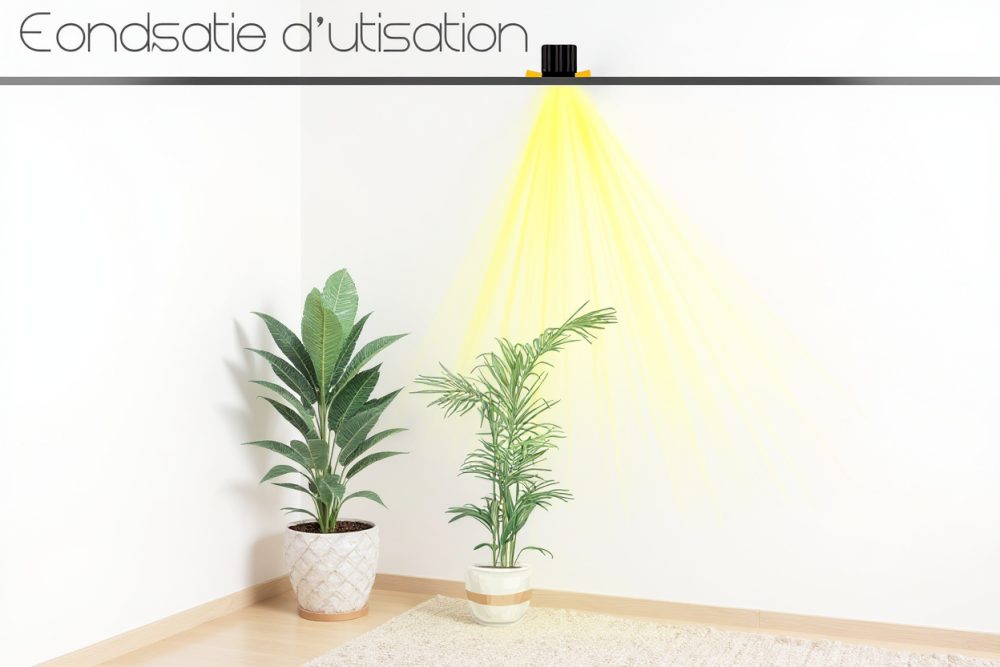
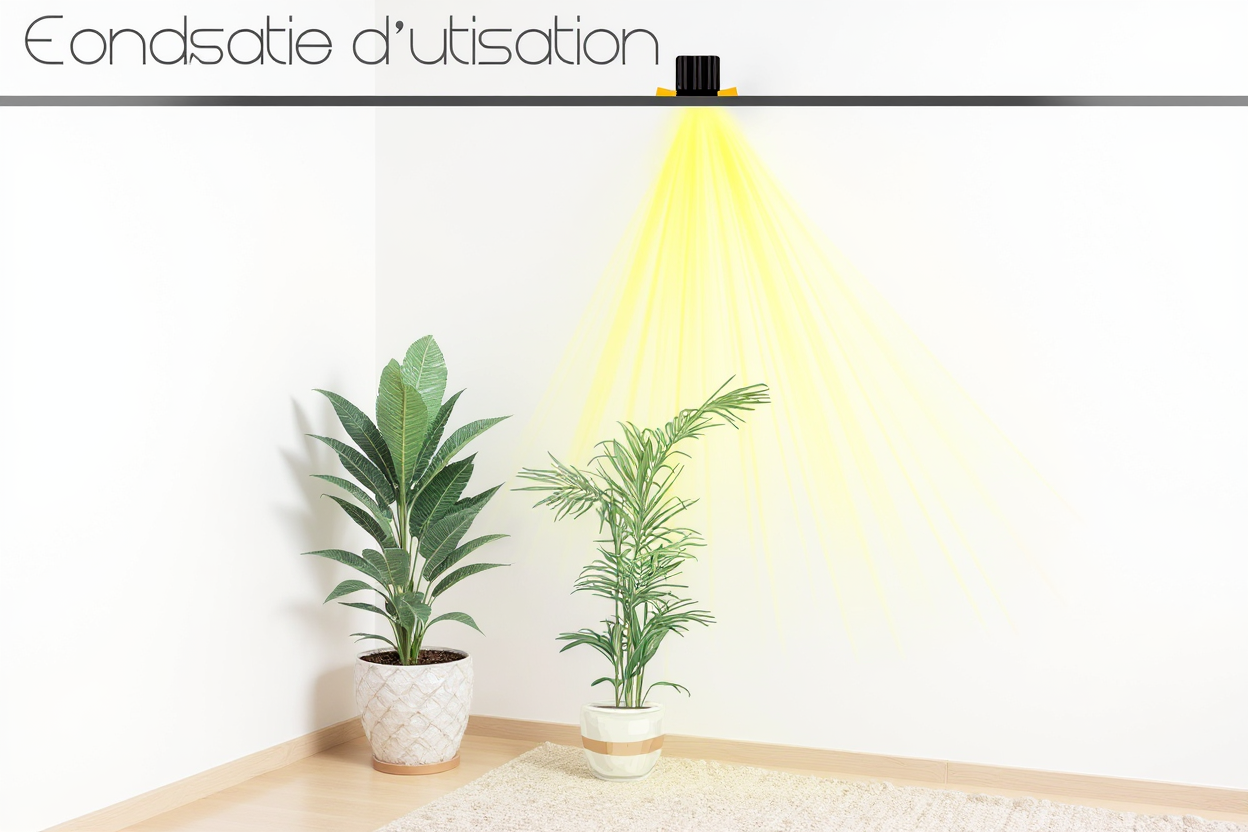
Light output directly affects the growth and appearance of your LED-lit green wall. For a natural indoor green-wall lighting setup, aim for 150–250 µmol·m⁻²·s⁻¹ (around 45 W/m²), ideal for plants such as ferns and pothos. More demanding plants, including some tropical and flowering species, may need up to 60 W/m² to thrive.
- Low-light plants : Mosses, shade-loving ferns and philodendrons do well at 30–40 µmol·m⁻²·s⁻¹ (10–15 W/m²), enough to maintain their appearance without excessive growth.
- Moderate light needs : Pothos, snake plants and peace lilies thrive at 150–200 µmol·m⁻²·s⁻¹ (40–50 W/m²), supporting photosynthesis and lush foliage.
- Light-hungry plants : Fast-growing or flowering species need 200–250 µmol·m⁻²·s⁻¹ (55–65 W/m²) for vigorous growth and vivid colour.
Dimmable systems such as the XModule V5 with a 0–10V dimmer let you adjust output precisely from 30% to 100%, depending on the plants' growth stage. Reducing intensity during sensitive phases limits stress, while gradually increasing it can boost vegetative growth by up to 25% and extend equipment life.
Lighting cycle and distance for a green wall
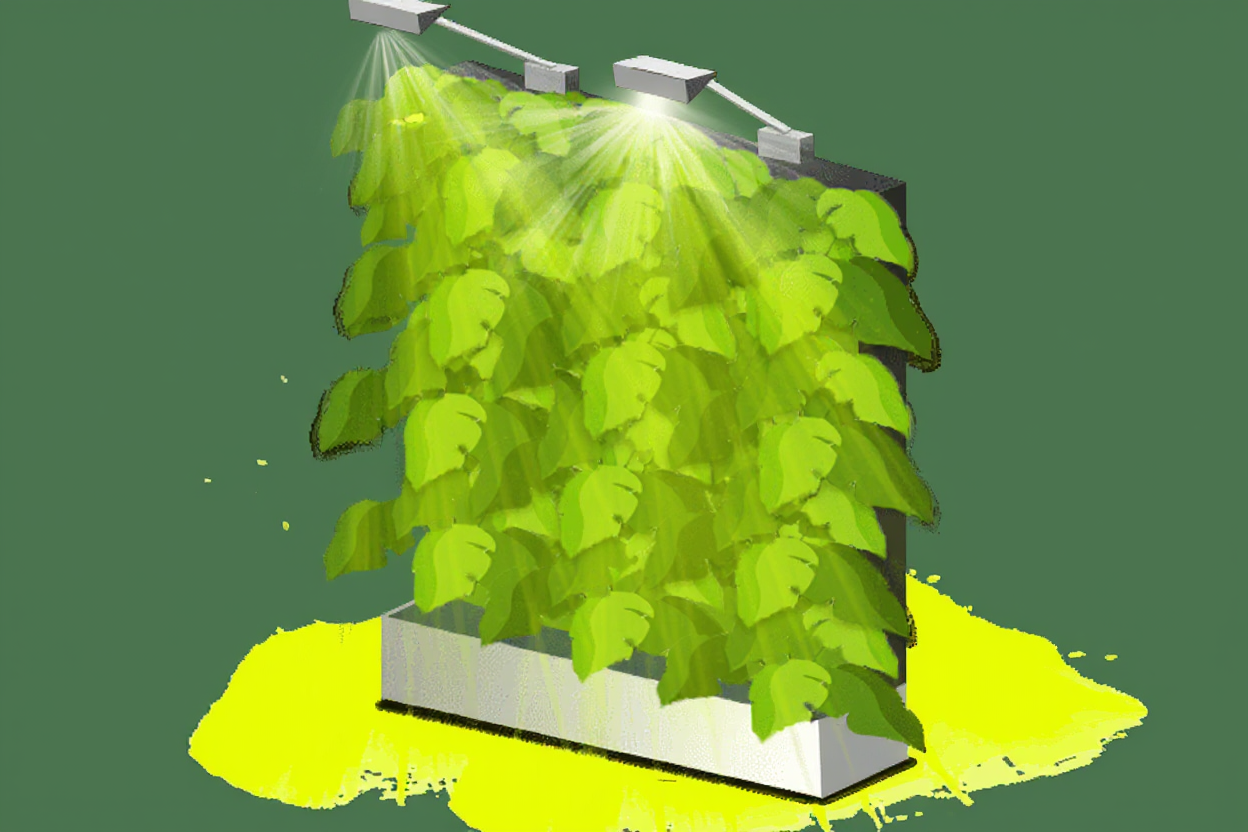
Light position and duration directly affect the wellbeing of your houseplants. Install LED or halogen spotlights 30–40 cm from the foliage, tilted at 45°, for even vertical lighting without dark spots or risk of scorching. This setup protects the leaves and illuminates the entire planted wall evenly.
Set a day/night cycle of 12–16 hours of light followed by complete darkness, which plants need for respiration. Automatic timers create gentle transitions between light and darkness, reducing plant stress and saving 15–20% energy compared with manual control.
Why choose LED instead of halogen?
Horticultural LED technology offers outstanding photon efficacy (over 2.5 µmol/J), without the excessive heat of halogen lights. It can save up to 85% on electricity while providing green-wall lighting better suited to photosynthesis. It also gives more even, safer illumination across a planted wall.
Halogen lights generate so much heat that they must be placed 60–80 cm away, which can leave dim areas. Thanks to optimised heat dissipation, our LEDs stay below 45°C and can be safely positioned just 30 cm away. Their lifespan reaches 50,000 hours (5–7 years of daily use), compared with barely 2,000 hours for halogen lights.
How to light a green wall
Lighting a green wall effectively requires a technical approach that considers the supporting structure, plant density and aesthetic goals. The choice of light fittings is crucial because it affects both the electrical installation and the project's future development. These technical tips will help you create a durable, adaptable installation for residential or professional use.
Choosing a panel or track
Integrated LED panels and modular tracks differ in flexibility and ease of maintenance. For lighting that can adapt over time, our standard 1-metre tracks can hold up to 20 adjustable 360° spotlights with a single power connection. This makes it possible to gradually adjust the lighting as the plants grow.
- Reconfigurable aluminium tracks : Our GreenVisuaLED system assembles with straight, T, L or cross connectors. These tracks create continuous runs, precise corners or grids covering 2 to 20 m² with even illumination.
- Adjustable recessed spotlights : Available from 9 to 50 watts with an adjustable 15° to 60° beam angle. Recessed into the wall or planter, they direct light exactly where it is needed.
- Integrated LED panels : Sizes from 30 × 30 to 100 × 100 cm provide even light, ideal for preserved or artificial green walls.
- LED bars and tubes : Linear profiles from 60 to 120 cm with translucent diffusers provide soft, wide light, perfect for shallow walls.
Match output to the wall area and the plants' needs. For 2 m², two 45W spotlights on a 100 cm track provide around 180 µmol·m⁻²·s⁻¹ for healthy growth. For 4 m², four spotlights arranged in a square help ensure even brightness.
| Planted area | Recommended setup | Total output | Light density |
| 1 to 2 m² | 2 × 45W spotlights on a 100 cm track | 90 W | 150–200 µmol·m⁻²·s⁻¹ |
| 2 to 4 m² | 4 × 45W spotlights on crossed tracks | 180 W | 180–250 µmol·m⁻²·s⁻¹ |
| 4 to 8 m² | 6 to 8 × 45W spotlights + 60W bars | 270–360 W | 200–280 µmol·m⁻²·s⁻¹ |
| Artificial wall | 30–40W wide-beam spotlights | 8–12 W/m² | Decorative lighting |
Discover our full range of horticultural LED lighting, specially designed to enhance and grow plants on green walls, including 9 to 200W spotlights, dimmable systems and customisable 0–10 V dimmer solutions.
Settings for indoor plants
LED lighting for a green wall should vary with foliage height and density. Choose different output for different areas: 12–20 watts at the top, 35–45 watts in the denser centre, and 45–50 watts at the base to compensate for natural shade.
Choose dimmable systems for intelligent seasonal control:
- +10–15% in winter to offset low natural light
- 80–100% in spring to encourage growth
- 60–70% in summer to prevent overexposure
Artificial green walls and decorative foliage
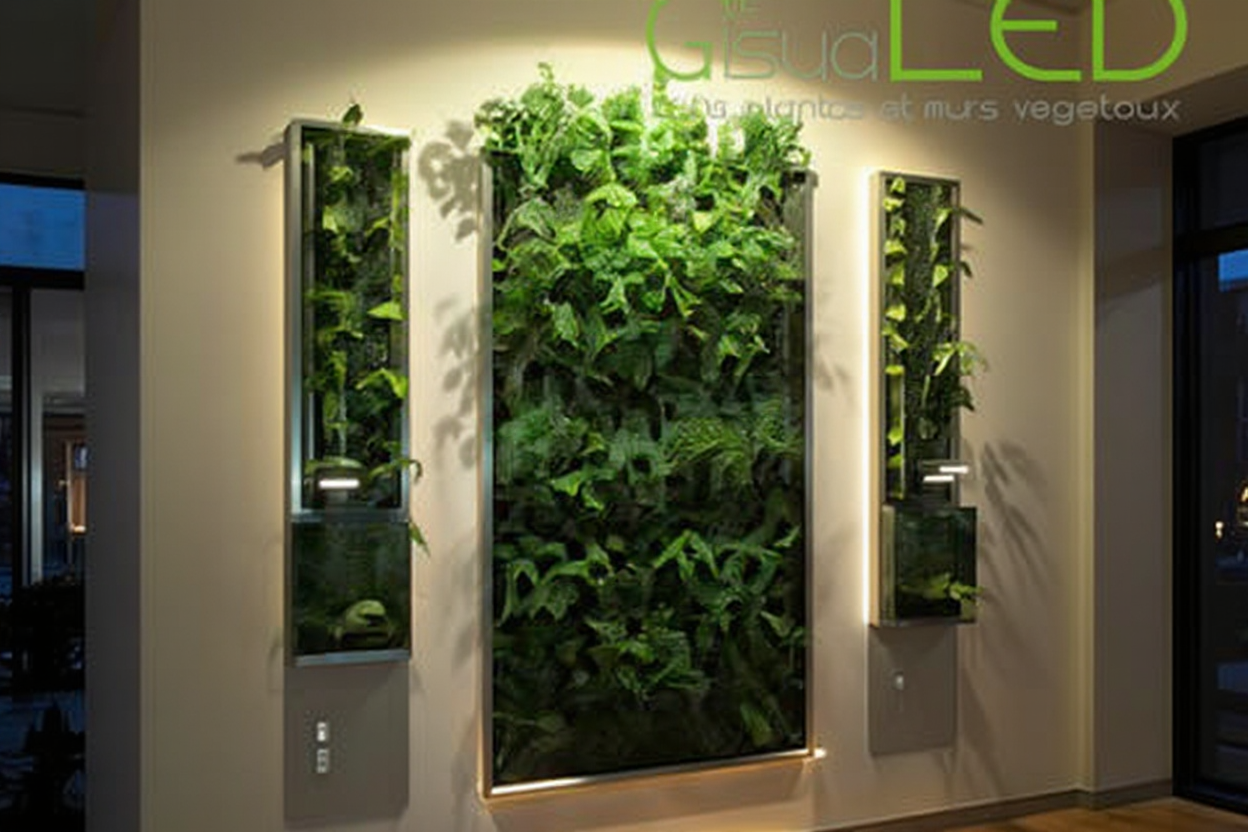
An artificial green wall or preserved wall needs different lighting from a living installation. The main aim is to enhance its appearance, textures and integration into the interior. Since it does not need light for photosynthesis, this type of wall allows you to choose the spectrum and colour temperature freely to create the desired atmosphere. This flexibility can turn a simple decorative panel into a striking light feature, adding depth and movement to residential and professional interiors.
Choosing LEDs for an artificial green wall
To choose suitable LED lighting for an artificial green wall, consider two key factors: colour temperature and colour rendering index. These ensure accurate colour reproduction and help create the desired atmosphere. For example, neutral white at 4000 kelvins resembles natural daylight and preserves the foliage's natural tones in professional spaces where visual comfort matters.
- Warm white, 3000 K : Ideal for a cosy atmosphere in restaurants or living rooms, although it may slightly dull dark greens or floral arrangements.
- Neutral white, 4000 K : The best choice for realistic artificial foliage, particularly in offices and commercial spaces.
- Cool white, 6500 K : Adds a modern, graphic touch, ideal for contemporary galleries or showrooms.
A colour rendering index (CRI) above 80 is essential for accurately reproducing the shades of artificial foliage. Our lighting solutions use high-performance LEDs (CRI >85%) and 8–12W/m² for even lighting without shadows, helping preserve the illusion of a real artificial green wall with LED lighting.
Lighting effects and decorative panels
To enhance an indoor artificial green wall, several lighting techniques are available:
Directional lighting with recessed spotlights (15°–30°) highlights specific areas and creates shadows that accentuate depth, like natural light filtering through foliage.
Backlighting uses LED strips behind the plant panel to create an elegant glow. At 6–10W per linear metre, it provides soft, even light without glare.
Explore our modular track-mounted LED lighting solutions : adjustable spotlights, LED bars and dimmable modules for professional projects involving an artificial green wall with LED lighting.
Optimal installation and lasting maintenance
To extend the service life of LED lighting for green walls, it is essential to follow electrical standards for safety and professional results. Regular maintenance keeps light intensity at the right level and supports healthy growth of plants. Both are important to the operation and durability of your indoor green wall.
Electrical standards and IP protection
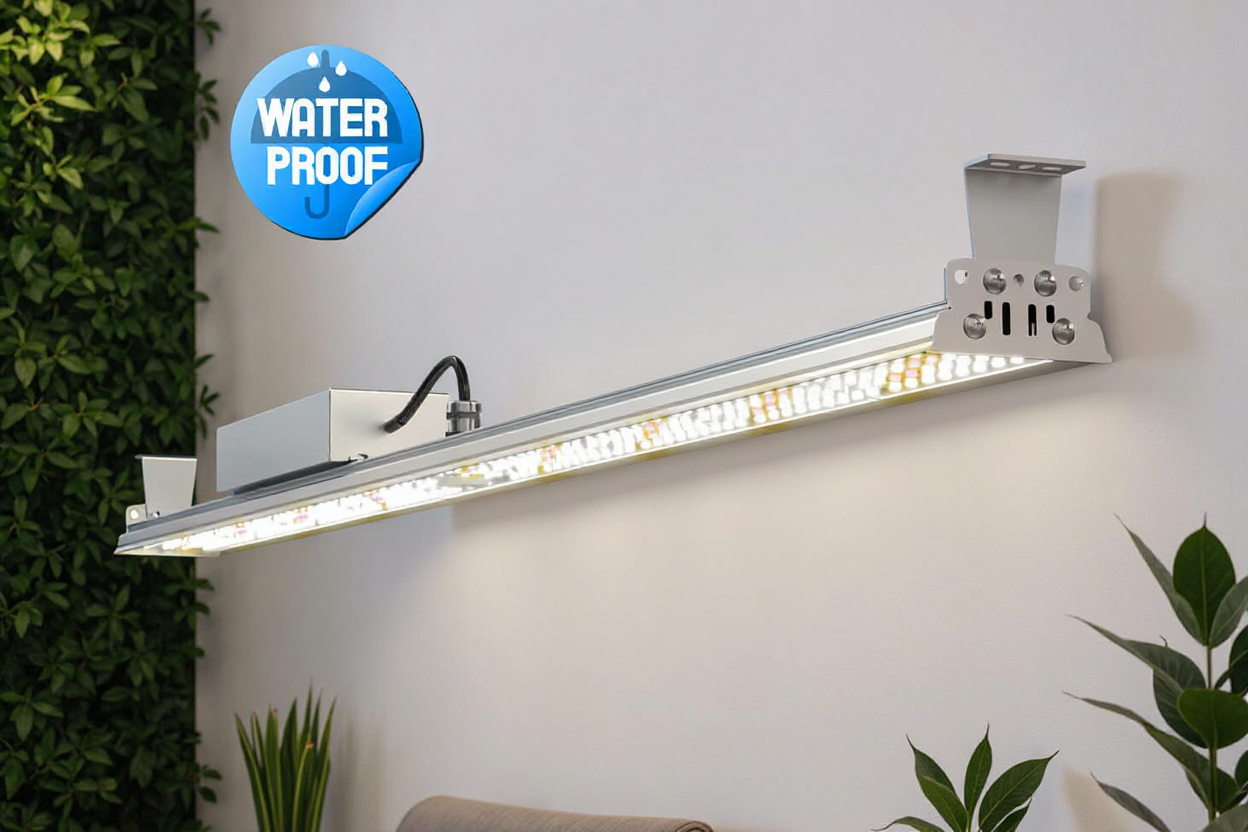
The IP rating indicates a light fitting's resistance to dust and water, an important consideration in damp environments. Our LED spotlights for green walls offer at least IP44 protection, suitable for splashes from irrigation systems. For more exposed areas, choose IP66, which protects effectively against powerful water jets and particles to maintain consistent light output.
LED drivers must be CE and RoHS certified to confirm the absence of harmful substances and compliance with European regulations. Efficiency above 90% and a power factor of 0.9 reduce energy losses and heat while stabilising the LED lighting. Integrated surge protection also helps prevent failures during bad weather.
A structured installation procedure
Wiring should be routed in PVC trunking or metal conduits in accordance with the NF C 15-100 standard, isolating electrical circuits from moisture. An accessible service enclosure makes maintenance easier without disturbing the look of the green wall. This allows quick repairs while preserving the appearance of the plants.
Position tracks 30 to 40 cm from the wall for good light distribution and to prevent overheating. Adjustable 360° spotlights eliminate dark areas and support even growth of plants. Straight, T and cross connectors let you create a neat, discreet electrical installation.
Preventive maintenance and cleaning
Cleaning the lenses every three months maintains 100% brightness and prevents drops in intensity that could affect photosynthesis. Gently clean them with a microfibre cloth slightly dampened with demineralised water to protect their optical quality.
Check connections annually with a continuity tester and verify temperatures (maximum 45°C after two hours of use) to extend the life of professional CREE components. This helps ensure stable light output and support the stated 50,000-hour lifespan.
Energy efficiency and scheduling
Timers and presence sensors reduce consumption by 20–35% by switching off the LED lighting when an area is unoccupied or at night. 0–10 V dimmable drivers integrate easily with home automation for centralised control.
Adding a dawn and dusk simulator (30 to 45 minutes) recreates the natural light cycle, reduces stress for plants and improves visual comfort. It also enriches the sensory experience while extending LED component life.
Discover our complete 2 m² green-wall LED lighting pack, including two swivelling 45W spotlights on a 100 cm track. The kit plugs into a standard 230 V socket and naturally enhances the colours of the plants, with a three-year warranty.
Frequently asked questions
Is LED light good for plants?
Modern horticultural LED lights are among the most efficient lighting solutions for growing plants indoors. They outperform conventional lamps with excellent energy efficiency, a well-suited spectrum and the ability to produce useful photons.
Our modules provide a complete white spectrum , combining blue wavelengths (400–500 nm) to stimulate plant growth and red wavelengths (600–700 nm) needed for flowering. This setup provides light suited to photosynthesis while maintaining a good colour rendering index without generating excessive heat.
With efficacy above 2.5 µmol/J and a 50,000-hour lifespan, these professional systems are an attractive and economical option for green walls or tabletop growing. They use up to 80% less energy than conventional lighting while providing 150–250 µmol/m²/s.
What are the drawbacks of a green wall?
Although green walls let you create impressive vertical displays, installation requires careful planning. Constant watering raises ambient humidity and may cause waterproofing problems on wall structures, so effective drainage is essential.
Regular maintenance (pruning and plant health checks) takes time and requires easy access. The initial cost is also higher than conventional decoration because you need a suitable structure, specialist substrate, irrigation and horticultural LED lighting.
Our lighting solutions are particularly energy-efficient (45W for 2 m²), with excellent colour rendering and a long service life. They support plant growth while reducing running costs, turning these challenges into lasting benefits.
What type of LED is best for plants?
Choose an LED light based on your plants' needs and the visual effect you want. For undemanding indoor species, choose white-spectrum LEDs (4000K) with a colour rendering index above 80, ensuring both efficiency and good light quality.
For small spaces (1–2 m²), 35–50W spotlights with a 30°–60° beam angle target foliage effectively. Larger professional projects can use modular tracks supporting up to 20 adjustable light points to accommodate plant growth.
Our range includes dimmable modules to adjust intensity as plants grow. It includes:
- SpectraBULB X20/X30 bulbs for compact shelves
- The powerful GVL SPOT V4 (10–200W) for large-scale installations
All come with a professional warranty of at least three years.
Also read our expert guide to green-wall lighting, from choosing the spectrum to planning the layout.
Related posts
 Discreet Green Wall Lighting: LED Design Guide
 Recessed Directional Grow Spot: A Guide for Plants and Green Walls
 Recessed LED Grow Bars for Green Walls: 2026 Comparison Guide