
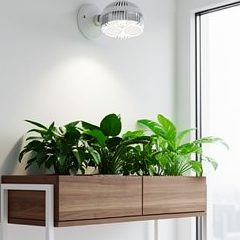
Horticultural LED grow lights: complete guide for houseplants
For successful indoor plant growing, it is essential to meet your plants' light needs, especially when natural light is insufficient. Horticultural LED lighting is a practical, economical and effective way to support healthy growth all year without increasing your energy use. This article explains how full-spectrum lamps work, how they support plant growth and what to consider when choosing the best option for orchids, ferns, bonsai or green walls.
Why choose a horticultural LED grow light for your plants?
Horticultural LED lights are transforming artificial lighting for houseplants by reproducing the full spectrum required for photosynthesis. This technology can turn any dim space into a thriving indoor ecosystem without compromising your interior design or increasing your electricity bills.
How artificial light can replace sunlight
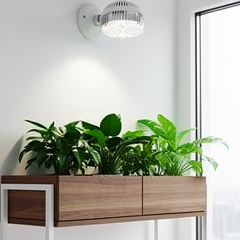
Replacing natural light with artificial lighting means understanding photosynthesis and the importance of suitable light intensity. Full-spectrum LEDs combine blue light (which stimulates leaf growth) with red light (which promotes flowering and fruiting), supporting balanced development from germination to maturity. Providing 12 to 18 hours of light a day helps respect the plants' natural cycle without stressing them.
- Optimised EVG+ spectrum : GreenVisuaLED lights reproduce a spectrum close to sunlight (between 3500 K and 5000 K), ideal for houseplants, including orchids.
- Effective red-blue balance : a mix of 30% blue, 50% red and 20% white speeds up germination, thickens foliage and helps prevent leggy stems.
- Low heat output : LEDs produce very little heat, preserving light intensity and protecting leaves even during long lighting periods.
- Easy scheduling : when connected to a timer, the lamp provides a regular light cycle without manual intervention.
The GVL SPOT 200 and GVL SPOT V4 range offer a white spectrum suited to every stage from germination to flowering, without needing to change equipment. This is particularly suitable for carnivorous plants and framed plant displays because it provides the required energy without excessive UV and remains efficient over time.
Benefits of full-spectrum LEDs
An effective horticultural LED light uses Philips diodes producing over 150 lumens per watt, converting nearly all the electricity into useful light. This high efficacy ensures consistent intensity, an even full spectrum and colour rendering that brings out the natural beauty of your plants.
Versatile full-spectrum LEDs cover every stage of indoor growing, reducing the investment to one durable device. Explore high-performance horticultural LED spotlights to light green walls, shelves or orchids while keeping energy use low.
Energy savings and LED lamp durability
Horticultural LED lights use up to 70% less electricity than conventional bulbs: a 50W spotlight can easily replace a 150W lamp without loss of brightness. This efficiency significantly reduces costs and provides years of continuous use, even with extended lighting periods.
With a lifespan exceeding 50,000 hours (over five years of continuous use), these lights reduce frequent replacements and waste. Combined with a minimum three-year warranty, this durability makes them a cost-effective, environmentally friendly investment for indoor growers.
Installing and using horticultural LEDs for plants
Installing horticultural LED lighting means choosing the right height, orientation and exposure time for your plants. Set these parameters correctly to improve energy efficiency, reduce electricity use and support steady growth in your foliage and houseplants.
Optimum lamp positioning for different plants
The distance between an artificial light source and your plants plays a key role in photosynthesis and plant health. Position the lamp 30 to 100 cm from the foliage to provide enough intensity without scorching, while covering a suitable growing area.
- Active growth phase : place the lamp 20–30 cm away to encourage dense growth while checking for heat stress.
- Flowering period : move the lamp back to 30–45 cm to encourage flowering while maintaining steady intensity.
- Dormant period : move it as far as 100 cm away to provide just enough light without stimulating growth in the cold season.
Full-spectrum LED bulbs such as the SpectraBULB X20 evenly light a 50 × 50 cm area, extendable to 100 × 100 cm in winter. Adjustable mounts let you raise the light as plants grow, maintaining stable intensity for balanced foliage.
LED bars and spotlights are easy to install on green walls with FloraCLIP E27 clamps. This practical solution eliminates dark areas and distributes artificial light evenly to support houseplant growth.
Using a timer to set the right light cycle
Installing an horticultural LED is simple: a standard E27 socket is all you need, with no external driver. Add a timer to automate day/night cycles and respect your plants' natural rhythm.
- Easy automation : set a 12–18-hour lighting period according to your plants' needs.
- Gradual adjustment : choose from 10 intensity levels for each growth stage.
- Variable lighting function : simulate sunrise and sunset by gradually changing brightness to reduce plant stress.
Quiet and discreet, these lights are ideal for compact spaces such as apartments and offices. Find out how to support plant growth with this horticultural LED bulb : just 20W of power for effective indoor grow lighting.
Lighting solutions for vertical plants and green walls
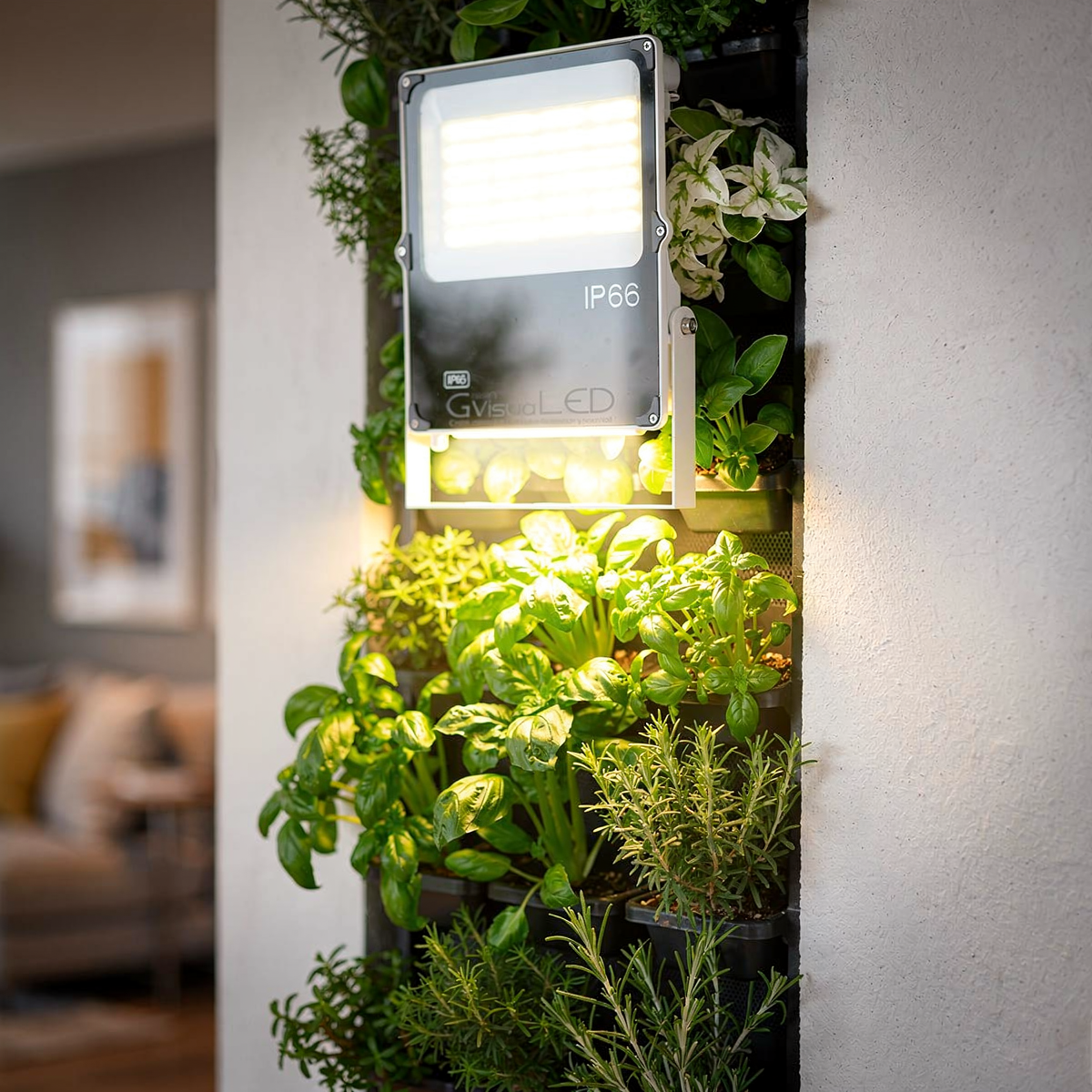
Green walls need even lighting across the entire surface. The waterproof (IP66) GVL SPOT is an ideal solution for greenhouses, terrariums and hydroponic systems, combining moisture resistance with a full spectrum suited to plant needs.
Flexible LED strips (430 nm + 660 nm) fit compact spaces and small indoor gardens. Their modular design supplies the artificial light needed for vertical planting, ensuring even coverage and healthy growth in horticultural LED installations.
What output and intensity do houseplants need?
Choosing the right output is essential for successful indoor growing. Consider several factors: the area to light, the plant species, available light intensity and your growth goals.
Calculating the required lumens helps optimise photosynthesis while controlling electricity use. High-efficiency LED bulbs, such as Philips models, can exceed 150 lm/W, turning each watt into useful light for your houseplants.
Calculating the required lumens for an area
For a small 50 × 50 cm area, a 20W bulb such as the SpectraBULB X20 provides around 3,000 lumens, enough for 3 to 5 medium-sized plants or a group of small houseplants. For 1 m², allow around 300W across several sources to provide 30,000 to 45,000 lux, comparable to a professional greenhouse. Green walls need either 48W LED bars covering 1.2 m² or 200W spotlights with reflectors for even distribution.
- Small area (50 × 50 cm) : 20W provides ideal intensity for a dense arrangement of small houseplants.
- Medium area (1 m²) : 300W provides 30,000–45,000 lux, ideal for herbs or a mini vegetable garden.
- Green walls : 48W bars or a 200W spotlight evenly light the full height, ideal for vertical plant displays.
- Large installations : above 2 m², allow around 300W/m² or combine several 200W spotlights for maximum efficiency.
For effective horticultural lighting, choose photon efficacy above 2.5 µmol/J to convert electricity efficiently into light used for photosynthesis. This directly affects growth speed, foliage density and flowering.
| Growing area | Recommended output | Light intensity (lux) | Number of plants |
| 0.25 m² (50 × 50 cm) | 20–50 W | 15,000–25,000 lux | 3–5 plants |
| 1 m² (100 × 100 cm) | 100–200 W | 30,000–50,000 lux | 10–15 plants |
| 2 m² (green wall) | 300–600 W | 35,000–60,000 lux | Professional installation |
Comparison of available horticultural LED bulb outputs
Our range meets a variety of houseplant lighting needs, from small setups to large greenhouses. For example, our GVL SPOT 200W provides the same intensity as a 600W halogen lamp while reducing energy use by 70%, according to our professional customers.
- Economy range, 20–50 W : The SpectraBULB X20 is ideal for orchids, terrariums and compact decorative displays.
- Mid-range, 100–150 W : A 100W spotlight can replace four equivalent halogen bulbs while improving energy efficiency by 25%.
- Professional range, 200 W : The GVL SPOT V4 covers several square metres with even light, ideal for green walls and premium installations.
- Modular tubes and bars : available in lengths from 60 to 150 cm and outputs from 6.6 to 18.3W, ideal for plant shelves.
Our LED solutions maintain a stable intensity for over 50,000 hours without spectrum degradation, unlike fluorescent tubes or halogen bulbs, which deteriorate quickly.
See the 200W horticultural LED light to boost your growing, a high-performance solution that supports houseplant growth, even in dim spaces.
Frequently asked questions
What is the difference between a standard LED bulb and a horticultural LED grow light?
A standard LED bulb emits light designed mainly for human vision, concentrated around 550 nm—a range of limited use to plants. By contrast, a horticultural LED targets the blue and red wavelengths that plants use for photosynthesis.
Our GreenVisuaLED bulbs optimise this efficiency with a specially tuned EVG+ spectrum: 30% blue, 50% red and 20% white. This mix closely reproduces natural daylight , allowing a 50W model to outperform a 150W household bulb while reducing energy use .
How many hours a day should I use a horticultural LED light for my plants?
For most houseplants, allow 12 to 18 hours of light per day. Needs vary by species: tropical foliage plants such as ferns and orchids thrive with 14 to 16 hours, similar to their natural environment.
However, do not go below a minimum of 10 hours of light or your plants may deteriorate. The ideal solution is a timer that maintains a regular light cycle without overloading your plants.
Can I use a horticultural LED light as ambient lighting in a living room or office?
Absolutely! Unlike older models that produced unpleasant purple light, our GreenVisuaLED lights emit much more attractive white light (between 3500K and 5000K). They create a warm atmosphere while supporting your houseplants.
With their low energy use (just 20W for the SpectraBULB X20) and silent operation, these horticultural systems fit perfectly into living spaces. An ideal solution for plant décor enthusiasts who want to combine appearance with efficiency.
Related posts
 Discreet Green Wall Lighting: LED Design Guide
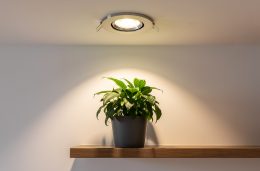 Recessed Directional Grow Spot: A Guide for Plants and Green Walls
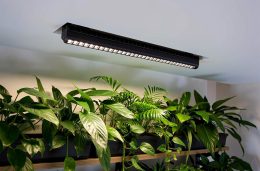 Recessed LED Grow Bars for Green Walls: 2026 Comparison Guide