
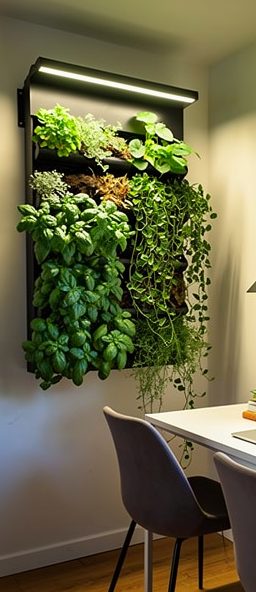
Houseplants without natural light: complete guide to shade
Growing houseplants in places with no natural light is an increasingly common challenge for city dwellers. This guide explains how to choose resilient species, adapt their care and use suitable horticultural LED lighting to turn dark rooms into green spaces.
Which houseplants can grow without natural light?
Choosing an indoor plant for a low-light space means understanding tropical species that grow naturally beneath forest canopies. Their broad, dark leaves capture every available bit of light, helping them tolerate very low-light conditions.
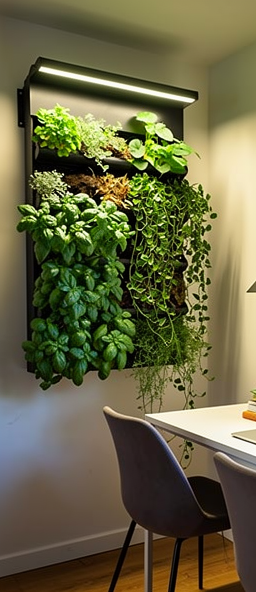
Zamioculcas and Sansevieria: champions of the shade
The Zamioculcas zamiifolia thrives in shade thanks to rhizomes that store water and nutrients. A simple LED light will highlight its glossy foliage, making it an ideal choice for dark corners.
- Impressive water reserves : its rhizomes let it go for months without watering.
- Glossy evergreen leaves : their reflective surface maximises photosynthesis in low light.
- Slow growth : its moderate growth reduces light requirements in windowless rooms.
The Sansevieria, also known as mother-in-law's tongue, can tolerate very dark conditions while staying healthy. Its graphic, silver-striped foliage adds decorative appeal to any pot in a dim location.
Pothos, Aspidistra and Calathea for dark corners
The Epipremnum aureum (pothos) adapts remarkably well to changes in light. In a shaded hallway, it can maintain its variegation if a little LED light compensates for the low brightness.
The Aspidistra, also called the cast-iron plant, is perfect for windowless bathrooms or hallways. With 12 hours of soft LED light a day, it stays elegant all year.
Calatheas and ferns tolerate shade but need more diffused light. Move the light source closer to show off their decorative foliage.
Choosing plants for low-light spaces
Leaf shape can indicate adaptation to low light: look for broad, thin, dark leaves, such as those of the philodendron, pothos or aglaonema.
- Forest origins : philodendrons, ferns and aglaonemas naturally grow beneath tropical forest canopies.
- Avoid : full-sun plants such as cacti and yucca do not tolerate shade.
- Stable temperature : maintain 18°C to 25°C to support photosynthesis in dark rooms.
Protect plants from cold draughts, which can be harmful when light levels are low. Add targeted artificial lighting to illuminate the foliage and help plants adapt, even in the shadiest areas.
Caring for potted plants in the shade
Potted shade plants need specific care. In dark corners of the home, adjust watering, choose a light potting mix and watch the foliage closely to compensate for low light.
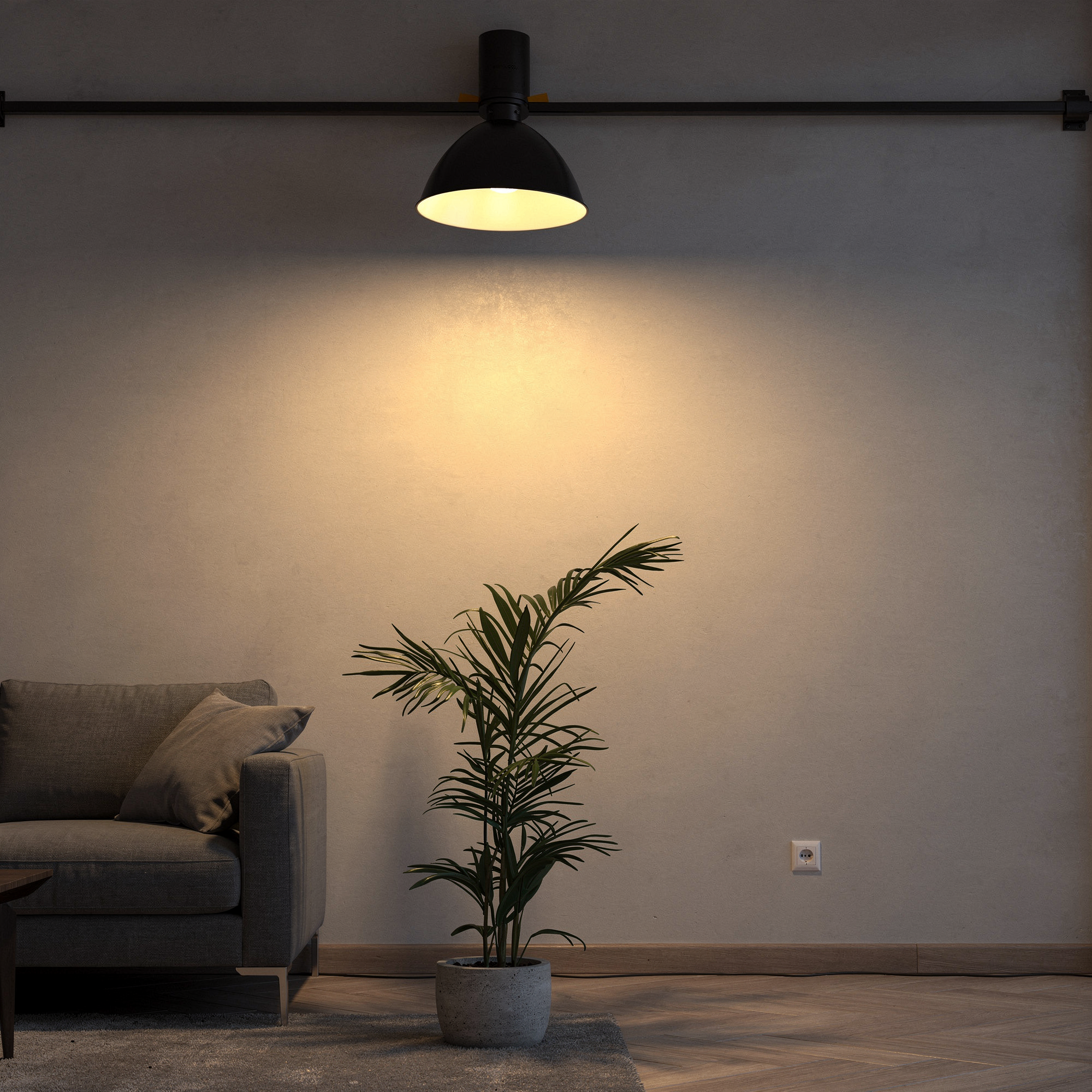
Watering and substrate for dark environments
Plants growing without light have a slower metabolism and use less water. Always let the potting mix dry completely between waterings to prevent root rot, which is common in low indirect light.
- An airy potting mix is essential : mix perlite and bark to keep roots oxygenated, even in dark rooms.
- Use less fertiliser : reduce fertiliser and apply a very diluted solution once a month.
- Regular inspection : check the foliage often for yellowing or unusual leaf drop.
- Suitable humidity : maintain 50–70% humidity for delicate species such as calathea and aglaonema.
A good substrate helps roots breathe despite constant shade, giving your shade-loving plants better conditions at home.
Identifying and correcting a lack of natural light
Some signs show that a plant is getting too little light: stretched stems, pale leaves or sparse foliage. Act quickly to prevent lasting damage.
- Visible leggy growth : stems stretch unusually as they search for light.
- Leaning towards the light : the plant clearly turns towards any available light source.
- Loss of colour : foliage loses its bright colour because of low light.
- Stalled growth : new leaves remain small and fragile.
Gradually increase the lighting and consider a specialist bulb such as the SpectraBULB X20 , which reproduces the spectrum plants need.
Rotation and gradual acclimatisation
Regularly rotate pots between brighter and darker areas so your ferns and other shade plants can recover without sudden light stress.
Regularly pruning philodendrons or pothos helps keep them compact and attractive in dim interiors. Removing excess stems encourages denser, more balanced growth.
LED lighting solutions for plants without sunlight
Modern horticultural lighting does more than make up for a lack of natural light: it can enhance shade-tolerant houseplants. LED advances now make it possible to grow plants successfully in low light, even when pots are far from natural light sources.
Horticultural LED lights: features and ideal installation
Full-spectrum horticultural LEDs (400–700 nm) provide a photon flux of 200 to 400 µmol·m⁻²·s⁻¹, suitable for shade plants. Used for 12 to 16 hours a day, they reproduce the light conditions needed for healthy houseplant growth, even in the darkest spaces.
- A tailored light spectrum : white LEDs between 4,000 and 6,500 K provide a colour temperature suited to photosynthesis.
- Ideal installation : position the light source 30–45 cm from the foliage for even lighting without overheating.
- Easy scheduling : a simple timer recreates regular day/night cycles that are essential for plant health.
- Guaranteed savings : efficacy can reach 150 lm/W, with a lifespan exceeding 50,000 hours.
The distance between the lamp and plant directly affects photosynthetic efficiency. A distance of 80 cm suits many species. Then adjust according to lamp output and how the foliage responds.
| Light type | Recommended distance | Daily duration | Coverage |
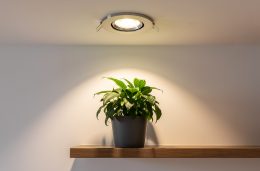
| 9W recessed spotlight | 40–60 cm | 12–16 hours | 50 × 50 cm |
| SpectraBULB X20 | 40–100 cm | 12–18 hours | 100 × 100 cm |
| GVL SPOT 100W | 100–120 cm | 14–16 hours | 180 × 180 cm |
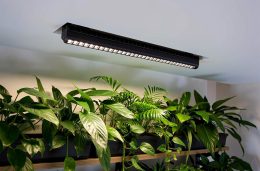
| Modular LED bar | 60–80 cm | 12–14 hours | Variable |
GVL SPOT 100W and SpectraBULB X20 for dark rooms
Equipped with high-end Philips LEDs, the GVL SPOT 100W effectively lights up to 1.8 m² when installed 120 cm above the plants. It is especially suitable for spider plants, dracaena and peace lilies, three popular houseplants known to tolerate low light.
The SpectraBULB X20 reproduces natural daylight with remarkable accuracy. Positioned 40 to 100 cm above your plants, it provides suitable light conditions for 12 to 18 hours a day, supporting shade plants in urban homes.
- Energy saving : just 20W for continuous, economical operation.
- Silent operation : fan-free, for a quiet environment.
- Flexible coverage : from 0.5 to 1 m², depending on installation height.
- Maximum compatibility : standard E27 base fits common household light fittings.
For ambitious projects such as green walls or professional installations, our GVL SPOT 100W is an excellent solution, combining high light output, IP66 protection and long life to turn a windowless space into a green retreat.
Scheduling light cycles for plant health
Respecting circadian rhythms is fundamental: a 12-hour light cycle followed by 12 hours of darkness suits most houseplants. Some flowering species may benefit from a slightly longer lighting period, but a sufficient night period is essential to avoid plant stress.
For precise control, use a lux meter: low-light plants generally need 100 to 300 lux. Then adjust lamp distance and lighting duration to support healthy growth while minimising energy consumption.
Frequently asked questions
Are there really plants that can survive in complete darkness?
Not completely, because all plants need light for photosynthesis. However, some houseplants, such as Sansevieria, Zamioculcas and Aspidistra can survive for several weeks in a dark room with very little light, especially if you supplement it with minimal LED lighting. Their secret? They make good use of stored nutrients.
How can I tell the difference between low light and a watering problem in potted plants?
It can be hard to tell in dark corners ! Low light causes unusually stretched stems and pale leaves that turn towards the light. Watering problems tend to make leaves soft or brittle. To check, test the moisture in the potting mix with your finger and review the daily light exposure before taking action.
What lighting should I choose for a windowless room with several plants?
To light a dark room, a wide-beam LED spotlight such as the GVL SPOT 100W is ideal. It covers around 180 cm² from a height of 120 cm. Arrange your houseplants : put the plants needing the most light (ficus, dieffenbachia and schefflera) in the centre, and the species more tolerant of shade such as peperomia, dracaena (or dragon tree) around the edges, where the light is less intense.
Related posts
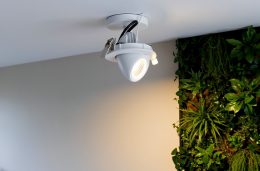 Discreet Green Wall Lighting: LED Design Guide
 Recessed Directional Grow Spot: A Guide for Plants and Green Walls
 Recessed LED Grow Bars for Green Walls: 2026 Comparison Guide