
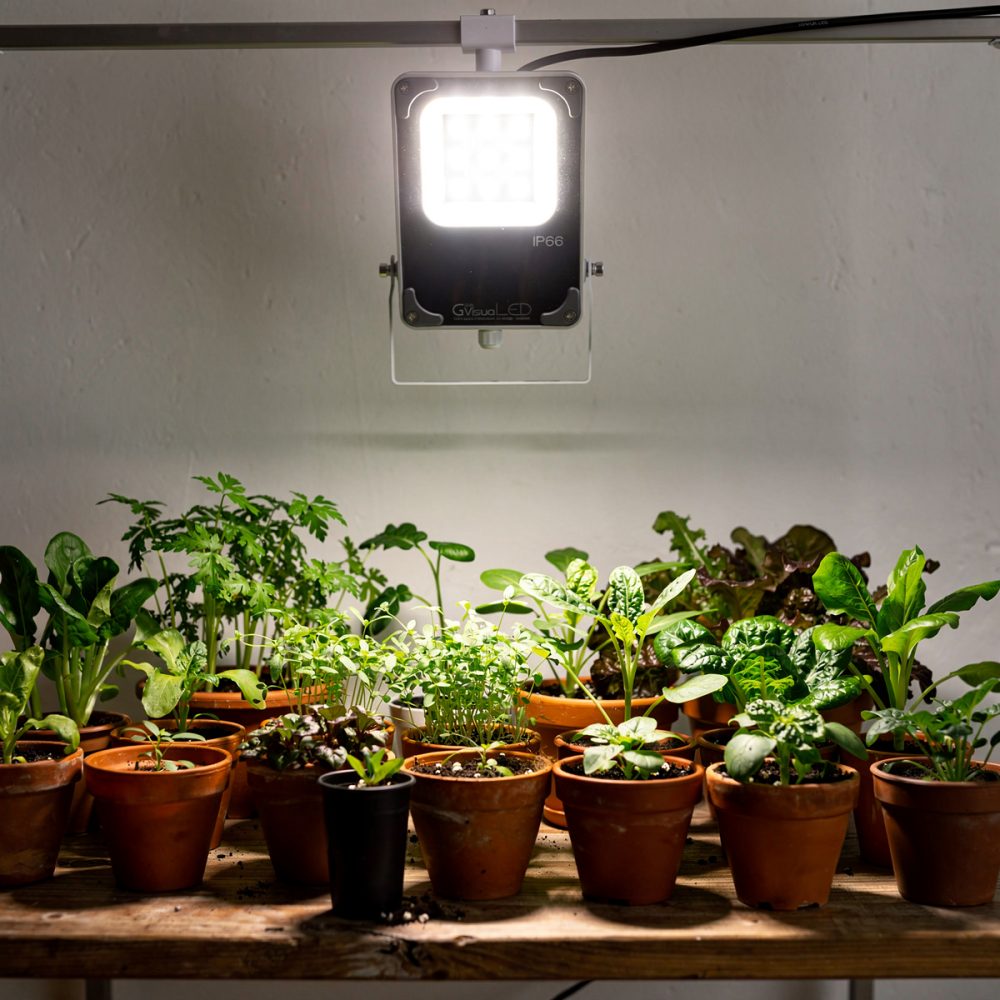
PPFD for Plant Growth: Optimal LED Grow Light Levels
The PPFD for plant growth is key to healthy plant development when growing indoors under LED grow lights. This measurement shows the usable light intensity available for photosynthesis and should be carefully adjusted throughout vegetative growth and flowering. This guide explains how to find the right PPFD level, size your lighting systems and position your grow lights effectively above the canopy.
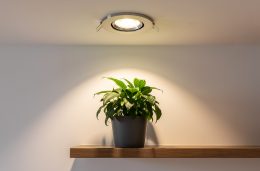
Optimise your plant PPFD with this professional horticultural LED spotlight
What is PPFD in plant growing?
The PPFD is an essential measure in modern horticultural lighting because it shows the amount of light actually received by a plant. Measured in micromoles per second per square metre, this photosynthetic photon flux density helps you adapt the light spectrum and intensity to the needs of your crop at each stage.
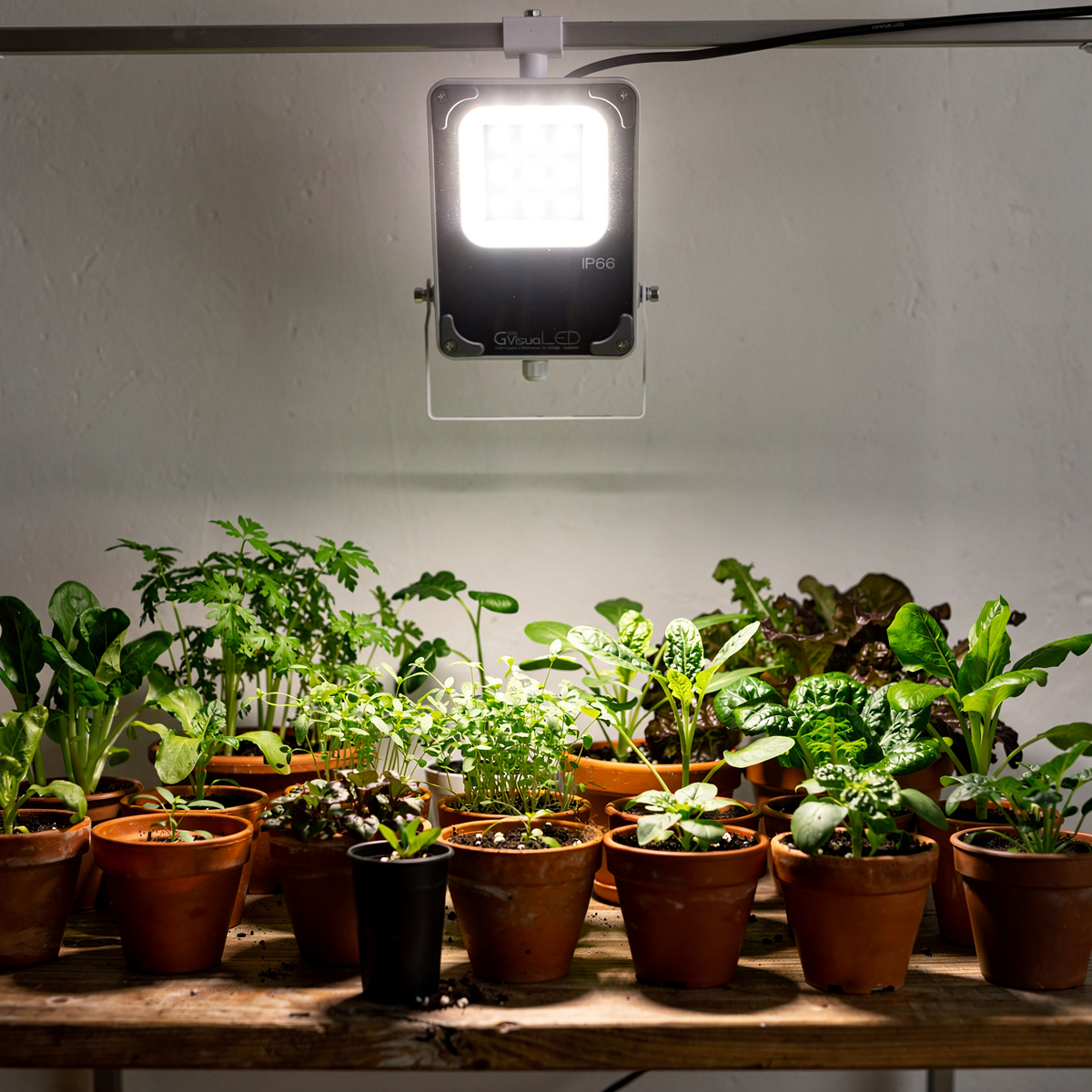
PPFD definition and unit of measurement
PPFD (Photosynthetic Photon Flux Density) is the number of photosynthetic photons (between 400 and 700 nm) reaching one square metre each second (µmol m⁻² s⁻¹). Unlike PPF, which measures the total output from a light source, PPFD shows the photon flux density actually received by the leaves. Measured at canopy height with a calibrated quantum meter, it can reveal changes in output caused by ageing LEDs or a change in distance.
- Photosynthetically active radiation (PAR) : only certain blue and red wavelengths effectively stimulate photosynthesis, because chlorophyll absorbs little of the green part of the light spectrum.
- PPF vs PPFD : PPF indicates total production in micromoles per second, while PPFD measures the intensity received at crop level.
- Comparing lighting systems : µmol m⁻² s⁻¹ provides an objective basis for comparing horticultural lighting performance, regardless of its wattage or format.
The difference between PPFD, lux and lumens for plants
Units such as lux and lumens reflect the sensitivity of the human eye (which peaks at 555 nm), whereas plants mainly use blue and red wavelengths . A light source can therefore have a high lux output but provide too little PPFD if its spectrum contains few photosynthetic photons. As a rough guide, 1 lux is about 0.0185 µmol m⁻² s⁻¹, but this conversion depends on the light spectrum.
Why PPFD matters in indoor LED horticulture
A uniform PPFD level avoids shaded areas that slow growth, while also preventing excessive light that can cause photoinhibition. Too little PPFD reduces photosynthesis and biomass production, while excess light (>1000 µmol m⁻² s⁻¹ without additional CO₂) can burn the leaves. By adjusting the amount of light, you can optimise growth, photosynthetic photon flux density and energy efficiency.
Our horticultural lighting uses multi-chip LEDs with stabilised output , providing consistent PPF. This makes it easier to calculate PPFD values based on mounting height and the number of modules. You can then control the photon flux density and support every stage of plant development, from germination to harvest.
Optimal PPFD levels at each growth stage
Plants have different light requirements at each stage of development. Adjusting the light intensity and PPFD level for each phase helps optimise photosynthesis while preventing plant stress.
PPFD for seedlings and vegetative growth
During early growth, including seedlings and cuttings, maintain a light intensity of 100–200 µmol/m²/s for 14–16 hours a day. This gentle light encourages strong rooting and the development of the first leaves without risking light burn.
During advanced vegetative growth , gradually increase the level to 200–400 µmol/m²/s (12–18 hours a day). This steady increase lets the plant adapt and develop a strong structure before flowering.
| Growth stage | Recommended PPFD (µmol/m²/s) | Lighting duration | Target DLI (mol/m²/day) |
| Seedlings and cuttings | 100–200 | 14–16 h | 5–11 |
| Early vegetative | 200–300 | 16–18 h | 12–19 |
| Advanced vegetative | 300–400 | 14–16 h | 15–23 |
| Pre-flowering | 400–500 | 12–14 h | 17–25 |
PPFD for flowering and intensive production
During flowering, a PPFD level of 400–600 µmol/m²/s (10–12 hours a day) encourages bud formation and the production of aromatic compounds. This light intensity speeds up maturation without compromising quality.
In intensive growing , some growers using additional CO₂ increase PPFD to 600–900 µmol/m²/s. If you do this, keep the temperature stable at 22–26°C to prevent heat stress.
PPFD limits with and without additional CO₂
Without CO₂ enrichment, photosynthesis reaches its maximum at around 1000 µmol/m²/s. Above this level, excess light is ineffective and can damage the leaves.
- Standard crops (400 ppm CO₂) : limit to 1000 µmol/m²/s
- CO₂-enriched crops (1200–1500 ppm) : up to 1400 µmol/m²/s may be possible
- Ornamental houseplants : 150–250 µmol/m²/s is sufficient
Our GVL SPOT V4 10W spotlights provide around 150 µmol/m²/s, which meets the light requirements of most houseplants while keeping energy use reasonable.
How to calculate and adjust PPFD with LED grow lights
To optimise a horticultural lighting system, it is essential to understand the relationship between electrical power, light intensity and the PPFD received by each plant. This helps you install LED modules effectively, achieve the desired photon flux and optimise both energy use and upfront costs.
How distance from the grow light affects PPFD
Light intensity follows the inverse square law: doubling the distance between an LED grow light and the canopy reduces PPFD by around 75%. Halving the distance, by contrast, quadruples the light level. This matters at every stage, from vegetative growth to flowering and seedling development.
For a 600 W LED grow light, the ideal flowering distance is 45–55 cm, providing a PPFD of 600–900 µmol/m²/s without overheating the leaves. Every centimetre of adjustment affects the PPFD calculation by 3–5%, so make precise changes as the plants grow.
- Vegetative growth: 200–400 µmol/m²/s – Position the light 45–60 cm above the canopy for even coverage without stressing young leaves.
- Standard flowering: 400–600 µmol/m²/s – Keep the light 45–50 cm away for good canopy penetration and an even photon flux.
- Intensive flowering: 600–900 µmol/m²/s – Lower the light to 40–45 cm, monitoring temperature and PPF to prevent heat stress.
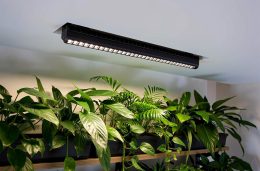
- Decorative green walls: 150–250 µmol/m²/s – Install the spotlights 40–50 cm away for even coverage without shadows.
Our modular lighting systems allow height adjustments of ±5 cm, changing PPFD immediately by around ±10%. This flexibility is a major advantage over fixed installations, helping deliver consistent growth and better control over cultivation.
Recommended distance for a 600 W LED grow light during flowering
For a 600 W LED grow light, PPFD calculations must account for photon efficacy (measured in µmol/J) and the area being lit. A model with an efficacy of 2.5 µmol/J produces 1,500 µmol/s of PPF, which must be spread across the growing area to achieve the desired intensity.
- 1 m² growing area – At 45–50 cm, the light delivers 600–800 µmol/m²/s at the centre, with a 15–20% drop towards the edges.
- 1.2 m² growing area – At 50–55 cm, coverage extends further; the centre receives 500–650 µmol/m²/s, suitable for standard flowering.
- Dense canopy – A distance of 50–60 cm helps light reach the lower layers and promotes balanced growth.
Horticultural lighting manufacturers provide PPFD charts by mounting height to help with system sizing. These figures prevent undersizing and help ensure that light output suits each growth stage.
Calculating the number of spotlights needed for a target PPFD
A GVL SPOT V4 spotlight covers 0.25 m² at 40 cm and provides 150 µmol/m²/s. Overlapping the light beams can double this intensity. To achieve 300 µmol/m²/s over 1 m², four spotlights arranged in a 2 × 2 grid are sufficient.
The general formula is: number of spotlights = (area × target PPFD) / (spotlight area × spotlight PPFD × overlap factor). The overlap factor varies from 0.8 to 1.2 depending on the layout, helping ensure an even light distribution.
For example, a 2 m² green wall requiring 200 µmol/m²/s needs 11 spotlights; we recommend 12 to compensate for edge losses and support optimal growth. This approach delivers even intensity, vigorous growth and well-developed leaves.
Measuring PPFD with a quantum meter
To assess the light intensity received by a plant accurately, use a specialist meter that measures PPFD. This measurement, calibrated for the spectrum used in photosynthesis, complements and verifies the PPF data supplied by manufacturers while taking the conditions of your installation into account.
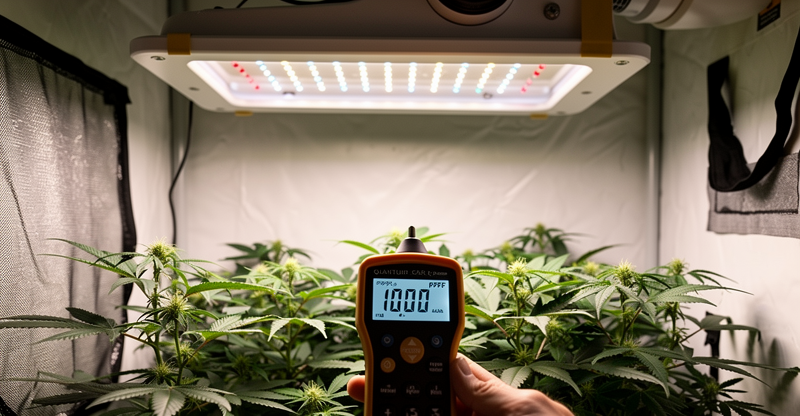
Choosing and using a calibrated PPFD meter
A professional PPFD meter, such as the Apogee SQ-500, accurately measures photosynthetic photon flux (in µmol/m²/s). With ±5% accuracy and sensitivity across 400–700 nm, it is a useful tool for checking theoretical calculations, adjusting lighting positions and ensuring even light across the canopy.
- Annual calibration is essential : have your sensor checked regularly by an accredited laboratory to account for natural drift caused by prolonged exposure to light.
- Position accurately at leaf height : even a few centimetres can significantly affect the PPFD reading, so always place the sensor at canopy height.
- Allow the lights to reach a stable temperature : run the LEDs for 15–20 minutes before measuring to obtain stable, representative readings.
Important: without a quantum meter, manufacturer PPFD charts provide a useful but imprecise estimate (±15%), because they do not account for real installation conditions, light reflection or the gradual ageing of diodes.
A protocol for measuring PPFD uniformity
To map light intensity, always take five readings: one in the centre and one at each corner of the illuminated area. This reveals variations in photon flux and identifies areas that may need lighting adjustments.
A difference of more than 15% between the centre and the edges creates harmful unevenness: leaves around the perimeter receive fewer photosynthetic photons, grow more slowly and develop less evenly than plants in brighter areas.
DLI and energy efficiency of grow lights
The DLI (Daily Light Integral) is the total amount of light a plant receives over one day. It is calculated by adding up the PPFD throughout the lighting period and expressed as moles of photons per square metre per day. This measure helps you adjust light intensity and exposure time to maximise photosynthesis without stressing plants.
Calculating DLI from measured PPFD
To convert instantaneous PPFD readings into DLI, use this simple formula: DLI = (average PPFD × lighting duration in seconds) / 1,000,000. This gives you the daily light dose actually available to your plants.
- Vegetative growth (18 hours/day) : a PPFD of 300 µmol/m²/s gives a DLI of 19.4 mol/m²/day, ideal for healthy foliage development.
- Flowering (12 hours/day) : at 750 µmol/m²/s, the DLI is 32.4 mol/m²/day, a good level for encouraging flower production.
- Houseplants (14 hours/day) : 180 µmol/m²/s provides a DLI of 9.1 mol/m²/day, enough for most ornamental species.
The key is to balance lighting duration and intensity to reach the target DLI. The shorter the photoperiod, the higher the PPFD needs to be, and vice versa. This flexibility lets you tailor lighting to each growth stage while controlling energy use.
Photon efficacy and lumen conversion for plants
The energy efficiency of an LED lighting system is measured in µmol/J (micromoles per joule). The formula is: (average PPFD × illuminated area) / power consumption. The higher the ratio, the more efficient your setup.
Today’s most efficient LEDs reach 3.0 µmol/J thanks to:
- High-performance chips
- Optimised thermal management
- A spectrum suited to plant requirements
A practical example : a 300 W light with an efficacy of 2.0 µmol/J uses 17% more energy than a 250 W model at 2.4 µmol/J to deliver the same PPFD. The higher upfront cost is generally recovered within 18–24 months.
Our LuminoLIGHT spotlights use next-generation Philips chips designed to:
- Maximise useful PPF
- Target the most effective wavelengths for photosynthesis
- Provide a balanced spectrum for harmonious growth .
Positioning spotlights for an even DLI
For uniform lighting, arrange your LEDs in a grid with slight overlap (around 10%). This layout keeps PPFD variation below ±10%, providing even coverage across the growing area.
Frequently asked questions
What is PPFD and why is it important for indoor growing?
PPFD (Photosynthetic Photon Flux Density) measures the number of active photons (between 400 and 700 nm) reaching one square metre of foliage each second, expressed in µmol/m²/s. Unlike simple brightness measurements, it accurately reflects the light intensity available for photosynthesis. At the right level, it effectively stimulates plant growth and adapts to each stage of development. Well-adjusted PPFD boosts vegetative growth and then flowering, while an incorrect level can slow growth or damage plants.
How can I accurately measure PPFD from my horticultural LED setup?
To measure your PPFD accurately under LED lights:
- Use a well-calibrated PAR sensor (such as the Apogee SQ-500)
- Position it at canopy height
- Take readings at several points (centre and at least four corners)
- Calculate the average (variation above 15% indicates uneven light distribution)
Regular checks let you adjust the height or position of your lights to provide an even light flux that supports plant growth.
What is the difference between PPFD and DLI for plant growth?
The main difference is:
- PPFD : an instantaneous measure of light flux in µmol/m²/s
- DLI (Daily Light Integral): the total amount of light received over 24 hours (in mol/m²/day)
Calculation: DLI = (average PPFD × duration in seconds) / 1,000,000. For example, 750 µmol/m²/s for 12 hours gives 32.4 mol/m²/day, suitable for demanding plants. This approach helps optimise both duration and light intensity for each stage of growth or flowering.
These PPFD values are explained and applied to planted walls in our green wall lighting guide.
Related posts
 Discreet Green Wall Lighting: LED Design Guide
 Recessed Directional Grow Spot: A Guide for Plants and Green Walls
 Recessed LED Grow Bars for Green Walls: 2026 Comparison Guide