
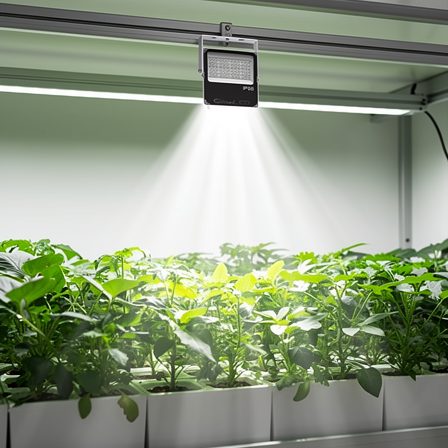
Greenhouse Lighting: A Guide to Horticultural LED Grow Lights
Horticultural lighting is now essential for healthy plant growth in a greenhouse. When natural sunlight is insufficient or uneven, a good-quality horticultural LED grow light becomes indispensable. This guide will help you choose the right bulb, calculate light requirements in lux and optimise lighting cycles for energy savings and effective photosynthesis.
Full-spectrum horticultural LED grow light for a greenhouse
The SpectraBULB X30 LED bulb provides a full spectrum suited to every stage of plant development: germination, seedlings, growth and flowering. Its balanced white light, enhanced with red light, provides even brightness and a spectrum that supports efficient photosynthesis. Compatible with E27 sockets and rated for an estimated 35,000 hours of use, this grow light spreads light over a 60° beam while limiting heat output.
Discover the ideal light for your indoor greenhouse
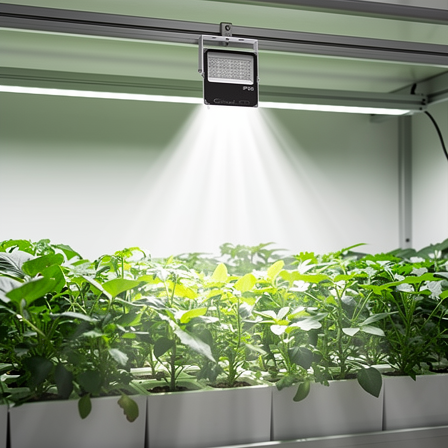
How a full spectrum supports plant growth
A full spectrum closely reproduces sunlight in the 400–700 nm range, which is crucial for photosynthesis. It combines three colour temperatures: cool white (6500 K) for dense foliage, neutral white (4500 K) for steady growth, and warm white (3000 K) to encourage flowering. One horticultural LED grow light can therefore cover the plants’ full life cycle.
- Optimal spectral balance : a mix of 30% blue and 70% red light creates a spectrum suited to chlorophyll.
- Moderate UV and IR : controlled levels can strengthen pigments, improve resilience and encourage flowering.
- Photon efficacy : a high output of 2.5–3.5 µmol·J⁻¹ helps reduce electricity use.
This horticultural LED is suitable for both decorative plants and more demanding species. Its consistent light helps compensate for shaded areas in a greenhouse and supports regular photosynthesis throughout the year.
Horticultural LED vs traditional HPS lights
Modern horticultural LED grow lights use up to 70% less energy than conventional HPS lighting for comparable light output. Their integrated full spectrum eliminates the need to switch bulbs (MH/HPS) between growth stages, while their low heat output allows them to be positioned closer to plants without scorching them.
With a lifespan of around 50,000 hours (more than six years at 12 hours a day), LEDs last far longer than HPS bulbs, which typically last 18 months. Their light output also remains stable over time, unlike sodium systems, whose efficiency declines with use.
How to tell if your houseplants are getting enough light
Horticultural LED grow lights provide a light spectrum similar to sunlight, which is essential for photosynthesis, flowering and the development of greenhouse-grown houseplants. This artificial lighting provides consistent and cost-effective brightness , and is easy to install and adjust to suit each species’ light requirements . It compensates for a lack of natural light and promotes healthy growth. Optimise the lighting in your indoor greenhouse
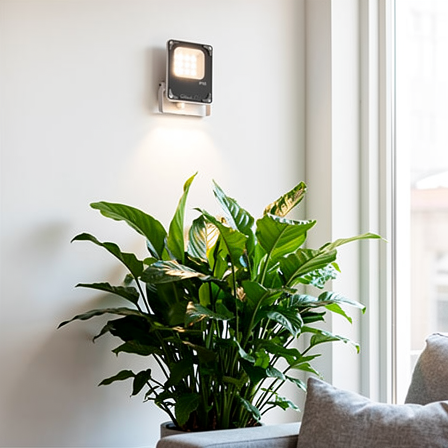
Signs of insufficient or excessive light in seedlings
Daily observation helps you determine whether your photosynthesis conditions are right. Small, yellowing leaves, slow growth, weak stems or a lack of flowers can indicate that light intensity or lighting duration needs adjusting promptly to prevent lasting damage.
- Yellowing and fading : pale leaves indicate insufficient chlorophyll production due to a lack of light. This is especially noticeable in young seedlings , which need 100–200 µmol·m⁻²·s⁻¹ or 5,000–10,000 lux.
- Leggy, weak growth : unusually long, thin stems show that a plant is stretching towards the light, weakening its structure.
- Leaf scorch and distortion : spotted or bleached leaves indicate too much light. Reduce exposure or move the light further away.
- Flowering problems : a lack of buds may indicate insufficient light or an unsuitable light spectrum for triggering flowering.
Use a PAR meter to measure PPFD at plant level and check that plants receive enough light: seedlings need 100–200 µmol·m⁻²·s⁻¹ at 30–45 cm, vegetative growth needs 300–500 µmol·m⁻²·s⁻¹ at 20–30 cm, and flowering may require up to 600 µmol·m⁻²·s⁻¹ for maximum production.
Recommended light levels for each growth stage
Each growth stage needs a specific light intensity to support photosynthesis. Green-wall plants without natural light can benefit from SpectraLine 10–40 W IP65 LED bars, which provide even coverage across up to 2 m² without excessive shadows.
Choose the right bulb : a 5/7 W GU10 suits a bonsai or small ficus placed 10–20 cm away; a 20 W E27 is ideal for orchids or cacti at 20–60 cm; and a long-range 30 W bulb can light tomatoes or peppers up to 100 cm away, depending on foliage density.
| Growth stage | Light level (µmol·m⁻²·s⁻¹) | Recommended power | Ideal distance | Daily lighting duration |
| Germination and seedlings | 100–200 | 30–50 W/m² | 30–45 cm | 16–18 hours |
| Vegetative growth | 300–500 | 50–70 W/m² | 20–30 cm | 16–18 hours |
| Flowering and fruiting | 500–600 | 70–100 W/m² | 20–30 cm | 12 hours |
Lighting solutions for green walls without natural light
Areas without natural light need effective artificial lighting . Our 60–120 W XModule units, with IP65 protection, provide even coverage across large green walls without harmful dark spots.
SpectraLine LED bars are easy to fit to X-WALL brackets or ceiling rails. You can adjust their height and direction to suit each stage: germination, growth or flowering.
How long can greenhouse plants go without light?
This 24-hour mechanical timer with 15-minute intervals gives you precise control over horticultural lighting in your greenhouse. Compatible with all horticultural LED grow lights, it supports loads up to 3,680 W (16 A) and adjusts the lighting duration in 15-minute increments. This helps optimise plant growth while limiting energy use. Optimise your greenhouse lighting today
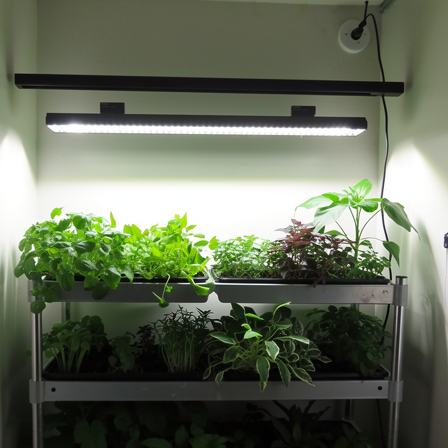
Ideal light cycles for growth and flowering
Daily lighting duration plays an important role in photosynthesis . A 16-hour light period followed by 8 hours of darkness works well for healthy growth. During flowering, a 12-hour light / 12-hour dark cycle mimics autumn conditions. Knowing how long greenhouse plants can go without light helps you optimise every stage for the best results.
- Successful seed starting : a cycle of 6 hours of light and 2 hours of darkness supports germination while maintaining regular metabolic activity.
- Encouraging growth : an 18-hour light / 6-hour dark cycle maximises photosynthesis for healthy root and leaf development.
- Controlled flowering : switching to a 12-hour light / 12-hour dark cycle encourages even flowering and makes harvesting easier.
- Respecting the natural rhythm : six hours of complete darkness allow plants to respire and redistribute their energy reserves.
Our 24-hour mechanical timer is simple and reliable to use, with no Wi-Fi connection or app required. Its robust mechanism maintains a stable photoperiod and helps prevent leggy growth or delayed flowering.
Mechanical timer for automating T8 spectrum lighting
Automating horticultural lighting in your greenhouse is a major advantage, whether you use T8 tubes or LED grow lights. This timer can control several light sources (up to 600 W per panel) via a standard power strip, providing even lighting across your growing area.
Set the timer manually using its dial. The reliable mechanical design keeps working after a power cut. Unlike electronic models, it requires no updates and retains its settings.
Saving energy with LED grow lights and an automatic timer
Careful control of lighting periods can reduce energy use by 20–30% and extend the life of your horticultural LEDs. For example, in a 4 m² greenhouse with two 300 W panels, a timer can cut annual consumption by around 730 kWh compared with continuous lighting.
By synchronising your timer with ventilation and irrigation systems, you can save even more energy and protect your equipment. The investment in a timer is generally recovered in under 18 months, while giving you more time to monitor your plants.
Frequently asked questions
What wattage of LED grow light should I choose for my indoor greenhouse?
The wattage you need depends mainly on the growing area and the type of plants. For 0.5 m² during vegetative growth, a 30–50 W light (around 150–200 µmol m⁻² s⁻¹) is usually sufficient. If you are growing over 1 m² during flowering, choose a more powerful 70–100 W horticultural LED, such as the SpectraBULB X30 or a SpectraLine bar (2.5–3.5 µmol J⁻¹), to optimise photosynthesis.
How far should I place horticultural LED grow lights from plants?
The distance between your LED grow lights and the plants depends on light intensity and their stage of growth. Keep lights 30–45 cm away from seedlings to avoid light stress. During growth, reduce the distance to 20–30 cm. During flowering, place a 30 W bulb 20–30 cm away, while a 7 W GU10 spotlight (60° beam angle) can be positioned just 10–20 cm away for optimal lighting that supports photosynthesis.
How many hours of light do my plants need each day?
Daily light requirements vary by growth stage. During growth, 16–18 hours of light help plants develop substantial biomass. During flowering, reduce lighting to 12 hours to encourage bud formation. For germination, alternate six hours of light with two hours of darkness. Use a timer in your greenhouse to automate these cycles and prevent young shoots from becoming leggy.
Related posts
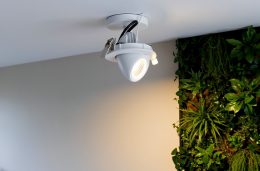 Discreet Green Wall Lighting: LED Design Guide
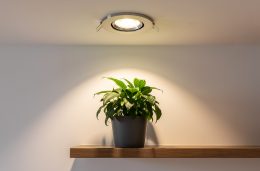 Recessed Directional Grow Spot: A Guide for Plants and Green Walls
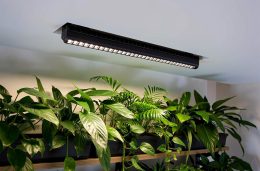 Recessed LED Grow Bars for Green Walls: 2026 Comparison Guide