
Do Climbing Plants Damage Walls? Which Species to Avoid
Are you wondering whether climbing plants damage walls ? This article gives you a clear answer. We will identify species that pose a real risk to your façade and introduce plants that enhance it safely. You will also find practical advice on installing plants in a way that protects your structure over the long term.
Which climbing plants really damage walls?
Some climbing plants do have very aggressive natural attachment systems. Over time, they can damage walls. It is important to understand the risks before choosing what to plant. In many cases, damage is caused by pads, suckers or roots that work their way into the smallest cracks.
Attachment systems that damage façades
A plant’s potential to cause damage mainly depends on its attachment system. Suckers and holdfasts grip the surface very tightly and can lift render, mortar or plaster. The constant pressure gradually widens existing cracks in the walls of a house.
- Holdfasts and suckers : cling to rough surfaces and leave stubborn marks that are almost impossible to remove without damaging the finish.
- Aerial roots : grow into mortar joints and gradually push them apart, weakening the structure year after year.
- Mechanical pressure : the weight of stems, especially if left unpruned, can pull on or deform fragile façades.
By contrast, plants with soft tendrils need an external support to climb around. They therefore do not pull directly on the wall. This key difference explains why some varieties are harmless while others can pose a real threat to your home.
Virginia creeper and ivy: why they can be dangerous
The risk of Virginia creeper damaging a wall is well known: it develops aggressive suckers that can strip render in no time. A Virginia creeper growing on a rendered wall can lift large areas of the finish in just two years, causing rapid and significant damage.
Common ivy is one of the most troublesome invasive climbers for walls. Its roots penetrate deep into mortar, widen gaps and can eventually loosen joints. If you try to remove it, stubborn residue remains stuck to the finish, making repairs much more difficult.
Factors that make wall damage worse
The condition of the wall is a major factor in the risk of damage. A substrate in poor condition, with peeling render or crumbling joints, deteriorates much faster under the growth of plants. Climbing plants can make matters worse by applying mechanical pressure and trapping moisture.
This moisture stays trapped under dense foliage, preventing natural evaporation and encouraging mould. It directly affects plaster and mortar, accelerating deterioration of the structure. In addition, holdfasts can pull away protective coatings, whether painted or synthetic, seriously compromising the wall’s water resistance.
The Wisteria looks spectacular, but its strong, woody stems exert considerable force and can deform a fragile façade. The trumpet vine uses holdfasts to anchor itself firmly, as can fruiting vines . Finally, the climbing hydrangea combines vigorous growth with strong adhesion, and trapped moisture can cause wooden window frames to rot.
Safe climbing plants that protect your walls
You can add greenery to your home without damaging the façade. Choose non-invasive climbing plants such as Muehlenbeckia or certain grasses, which need only a simple support and do not develop aggressive roots that could damage the wall. Their growth remains manageable, giving you long-lasting decoration without drilling into the structure. For more on outdoor planting, read our complete guide to outdoor green-wall plants.
Muehlenbeckia, philodendron and hoya: safe choices
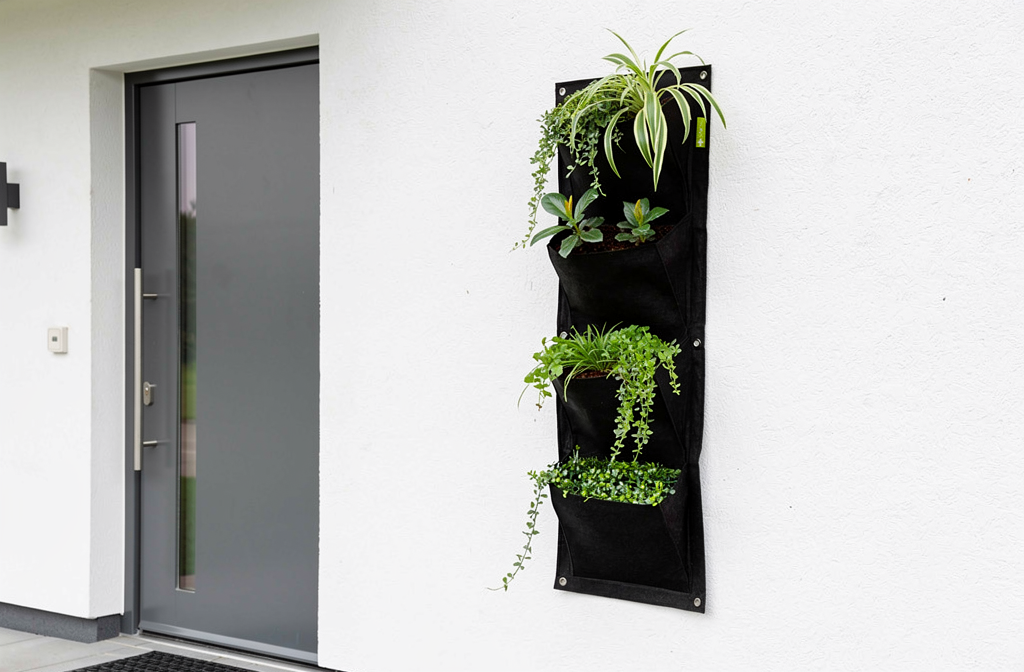
Muehlenbeckia complexa forms a light, cascading display and does not try to penetrate walls. Unlike poorly managed Virginia creeper, it has no aggressive attachment system that could damage masonry. It grows in its own substrate without harming the wall, avoiding the problems sometimes caused by common ivy.
Philodendron climbs a separate trellis that protects the façade. Hoya also keeps its roots near the surface and poses no risk to the finish. These climbing plants produce abundant foliage without threatening the strength of the building.
| Species | Root type | Depth | Risk to the wall |
| Muehlenbeckia | Shallow aerial | 2–3 cm | None |
| Philodendron | Aerial | 0–2 cm | None |
| Hoya | Shallow fibrous | 1–2 cm | None |
| Stipa | Compact fibrous | 3–5 cm | Minimal |
| Carex | Short rhizome | 2–4 cm | None |
Grasses and tendril-bearing plants for green walls
Grasses such as Stipa and Carex add movement without compromising the wall structure. These non-invasive climbing plants are well suited to covering a wall safely. Their compact root systems stay in the space provided and do not spread into building materials.
Other species, including climbing roses, clematis and jasmine, use soft tendrils to grow. These vines gently wind around a stake or an external support set a short distance from the wall, protecting its structure even after years of vigorous growth.
How their roots protect your façade
The main advantage of these plants is that they cannot penetrate masonry. Their roots stay at the surface, helping prevent moisture from building up against the wall and allowing good airflow between the plants and the structure.
- Aerial roots : attach only to the trellis without touching the wall, allowing moisture to evaporate naturally.
- Compact root systems : remain in the substrate and do not put pressure on masonry joints.
- No holdfasts : the plant does not attach directly to the wall, which makes maintenance much easier.
A wall with render and honeysuckle growing on a support can stay intact for years, despite exposure to the weather. This shows that it is possible to add plants without putting your home at risk.
How to grow climbing plants without damaging a wall
A well-planned installation is essential to keep climbing plants and your façade working together safely. Careful installation and regular maintenance can almost eliminate the risk of long-term damage. Correct spacing, a suitable support and regular pruning are the three key ways to protect the wall.
Choosing and fitting the right support at a distance
Install a sturdy support, such as a trellis or galvanised wire, 10–15 cm away from the wall. This gap is essential: it allows air to circulate and prevents moisture from entering the wall. It also directs the climbing plants to attach only to the support, keeping them away from the façade.
- Perforated metal trellis : a durable support that provides excellent ventilation and plenty of strong anchor points for plants.
- Taut galvanised wires : a lightweight option for tendril-bearing plants that minimises the load on the structure.
- Rigid PVC supports : durable and easy to clean, they do not retain moisture and suit some climates particularly well.
Check the fixings regularly to make sure they can support the weight of the plants. If the support fails, ivy or Virginia creeper may attach directly to the wall, undoing your protection efforts. Replace rusty fittings promptly to maintain a safe installation.
Regular pruning and maintenance to protect the façade
Pruning is your main way to stop plants damaging the wall over time. Removing 30–40% of the growth in spring limits the load on the support. This simple step also significantly reduces moisture build-up behind the foliage.
A drip irrigation system helps avoid waterlogged soil and prevents water from seeping into the wall. Clean your gutters too, so water cannot collect and create overly damp microclimates. An annual inspection can help you spot cracks or damage early.
Adapting the installation to the type of wall
On a rendered wall, avoid ivy, Virginia creeper and climbing hydrangea. Choose lightweight tendril-bearing plants and grow them on a support set at a safe distance. Render is fragile and can easily be lifted by holdfasts, causing significant damage.
On wooden walls, avoid direct contact with plants to prevent the wood from rotting. Guide plants only onto a freestanding trellis or pergola set away from the structure. Wood can deteriorate quickly in the damp conditions created by some plants.
On vinyl façades, use tensioned wires to keep plants 15–20 cm from the cladding. Stone walls can better tolerate honeysuckle, provided the support is properly secured to prevent cracks. To protect painted walls, leave enough clearance to avoid moisture damage and holdfasts.
Frequently asked questions
Which climbing plants can damage a wall?
The main climbing plants to avoid are Virginia creeper, ivy, climbing hydrangea, wisteria and trumpet vine. These plants develop holdfasts or aggressive suckers that work their way into small cracks and can lift render and damage plaster. Virginia creeper, for example, can remove large areas of finish in a very short time.
As for ivy, its roots grow directly into masonry and widen existing gaps. If left unchecked, these climbers can damage the structure of your wall. Take care with this kind of ornamental vine or other particularly invasive plant.
Does wisteria damage walls?
Yes, it can. Wisteria poses a serious risk to your home. Its exceptionally strong stems exert enough mechanical pressure to deform a façade or lift masonry. Without an extremely sturdy support and regular checks, it can eventually cause considerable damage.
Wisteria quickly forms a heavy, dense mass that can weaken old brickwork. To stop it from damaging your wall, it needs frequent, careful pruning.
How can I grow a plant up a wall without damaging it?
The best solution is to install a wooden or metal trellis about 15 cm from the wall. Choose non-invasive climbing plants, such as some philodendrons, or plants with soft tendrils such as honeysuckle or climbing roses. They attach to the support without damaging the building materials.
Regular maintenance is also essential, including pruning to limit the weight of the plants. By training the climbers along a wall support and checking it each year, you can avoid any risk of damaging the façade.
Related posts
 Discreet Green Wall Lighting: LED Design Guide
 Recessed Directional Grow Spot: A Guide for Plants and Green Walls
 Recessed LED Grow Bars for Green Walls: 2026 Comparison Guide