
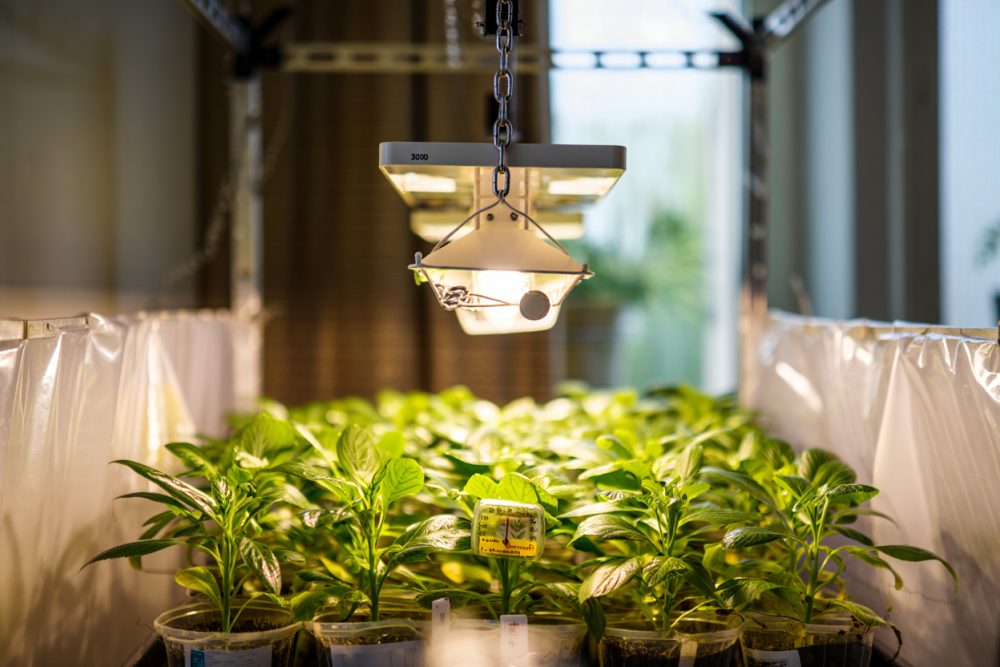
300 W CFL Lamp Distance: A Guide for Your Plants
This article gives you precise guidance on the ideal distance between a 300 W CFL lamp and your indoor plants to prevent leaf scorch. Learn how to adjust the distance for each stage of growth and manage heat in your growing space. The aim is to maximise yields while taking the technical features of your CFL bulb into account.
Ideal distance for your 300 W CFL bulb
Correctly positioning a 300 W CFL bulb is essential for successful indoor growing. The distance from the CFL lamp should be based on the actual power of your equipment, not the nominal rating printed on the packaging. These two figures often differ technically.
Understanding your lamp’s actual power
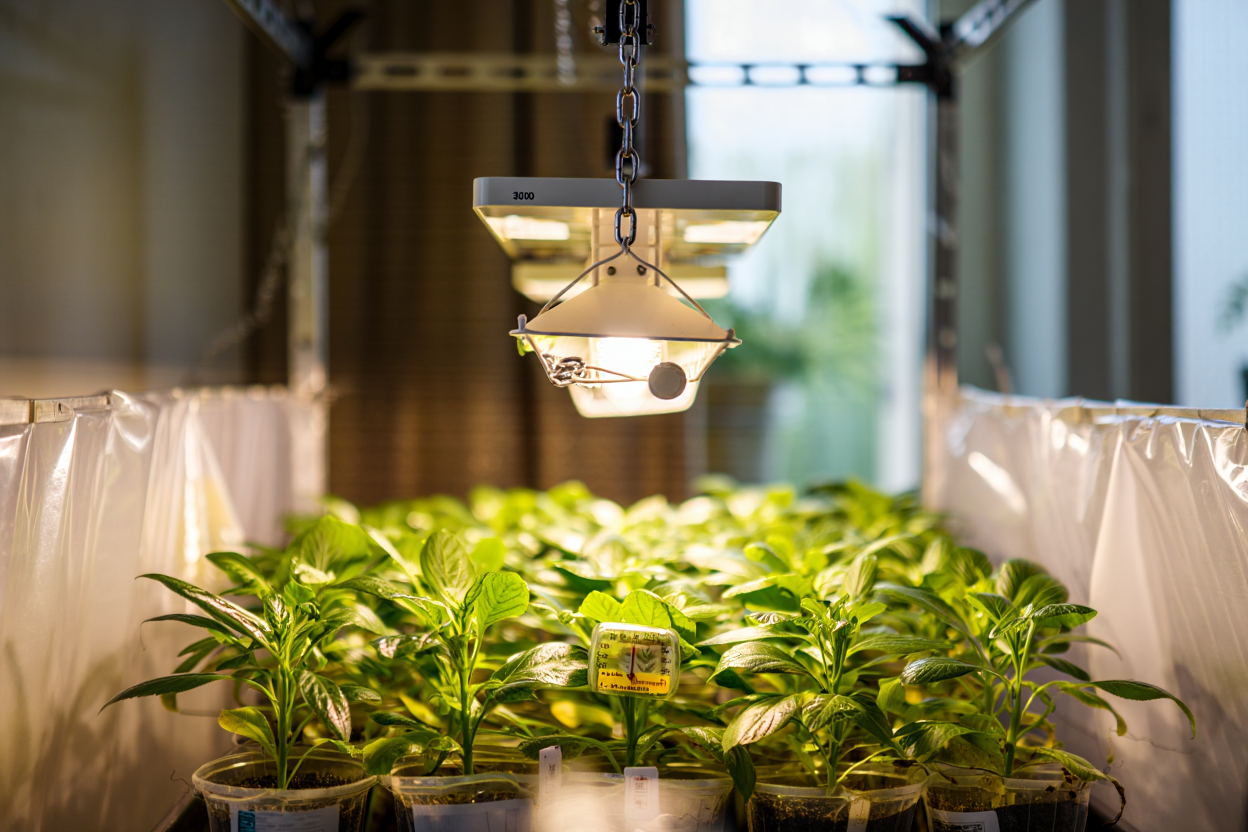
A CFL lamp labelled 300 W typically consumes just 30–40 W of electricity, which directly affects the recommended distance. The 300 W nominal rating is mainly a comparison with the light output of a traditional incandescent bulb. This fundamental difference can make online advice seem contradictory.
- Light equivalence : the stated 300 W means the lamp produces light comparable to an incandescent bulb of that rating, which can make it seem very bright.
- Heat dissipation : a 300 W CFL lamp still releases 100–130 W of heat, making proper ventilation essential for plant protection.
- Spectrum and performance : models that favour red light tend to produce more heat than those with a balanced white spectrum.
This low power consumption makes fluorescent lamps energy-efficient, but means the CFL lamp needs to be placed closer to plants than other technologies. CFL grow lights remain a practical choice for anyone seeking good energy efficiency and effective temperature control in a small growing space.
Understanding the difference between nominal and actual power helps you optimise your horticultural setup. Your plant receives light similar to that of a 300 W bulb, but uses only a fraction of the energy. The heat produced is also much easier to manage day to day.
Distance ranges for different light levels
For safe use of your 300 W CFL bulb, aim for 25–35 cm above the canopy. This is a good compromise between sufficient light intensity and a manageable temperature. It suits most indoor plants without requiring constant adjustment.
Some recommendations suggest placing the lamp less than 10 cm or more than 45 cm away. Such distances require careful validation and close monitoring of plant health. They depend too much on variable factors such as ventilation quality and the sensitivity of the species.
Factors that affect lamp positioning
Several important factors can change the ideal distance for a CFL grow light. Ignoring them can lead to scorched leaves or excessively stretched stems. You can avoid these problems by checking each part of your growing environment.
- Ambient temperature : if the room is above 25°C, move the lamp 10–15 cm farther away to reduce heat stress.
- Light spectrum : red light produces more heat than a white spectrum, so a slightly greater distance is preferable.
- Coverage area : raise the lamp to cover a larger area and maintain an even light distribution.
- Reflectors : a good reflector improves light efficiency, allowing you to move the source farther away without a noticeable loss of intensity.
These four factors interact and need to be kept in balance. Excellent ventilation and a cool room allow the CFL lamp to be placed much closer to plants. Conversely, a warm or poorly ventilated space means moving the lamp away immediately to prevent long-term damage.
Adjusting the distance for each plant stage
plant development involves several stages, each with different requirements for light intensity and sensitivity to heat . Positioning the light source correctly at every stage is essential for healthy growth and maximum yields in your indoor grow.
Germination and seedling stage
During germination and the seedling stage, young shoots are very delicate. A suitable distance for each stage is generally 30–45 cm above the soil to protect them from excessive light intensity .
This is a crucial period requiring care, because the first leaves are highly sensitive to extreme conditions. A lamp placed too close can cause serious or even irreversible stress, affecting plant development over the long term.
Start by placing your CFL lamp around 45 cm away, then observe how the young plants respond over the next few days. If they remain vigorous, gradually reduce the distance to provide the right light without causing harm.
Vegetative growth and foliage development
During the growth stage, the plant strengthens its stems and develops foliage, requiring more light. A distance of 25–30 cm is often recommended to support vigorous plant development .
With precise heat management , some experienced growers move the lamp to within 12–14 cm. This intensive approach encourages dense growth but requires excellent ventilation to remove excess heat.
Flowering and bud maturation
During the flowering stage, a distance of 20–35 cm is a good balance, depending on the temperature in your grow space. Moving the lamp to around 20 cm can help produce denser buds, provided heat is carefully controlled.
Towards the end of the cycle, raise the lamp to 30–35 cm to prevent the flowers from overheating. This protects delicate structures and preserves harvest quality throughout growth and flowering.
Always adjust the height gradually to give the plant tissues time to acclimatise. Even a change that seems right in theory can cause unnecessary stress if made suddenly.
Heat management for grow lights
Beginners often overlook heat management, even though it is crucial. A 300 W CFL lamp generates significant heat that can quickly build up in a growing space without an extraction system. Stagnant heat can soon create harmful conditions for plants.
Ventilation needed for a 300 W CFL
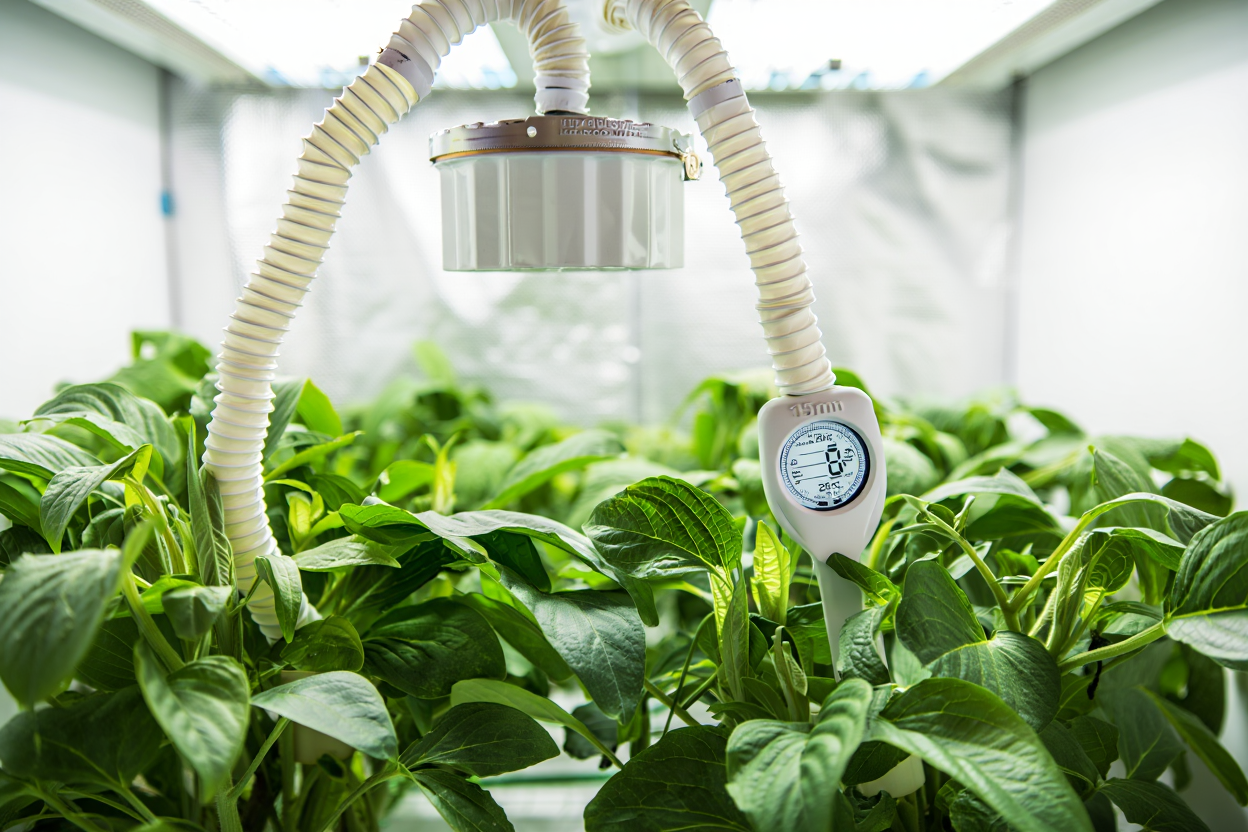
Active ventilation is strongly recommended to manage heat, because a 300 W CFL lamp releases around 100–130 W as heat. In a typical small space, an airflow rate of around 300 m³/h is generally enough to stabilise the temperature and provide acceptable growing conditions.
- Suitable extractor fan : a 125 mm model (360 m³/h) can maintain a temperature of around 27°C at a distance of 15 cm, provided it is set up correctly with optimised ducting.
- Internal air circulation : an oscillating fan complements extraction by moving air and eliminating hot spots around the leaves.
- Fresh air intake : make sure enough fresh air can enter. Otherwise extraction becomes less effective and humidity can rise to dangerous levels.
- Reflector setup : tilting the reflector slightly helps hot air escape naturally instead of building up above it.
Although installing ventilation requires an initial investment, it significantly improves plant health. With active ventilation keeping the temperature below 27°C, you can place the lamp closer—12–20 cm away—without worrying about leaf scorch.
Ideal temperature at canopy level
The main goal when growing under CFL lighting is simple: keep the canopy temperature below 28°C. Ideally, aim for 24–27°C to optimise plant metabolism. These conditions allow photosynthesis without chronic heat stress.
Ventilation for grow lights is a top priority, just like choosing the light itself. If the temperature around the leaves rises above 30°C, move the light away or increase airflow immediately. For good balance, the temperature difference between the ambient air and the area under the reflector should not exceed 5°C.
Improving performance with reflectors and airflow
Reflectors can significantly improve your setup’s light efficiency, allowing you to position the lamp slightly higher without losing intensity. A good reflector can redirect up to 95% of otherwise lost light towards your plant, increasing yield without using more electricity.
Air movement from ventilation also supports leaf transpiration and strengthens plant tissue. Plants exposed to a gentle breeze develop stronger stems and denser foliage than those in stagnant air, improving the resilience and appearance of your indoor crop.
%products%
Measuring and controlling light levels for your plants
Knowing exactly how much light intensity your plant receives lets you adjust the distance safely, based on measurements rather than guesswork. Using light readings makes growing more reliable and helps deliver consistent results.
Using a lux meter to adjust the distance
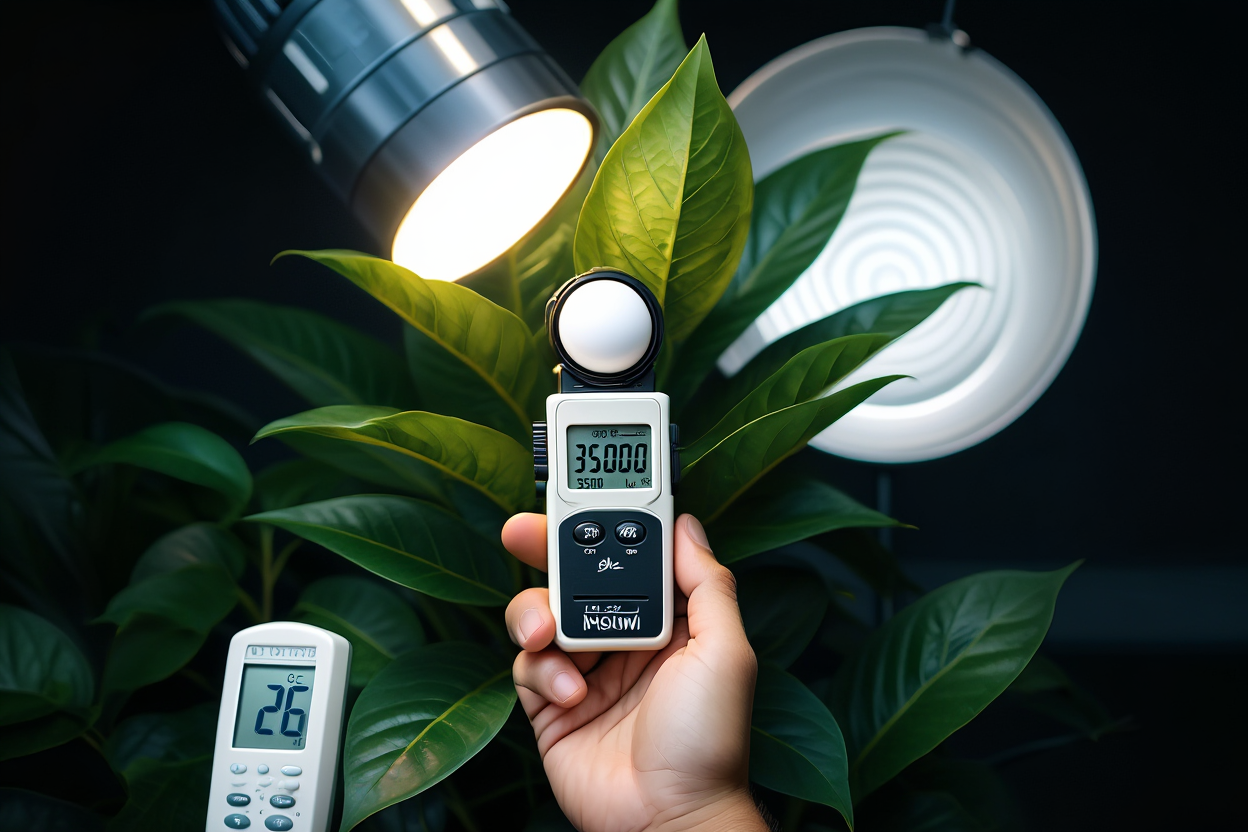
A lux meter provides useful precision when assessing the light reaching the canopy. It helps you adjust the distance from the lamp based on objective readings. For example, during vegetative growth under a 300 W CFL lamp , aim for 30,000–45,000 lux at plant level.
- Vegetative stage : aim for 30,000–45,000 lux to encourage dense foliage and strong stems.
- Flowering stage : increase light intensity to 50,000–70,000 lux to support flower development.
- Seedlings and young plants: start gently at 10,000–20,000 lux, then increase gradually as they grow.
Take weekly readings to maintain these targets as the plant grows closer to the light source. Keeping a record helps you understand how your plants respond to different light levels.
| Growing stage | Recommended lux range | Approximate distance (cm) |
| Germination | 10,000–20,000 | 30–45 |
| Vegetative growth | 30,000–45,000 | 25–30 |
| Flowering stage | 50,000–70,000 | 20–35 |
| Maturation | 40,000–55,000 | 30–35 |
Benefits of a PAR meter for grow lights
A PAR meter is often more suitable than a lux meter for grow lights because it measures the light available for photosynthesis specifically. Unlike a lux meter, which detects all visible light, this instrument focuses on the spectrum absorbed by chlorophyll.
During vegetative growth, the recommended target is generally 300–600 µmol·m⁻²·s⁻¹, depending on canopy density. For an indoor plant under a CFL lamp, around 10,000 lux is a reasonable initial target for germination.
Simple checks without specialist equipment
If you do not have a meter, the hand test is a useful way to detect too much heat. Hold your hand at canopy height for around 30 seconds to assess how warm it feels.
If the heat becomes uncomfortable, move the CFL lamp a few centimetres farther away to avoid damaging the foliage. Although it is an empirical test, it can help prevent scorching, especially during flowering or the seedling stage.
Recognising and correcting lighting problems
Plants constantly communicate their health through visible signs. Learning to read these symptoms is essential for correcting lighting problems before they affect your growing cycle.
Visible signs that the distance is wrong
Scorched leaf tips or pronounced yellowing are clear signs of light stress caused by a CFL lamp that is too close or excessive heat . Respond quickly: move the light source 2–5 cm farther away and check the ambient temperature.
By contrast, legginess suggests that your lamp is too high or that light intensity is too low for your plant. Stems become abnormally long and leaves stay small; if this happens, gradually move the CFL lamp closer.
- Bud discolouration : unusual colour during flowering indicates localised light stress. Raise the lamp and check airflow.
- Deformed leaves : curled or crumpled leaves generally indicate chronic heat stress, requiring better ventilation and a greater distance from the lamp.
- Slow growth with dark foliage : this combination often indicates insufficient light intensity , usually because the lamp is more than 35 cm away.
Taking regular photos of your plants helps you spot subtle deterioration before it gets worse. This visual record is a useful reference for making practical adjustments in future growing cycles.
A gradual method for adjusting the lamp
Make adjustments in stages, starting from a safe position suited to the plant’s development. Observe its response for a few days, then reduce the distance from the lamp in 5 cm increments until you reach the ideal height.
Record each change, including the date, plant size, lamp distance and measured temperature. This personal log is more useful than generic advice because it reflects your actual environment and equipment.
Accessories to optimise your setup
The right equipment makes a real difference: it improves adjustment accuracy and makes it easier to maintain ideal conditions throughout the growing cycle.
- Adjustable supports : chains or pulleys let you change the height easily without taking everything apart.
- Reflective surfaces : a high-quality matte white finish improves light distribution and reduces shadows.
- Measurement instruments : a lux meter objectively checks your lamp distance instead of relying on rough estimates.
- Specialist thermometer : a thermo-hygrometer at foliage level gives you reliable data for climate control.
Turn your pots regularly to distribute light evenly under the CFL lamp and prevent uneven growth. Also follow suitable lighting cycles to prevent overheating and limit cumulative signs of light stress .
Frequently asked questions
What is the closest I can place a 300 W CFL lamp without burning my plants?
The ideal distance mainly depends on heat management in your space. If ventilation is effective and keeps the temperature below 27°C, you can position your CFL lamp around 15 cm from the plant.
Without an effective cooling system, however, it is safer to keep a distance of 25–35 cm. Always start farther away and move the lamp closer gradually, while checking the temperature at foliage level.
How should I adjust the distance if my plants show stress despite the lamp seeming correctly positioned?
If your plants show warning signs such as leaf scorch or slow growth, check conditions carefully. First measure the temperature at canopy height and, if possible, check the light intensity too.
These readings will help you decide whether to adjust the distance to reduce heat or improve light exposure. Record what you observe so you can identify the cause of the stress before making changes.
Should I adjust the distance of my 300 W CFL lamp throughout the growing cycle or only at certain stages?
It is recommended that you raise your CFL lamp almost every week, as plants grow quickly. As the plant gets taller, it moves closer to the light source and receives more heat.
Pay particular attention during sensitive transitions, such as moving from germination to vegetative growth or the start of flowering. These stages require changes to light intensity to meet the needs of each part of the growing cycle.
Related posts
 Discreet Green Wall Lighting: LED Design Guide
 Recessed Directional Grow Spot: A Guide for Plants and Green Walls
 Recessed LED Grow Bars for Green Walls: 2026 Comparison Guide