
Natural Outdoor Green Walls: Benefits and Complete Guide
This article explores the natural outdoor green wall from every angle, from its thermal benefits to the installation. Find out how a planted façade becomes a self-sustaining ecosystem that reduces energy costs, improves quality of life and gives every building a lasting visual appeal.
Why install a natural outdoor green wall?
More than just a decorative feature, an outdoor green wall is a structure that offers tangible benefits. Each plant, combined with a growing medium suited to it, contributes to indoor comfort and the long-term sustainability of the outdoors, while adding a lasting touch of greenery.
Thermal insulation and energy savings
Dense foliage and the growing medium form an natural : they block heat in summer and retain warmth in winter. This natural barrier reduces heating and cooling needs, providing long-term thermal benefits and lower energy bills.
- Lower energy bills : a primary school in Lyon recorded a 30% reduction in heating consumption thanks to this vertical greening technique.
- Natural humidity regulation : the structure absorbs excess moisture and releases it gradually, maintaining a balanced microclimate.
- Greater thermal stability : temperature fluctuations are better absorbed, extending the life of façade materials.
- Contribution to wellbeing : a temperature-regulated environment supports concentration, reduces fatigue and improves sleep quality.
The combination of foliage and the growing medium can also reduce noise by 5 to 10 dB, a significant advantage in often noisy, densely populated urban areas.
Air purification and stronger urban biodiversity
Beyond its thermal benefits, the planted façade acts as a natural filter: leaves capture fine particles and pollutant gases, while roots store or break them down. This process significantly improves air quality around the building.
Biodiversity flourishes around a green wall. Flowers and foliage attract butterflies, bees and other beneficial insects, while its vertical structure provides a valuable ecological corridor that strengthens local ecosystems and encourages pollination.
Visual enhancement and occupant wellbeing
A planted façade can dramatically change the appearance of an building ordinary building, turning it into a striking landmark with its shades of green and changing seasonal blooms. This natural appearance can increase property value by around 5%, according to the GreenFacade study conducted in Bordeaux.
A daily view of greenery can help reduce stress, calm the mind and reconnect residents with nature. This psychological benefit, combined with the other advantages, makes the case for installation an outdoor green wall in urban or residential projects.
Which plants should you choose for your outdoor green wall?
The success of a living green wall depends mainly on choosing suitable plants. Each green-wall plant should be selected according to the local climate, available light and the appearance you want, to ensure greenery that lasts. This first step is crucial: it determines the vigour, density, structure and appearance of this natural outdoor plant display.
Choose plants according to sun exposure and climate
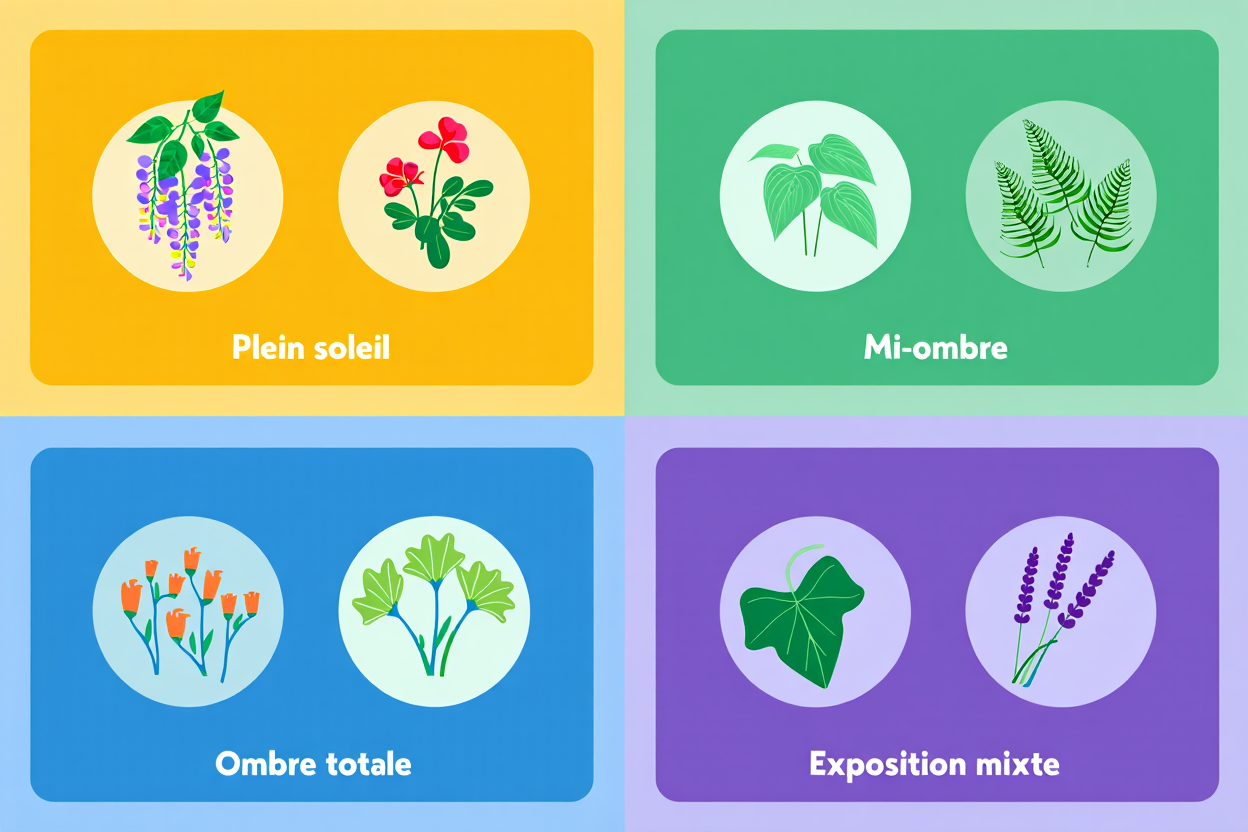
A green-wall plant will thrive only if its light requirements suit the wall's aspect. Light intensity affects growth, foliage colour and flowering, all of which are essential to the overall appearance.
Full-sun locations with at least six hours of direct sunlight are ideal for wisteria, clematis, perennial geranium and lavender— plants that tolerate heat and need less watering. Partial shade, with three to six hours of sunlight, suits ferns, hostas, begonias and philodendrons, which retain greenery without risk of scorching. Fully shaded areas, receiving less than three hours of light, favour saxifrages and Boston fern, species naturally adapted to shade.
| Exposure | Sunlight duration | Recommended species | Drought resistance |
| Full sun | 6+ hours daily | Wisteria, clematis, geranium, lavender, sedum | Excellent |
| Partial shade | 3–6 hours daily | Ferns, hostas, begonia, ivy, holly (Ilex aquifolium) | Good |
| Full shade | Under 3 hours | Saxifrages, Boston fern, philodendron, greater celandine | Moderate |
Regional climate also brings constraints: in frost-prone areas, choose hardy perennials that retain their structure through winter; in Mediterranean climates, favour succulents and herbaceous plants that need little watering; in temperate oceanic regions, ambient humidity allows for a wider choice of plants and a more lush outdoor display.
Hardy species that look good all year
To maintain an attractive appearance throughout the year, plants used in a living green wall should remain attractive in every season. A balance of evergreen foliage and seasonal flowers provides greenery throughout the year while keeping the display dynamic.
- Evergreen foliage : ivy (Hedera helix) quickly covers shaded modules; holly (Ilex aquifolium) adds glossy leaves and red berries; Boston fern brings delicate texture and rich green colour.
- Herbaceous plants and grasses : blue fescue and other light grasses add movement and volume, adapting to different aspects with minimal maintenance.
- Seasonal flowers : perennial geranium from May, petunias and begonias in summer, then Salvia splendens in autumn create a continuous succession of colour.
- Succulents : sedums and other succulents withstand significant drought, making them ideal for an outdoor green wall with little irrigation and a distinctive natural appearance.
Combining textures enhances the appearance: pairing fine grass foliage with broad philodendron or hosta leaves adds visual depth. Allow 25 to 100 plants per square metre, planted in removable modules six to nine centimetres deep, to make it easier to replace weaker plants without compromising the overall structure of the outdoor green wall.
%products%
How to install and maintain an outdoor green wall
A successful living green walloutside depends on several key technical factors: a sturdy structure, a installation, suitable growing medium and a precisehydroponic irrigation system. This technical foundation ensures the system's durability and the health of the plants. Follow these principles to create a resilient, natural and beautiful vertical garden.
Load-bearing structure and durable material choices
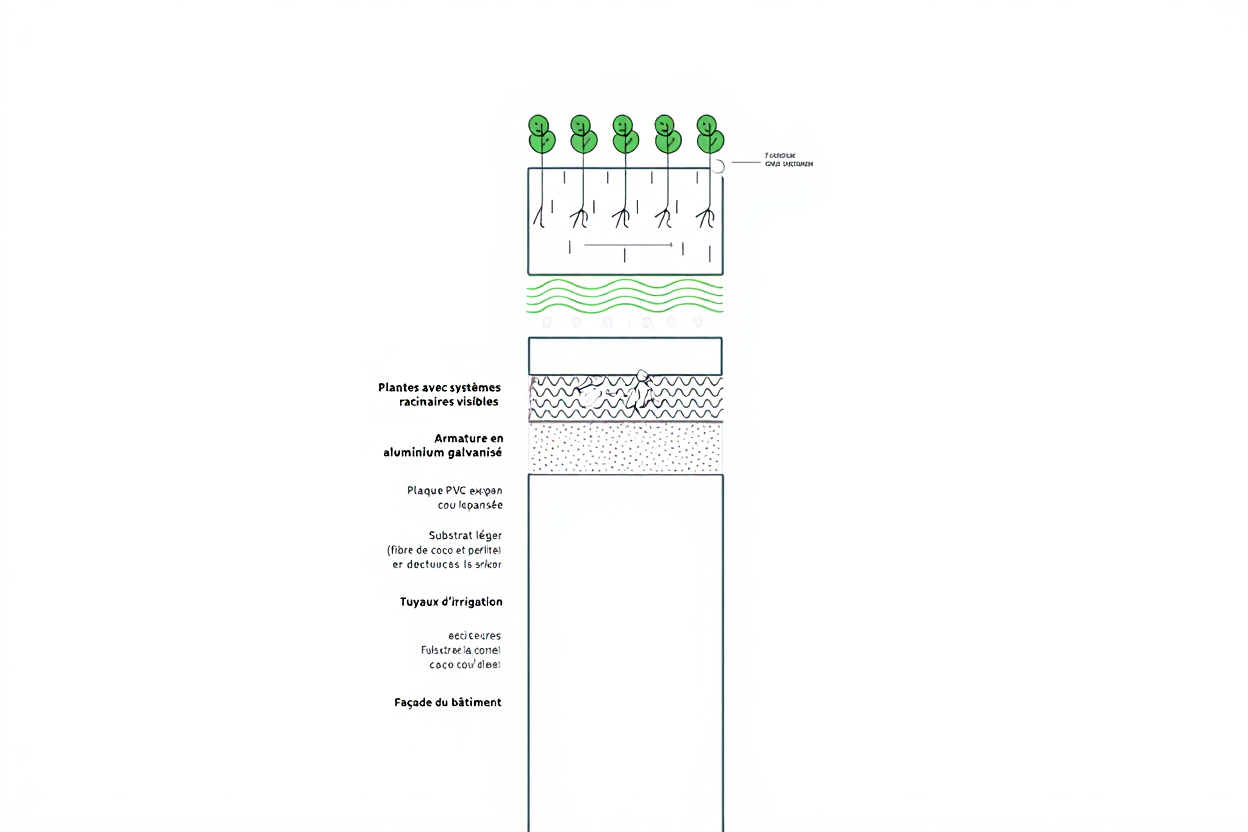
Thegreen wall installation begins with a frame strong enough to support a substantial load (about 250 kg/m², including water-saturated growing medium). The frame is fixed a few centimetres from the supporting wall to encourage airflow, prevent moisture build-up and protect theoutside.
- Frame materials : galvanised aluminium is valued for corrosion resistance; stainless steel offers excellent longevity; wood or bamboo add an attractive natural touch outdoors but require more regular maintenance.
- Waterproofing : a waterproof PVC board combined with two layers of horticultural felt retains water while allowing controlled drainage.
- Growing medium and drainage : a mix of coconut fibre, perlite and rockwool balances low weight, aeration and water retention. A depth of 20 to 25 cm is recommended to protect roots from frost.
Integrated gutters collect excess water and send it back to the top of the system or to an adjacent vertical garden, making the most of every drop ofwatering.
Automatic irrigation and water management
The central system of a natural green wall is itshydroponic irrigation. A pump sends water and nutrients from the reservoir to the top of the panel. The water then flows down by gravity, feeding each plant, before being collected for reuse in a continuous, efficient cycle.
- Drippers : self-regulating drippers (2 L/h) installed on 16 to 25 mm pipes provide even distribution across the full vertical surface.
- Scheduling : a waterproof timer controls the frequency ofwatering : about every 15 days in winter, every three days in autumn, daily in spring and up to twice a day in summer for a south-facing wall. Check water quality (pH 5.5–6.5) and conductivity regularly.
- Fertilising : soluble organic fertilisers added directly to the reservoir feed the living plants effectively without wasting water.
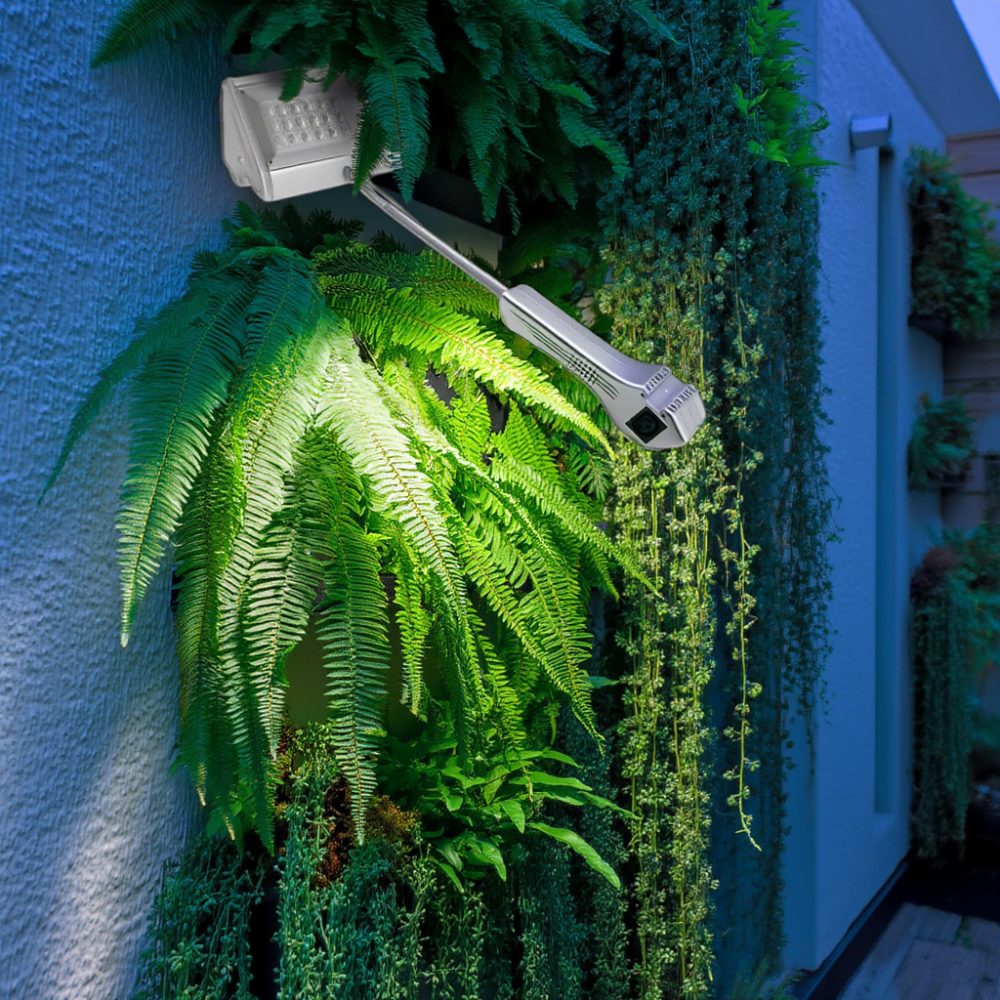
Supplementary lighting may be needed to complement natural sunlight. LED floodlights, such as the green wall LED spotlight, or an green wall LED bar with an IP65 rating, provide the light needed for photosynthesis.
Regular maintenance and frost protection
Monthly maintenance is recommended to keep your outdoor green wall : check dripper flow, clean filters, inspect felt and fixings, and replace weakened plants. Light pruning every two or three months encourages denser growth and improves the appearance.
In regions with harsh winters, protective mulch or cold-hardy species (ivy, holly) can protect the roots. In milder climates, watering every 15 days may be enough. Suitable LED lighting, as explained in this green wall lighting guide, compensates for the lack of light in winter and supports plant growth throughout the year.
Frequently asked questions
What are the main disadvantages of an outdoor green wall?
A natural green wall is a significant investment, generally ranging from €2,000 to €8,000, depending on the area, selected structure and complexity of the project. It also requires careful maintenance: regular automatic watering, filter cleaning, seasonal pruning and replacement of failing plants. Thehydroponic irrigationsystem, pump and lighting all consume energy. In addition, frost-resistant growing medium, careful sophisticated design and a fully waterproof support are essential to prevent leaks and protect the biodiversity within the outdoor green wall.
How much does a complete natural green wall installation cost?
The cost of installing an outdoor green wall varies widely. For example, a 5 m² green wall kit, including the structure, growing medium,watering and plants, costs between €1,500 and €3,500. A complete professional solution with hydroponic irrigation, LED lighting and a maintenance contract costs about €8,000 to €15,000 for 10 m². Add wall preparation, labour and an annual maintenance budget of €300 to €800. However, the many benefits —including energy savings, increased property value, comfort and appearance—can generally repay the investment over ten to fifteen years.
What is the difference between a natural green wall and a climbing plant?
A single plant can cover a façade at its own pace without a complex technical support system. It needs conventional watering and mainly offers visual greenery and slight cooling of the air outside. By contrast, a natural green wall is a sophisticated design. It combines a dense planting of growing medium rich in nutrients, a controlled watering system, often hydroponic irrigation and supplementary lighting, all integrated into a waterproof structure. This complete system offers many benefits, including thermal insulation, pollutant filtration, increased biodiversity and a real improvement in the appearance of the building.
Related posts
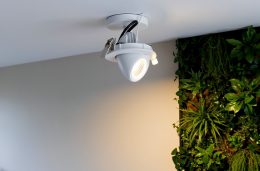 Discreet Green Wall Lighting: LED Design Guide
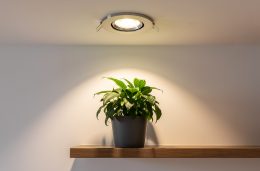 Recessed Directional Grow Spot: A Guide for Plants and Green Walls
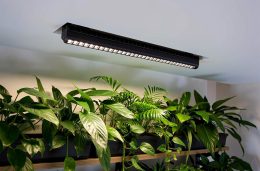 Recessed LED Grow Bars for Green Walls: 2026 Comparison Guide