
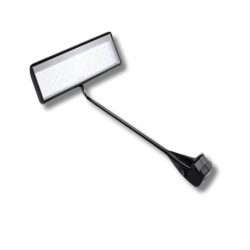
Horticultural LED spotlight for growing plants on green walls
Looking for effective lighting to enhance your vertical garden? Our horticultural LED spotlight X-WALL T50 50W is the ideal solution. Its natural light spectrum, very close to sunlight, effectively supports photosynthesis and promotes optimum plant growth. This guide introduces the technical specifications, precise settings and mounting options you need to create a truly illuminated green wall without excessive power consumption.
Horticultural LEDs and plant lighting
LED horticultural lighting is now essential for successful indoor vertical gardening. Modern horticultural LED lights offer excellent light output, effective thermal management and a spectrum suited to ideal growing conditions. Unlike conventional grow bulbs, LED technology targets the wavelengths plants use, reduces heat output and significantly lowers energy consumption.
Which grow light is best for a green wall?
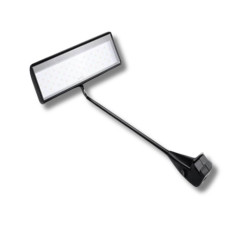
Choosing the right recessed horticultural spotlight for a green wall is crucial to plant health. Our X-WALL T50 50W model evenly illuminates an area measuring 50 × 150 cm, avoiding growth-inhibiting dark spots. This output is ideal for planted frames from 0.5 to 2 m²; larger installations will generally need 100 to 200 W.
- Full spectrum : Combining blue (450 nm) and red (660 nm), it encourages dense foliage and maximises photosynthesis.
- CRI > 90 : Natural colour rendering makes it easier to spot plant stress or deficiencies straight away.
- 30°–45° beam angle : The focused beam penetrates the foliage effectively without dazzling delicate plants such as orchids, while minimising wasted light.
Thanks to its aluminium heat-dissipation system, the surface temperature stays below 35°C, helping to preserve moisture in the substrate of green walls and hydroponic gardens. This effective thermal management prevents premature drying, reduces watering frequency and extends the flowering period—a major advantage for planted frames in air-conditioned spaces.
50W LED for green-wall growing
Our compact LED plant spotlight produces more than 2.5 µmol/J, or around 200 µmol·m⁻²·s⁻¹ at 30 cm from the foliage: an ideal intensity for pothos, philodendrons and spider plants. This performance is comparable to a 150W HPS lamp while using up to 70% less energy. Its 3-metre cable, screw-mounted plate and adjustable angle (0–45°) make it easy to install and adapt to the density of your foliage.
Horticultural LED fixtures or grow bulbs?
The horticultural LED revolution has transformed indoor plant growing, gradually replacing older sodium and fluorescent grow lamps. High-end CREE diodes offer an impressive lifespan of 30,000 to 50,000 hours—equivalent to 10 to 15 years at 12 hours of daily use—considerably reducing maintenance, especially for high-mounted installations. Their low heat output also reduces air-conditioning requirements, further improving overall energy efficiency.
The ability to adjust the light spectrum meets the specific needs of each growth stage: blue light stimulates vegetative development, while red light encourages abundant flowering and denser foliage for a spectacular green wall. Discover our X-WALL T50 LED spotlight, a complete horticultural lighting solution that combines high performance, exceptional service life and an attractive design.
LED lighting for green walls
A green wall can transform your interior, adding living greenery, purifying the air and regulating humidity. For the project to succeed, high-performance horticultural lighting is essential. Plants grown vertically need suitable light to compensate for limited natural sunlight in rooms with little daylight.
How to position the lighting
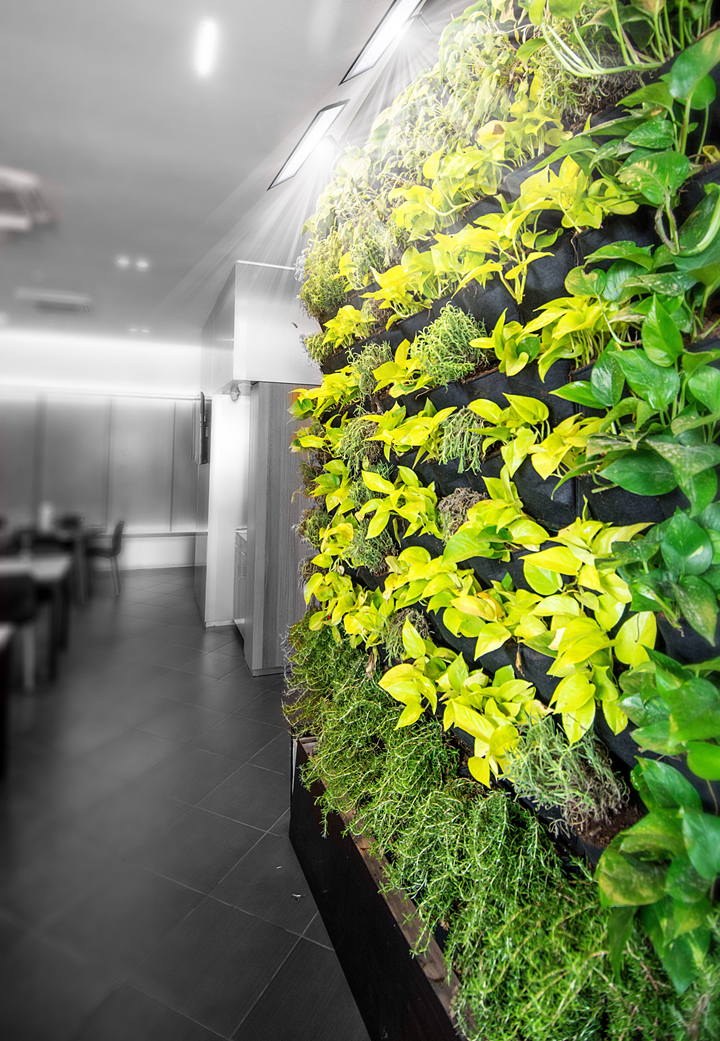
Spotlight placement determines whether growth is even and vigorous across the entire living wall. Position recessed vertical-garden lights 30 to 45 cm from the foliage to respect phototropism while distributing light evenly. This distance helps prevent plant heat stress and avoid wasting energy.
- Staggered layout : Install spotlights every 20–30 cm on parallel tracks, alternating their positions to eliminate dark areas—ideal for tall green walls.
- 30° downward tilt : Angle the spotlights slightly to illuminate lower areas effectively without dazzling sensitive plants.
- Adjustable systems : Choose adjustable mounts that let you gradually lower the spotlights (around 10 cm every six months) as the plants grow.
- Smart sensors : Add light sensors that switch the lamps off automatically when natural light is sufficient (above 10,000 lux) to maximise energy savings.
Lighting should suit the variety of plants on your wall. Place light-hungry plants, such as herbs and flowering species, directly beneath the most powerful spotlights. Reserve less illuminated areas for tolerant varieties such as ferns and pothos, recreating the balanced light of a natural woodland understory.
For ambitious projects, a modular track system makes it much easier to adjust the lighting. Each 360° adjustable spotlight suits every layout, whether the wall is straight, curved or modular. Discover our tips for choosing the best LED lights for your green wall.
Controls for horticultural LED lights
Smart control systems bring horticultural lighting up to date, with precise settings for every stage of development. A LED grow light for vegetative growth and flowering with a 0–10 V or PWM dimmer provides full control over light intensity. Fine adjustments can save up to 50% on electricity and significantly extend LED service life—a key advantage of today's horticultural LED lights.
Set light cycles that reproduce the sun's natural variations and stimulate biological processes. During vegetative growth, allow 16 hours of light at 70% intensity followed by 8 hours of complete darkness to encourage foliage development. During maturation, switch to 12 hours at full power, 4 hours at half intensity and then 8 hours without light. This cycle optimises nutrient uptake while limiting excess humidity.
Horticultural LEDs and plants
Horticultural LED technology uses precise photobiological mechanisms: each plant absorbs only certain wavelengths essential to photosynthesis. By targeting these active wavelengths with its light spectrum, an LED bar maximises useful light to stimulate plant growth while reducing energy wasted on unnecessary radiation.
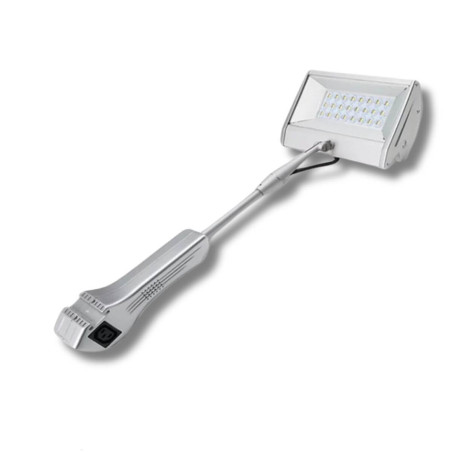
Which LED wavelengths support photosynthesis?
A recessed spotlight designed for photosynthesis should provide a well-balanced light spectrum that meets plant needs at every stage of development. Blue wavelengths (400–500 nm) activate chlorophyll production and regulate stomata, while red (620–680 nm) triggers flowering and supports biomass development. A small green component penetrates deeper into the foliage, which is particularly useful when growing plants on a wall.
- Full spectrum, 4000–6500 K : An all-purpose solution that supports plants from germination through flowering, without needing to change the grow light.
- High-performance CREE diodes : Outstanding efficacy of 2.8 µmol/J, producing 40% more active photons than conventional models.
- CRI > 90 : Reproduces the true colours of foliage, making it easier to diagnose deficiencies or disease visually.
- Adjustable blue-to-red ratio : Lets you tailor the lighting to plant needs, with more blue for vegetative growth and more red for flowering.
Light intensity (in µmol·m⁻²·s⁻¹) remains the key to successful growing. Aim for around 200 µmol·m⁻²·s⁻¹ at 30 cm from the foliage. Below 100 µmol·m⁻²·s⁻¹, plants may become leggy; above 400 µmol·m⁻²·s⁻¹, photoinhibition may occur.
LED lighting for plant growth
The X-WALL T50 (50W) horticultural LED spotlight is an ideal solution for intensive green-wall growing. With coverage of 50 × 150 cm and an excellent CRI (>90), it combines performance with energy savings of up to 65% compared with traditional HPS lamps, while providing highly uniform lighting.
Paired with a wall-mounted hydroponic system, its optimised spectrum—with a strong red component at 660 nm for rooting and blue at 450 nm for compact foliage—can deliver excellent results. For a 1 m² area lit to 200 µmol·m⁻²·s⁻¹, a flow rate of 3 L/h is generally sufficient; this may rise to 5 L/h for very dense planting or hot conditions.
Choosing an efficient grow light
Three key criteria guide the choice of a high-performance LED light: output suited to the growing area, safety certifications (CE-ETL-RoHS-UL) and high energy efficiency. These features support successful growing and a fast return on investment.
For green walls exposed to moisture, choose an IP66-rated watertight housing that resists water splashes and dust. Our aluminium, ABS and steel models combine durability with contemporary styling for seamless integration into any setting.
Frequently asked questions
Is LED light good for plants?
Yes, LED lighting is currently one of the best solutions for growing plants indoors. Modern models provide a complete light spectrum that meets the needs of plants. For example, a 10W recessed LED spotlight produces more useful light than a conventional 60W horticultural LED bulb , while generating less heat. This energy efficiency encourages optimum growth , whether for an indoor green wall with ferns or a herb garden.
Do LED lights really help plants grow?
Absolutely! A 24W horticultural LED provides around 40 µmol/s, enough to activate photosynthesis over 0.4 m² and grow sturdy plants. By adjusting the balance of blue and red light, you can encourage dense growth in culinary herbs, delicate flowering in orchids or strawberry production. This makes it an ideal lighting solution for growing in urban spaces.
What are the disadvantages of LED lights?
The initial cost of a horticultural lighting LED system remains significant, even though energy savings and a long lifespan (30,000 to 50,000 hours) can pay it back within 3 to 5 years. Poorly ventilated low-end models may have an unbalanced light spectrum and be prone to overheating. Without intensity adjustment or with poor positioning, it can also be difficult to adapt the light to different stages of growth or flowering, which can stress the plants.
For further information, see our expert guide to lighting a green wall, with recommended PPFD levels, spectrum and distances.
Related posts
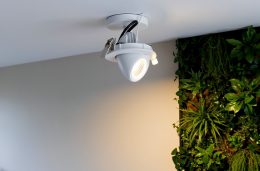 Discreet Green Wall Lighting: LED Design Guide
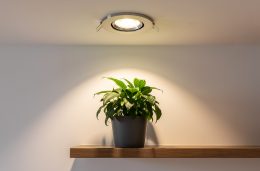 Recessed Directional Grow Spot: A Guide for Plants and Green Walls
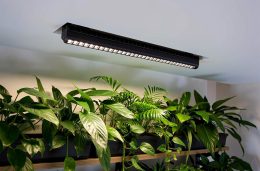 Recessed LED Grow Bars for Green Walls: 2026 Comparison Guide