
Natural and Artificial Lighting for Green Walls: A Complete Guide
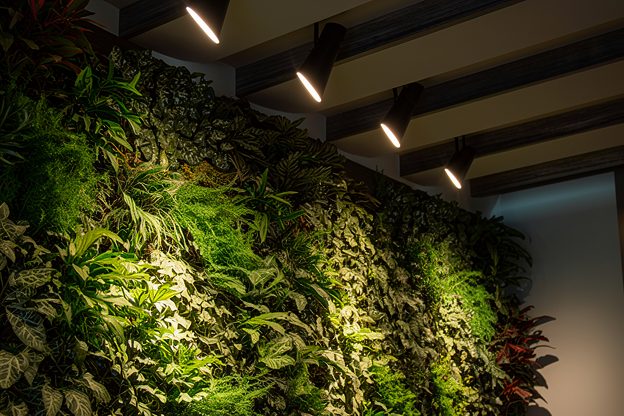
Good lighting is essential to show off your green wall, whether it is indoors or outdoors. This guide will help you choose the best indoor or outdoor light and the right colour temperature for an attractive result. We will also look at ideal positioning using effective lighting solutions for artificial green walls. The aim is to combine natural light with artificial lighting to create a harmonious atmosphere while keeping energy use under control.
Which colour temperature should you choose for your green wall?
Colour temperature sets the overall mood of your display and determines how it fits into the room. It directly affects how the foliage and your plant décor look. The right choice highlights the display and gives the greenery a natural appearance.
CRI and colour rendering for vibrant foliage
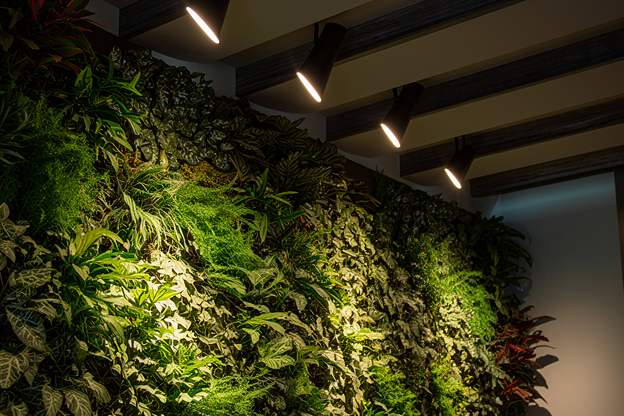
A colour rendering index (CRI) above 90 is essential for keeping your artificial green wall looking vibrant . A colour temperature of 4000 K closely reproduces daylight for a realistic effect. Together, they enhance shades of green and create a balanced atmosphere in your home.
- Ideal CRI (90–95) : brings out every detail of the plant frame and the texture of the foliage with remarkable authenticity.
- Neutral 4000 K colour temperature : provides natural-looking light without making plants look yellow or the room feel cold.
- Avoid extremes : light that is too warm can make the display look yellow, while artificial lighting that is too cool creates an unflattering blue cast.
Balanced-spectrum horticultural LEDs are the ideal choice for highlighting your greenery while saving energy. This technology preserves the appearance of your artificial foliage even with prolonged daily use.
Ideal power and distance for horticultural LED spotlights
The required power depends on the distance between the light and your illuminated green wall. A 9 W spotlight placed around 40 cm away provides even coverage. This gives you the right light intensity, measured in lumens, to enhance the surface.
For large green walls, evenly spaced, powerful spotlights help avoid unattractive shadows. Precise positioning provides bright, uniform light across an area of around 2 m². This keeps the appearance consistent across the full height of the foliage.
For a less dense wall, you can adjust the distance to change the light intensity. A lux meter can help you check that the light is distributed evenly across the display. Adjusting the power or position of the spotlights will correct any unevenness.
A light spectrum suited to indoor artificial green walls
Unlike living plants, indoor artificial green walls need only low light to reveal their textures. Moderate intensity is enough to highlight the artificial greenery without overheating it. This saves energy while creating an elegant, calming atmosphere.
White-spectrum LEDs mimic natural sunlight by blending blue, red and white tones. This combination renders colours well and produces very little heat. It is the perfect choice for preserving your artificial foliage over time, even with intensive use.
Installing and mounting a lit artificial green wall
Careful planning of the frame and wiring is essential when installing an artificial green wall with lighting. A well-planned installation ensures both an attractive finish and safe, durable architectural lighting.
Frames and supports for artificial green walls
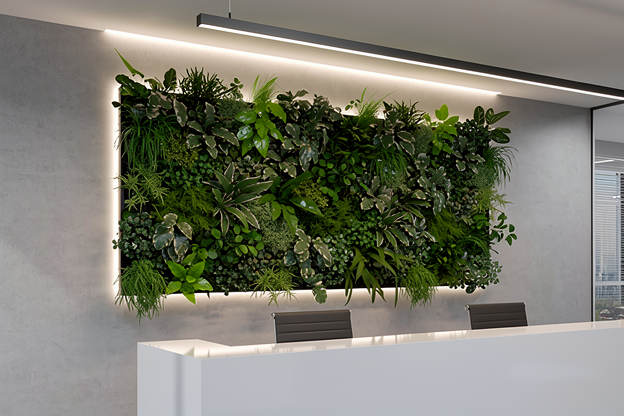
To support the synthetic foliage and integrated lights, your artificial green wall needs a sturdy support, such as panels or a metal frame. Stainless-steel or aluminium fixings are essential for lasting moisture resistance while preserving the look of your décor.
- Modular 1 m × 1 m panels : simple clip-together assembly makes it easy to adapt them to the size of your room.
- Aluminium support rails : designed to hold light bars every 30 cm, they offer flexibility to adjust the light intensity.
- Wooden or aluminium frames : neatly conceal the light sources for a clean finish that blends into your décor.
- Adjustable clip system : lets you set the lighting distance between 10 and 30 cm to achieve the look you want.
Plan the cable routing before assembly, using conduit or trunking for a clean, professional finish. Discover the ideal LED lighting solution for your green walls, a complete GreenVisuaLED range designed to support the growth of plants while showing them off. It includes mobile control options and tailored support for your project. Planning ahead is key to keeping your lighting installation safe and preserving the visual impact of your creation.
Integrating LED strips and recessed spotlights
Installing LED strips and recessed spotlights requires careful thought about positioning and ventilation. To recreate the effect of natural light, choose full-spectrum LEDs fitted into an aluminium profile with an opal diffuser to soften the light.
- LED strip spacing : leave around 20 cm between strips for even illumination—about five strips per square metre of artificial greenery.
- 9 W recessed spotlights : fit into a 70 mm cut-out and need 5 mm of clearance around them for proper ventilation.
- Modular horticultural bars : easy to mount on rails spaced 30 cm apart, they suit artificial green walls of any height.
- Safe electrical connection : up to three spotlights can be connected in series to a protected transformer, avoiding the risk of overload.
Before final installation, we strongly recommend testing a small section. This lets you check that the greenery is evenly lit without unattractive shadows, so the entire artificial green wall will have the ideal lighting.
Combining natural and artificial light effectively
A subtle combination of daylight and electric lighting creates an exceptional atmosphere, showing off your planted display while controlling energy use. This approach can turn any dark room into an elegant botanical gallery.
Making the most of natural light for green walls
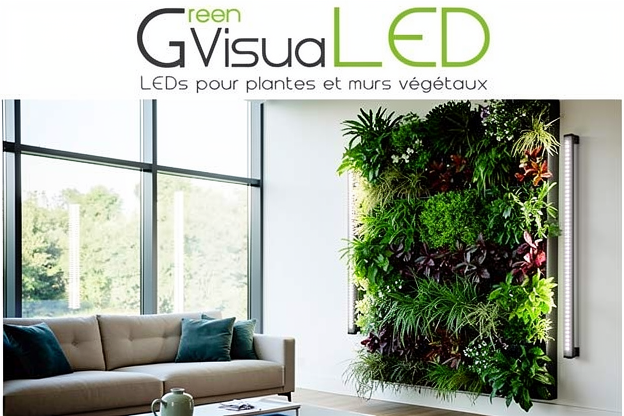
To get the most from daylight, choose a location that receives at least 2–4 hours of direct sun each day. A south-facing position is ideal for maximising natural light, while clear glazing helps spread light evenly and protects the foliage from the weather.
- Prefer a south-facing position : it gives your display gentle morning light and reduces the need for artificial lighting during the day.
- Clear protective panels : let sunlight through while protecting against thermal shocks, helping preserve your greenery.
- Reflective surfaces : white or aluminium reflectors behind the installation direct ambient light towards the plants for more even coverage and less reliance on lamps.
- Sheer curtains or filtering blinds : in a very bright room, they reduce glare and improve visual comfort without detracting from the artificial green wall.
White or metallic reflective surfaces increase the available natural light and distribute it evenly across the artificial green wall. This simple approach can significantly reduce the need to keep the lights on all the time.
| Type of light exposure | Recommended hours per day | Supplementary artificial lighting |
| Direct natural light | 4–6 hours | 6–8 hours at the end of the day |
| Diffuse natural light | 2–4 hours | 10–12 hours of continuous supplementary lighting |
| No natural light | 0 hours | 12–18 hours as the primary light source |
| Windowless dark room | 0 hours | 16–18 hours on an intensive cycle |
Automating artificial light sources in sync
Full-spectrum horticultural LED grow lights are an effective alternative to natural light for green walls. They reproduce the wavelengths needed for photosynthesis with a carefully balanced mix of blue, red and white light. This technology provides a suitable light intensity while producing very little heat, helping preserve foliage even during extended use. A timer can mimic natural day–night cycles (12–18 hours) and set the lighting distance (30–100 cm) for even coverage across the wall, encouraging dense growth and preventing legginess. Modular solutions—spotlights, bars or strips—also fit discreetly into interiors, providing even coverage without compromising the design. That is why we strongly recommend using LED technology to optimise lighting for your green wall and achieve an attractive, long-lasting result.
Smart synchronisation of sunlight and artificial lighting, controlled by timers or sensors, enables a smooth transition between day and night. A system that gradually adjusts its output avoids harsh visual contrasts and optimises energy use.
The GreenVisuaLED mobile app makes it easy to automate schedules and adjust intensity for the seasons. An integrated sensor automatically reduces lamp output when natural light meets more than 30% of the requirement, helping lower electricity bills.
Dimmers balance natural brightness and electric light in real time, preventing glare and maintaining a harmonious atmosphere. This dynamic control makes your artificial fern green wall a striking architectural feature, in sync with the natural rhythm of the day.
Outdoor use and combined light intensity
Outdoors, combining direct sunlight with weatherproof 9 W spotlights keeps your installation visible and attractive after dark. IP65-rated outdoor lights offer excellent resistance to weather and changing conditions.
- Weatherproof outdoor spotlights : provide good visibility at night, extending the appeal of your artificial fern green wall in your landscape design.
- Full spectrum, 3500–5000 K : closely mimics sunlight for natural colour rendering, even without any natural light.
- Moderate combined intensity : avoid exceeding 500 µmol·m⁻²·s⁻¹ to prevent wasted energy.
The combined output from all light sources should stay below certain thresholds to preserve visual balance, particularly in mixed installations. Carefully balancing each source creates a natural look that enhances the design of your artificial jungle green wall.
Frequently asked questions
Which LED lighting should I choose for an indoor green wall?
To light your green wall indoors, choose horticultural LEDs with a balanced white spectrum and a colour temperature close to 4000 K. Recessed 9 W spotlights placed around 30 cm away will effectively cover 2 m² without producing too much heat. This solution highlights your greenery while remaining energy-efficient.
An artificial lighting cycle of 12–14 hours a day is recommended to create a welcoming atmosphere while managing energy use. A mobile app also lets you adjust intensity according to the available natural light for a harmonious result.
How do I light an artificial green wall without natural light?
An artificial green wall in a dark room without windows needs artificial lighting as its main source for around 16–18 hours a day. The aim is to create a lively, natural atmosphere even without any daylight .
For example, install evenly spaced full-spectrum LED strips or 9 W spotlights for uniform coverage. Moderate intensity is enough to reveal the details and textures of the foliage on your artificial greenery in a dark room.
GreenVisuaLED’s system can add subtle lighting effects to bring the space to life and draw the eye. It is a great way to highlight artificial greenery in a dark room, especially in commercial settings, without increasing energy bills.
What colour temperature should I use to light plants?
The ideal colour temperature for highlighting your green plants is around 4000 K, a neutral white. This accurately renders every shade of greenery and creates a calming atmosphere in your home.
Avoid lights that are too warm, as they can make the foliage look yellow, or too cool, which creates an unflattering blue cast. This colour balance is essential for a realistic effect, whether you are lighting an artificial green wall or live plants.
If you grow live plants, adding red light at the end of the day can encourage flowering and support plant growth. GreenVisuaLED offers adjustable solutions combining these spectra to suit your installation.
Follow our expert guide to green-wall lighting to balance natural and LED light.
Related posts
 Discreet Green Wall Lighting: LED Design Guide
 Recessed Directional Grow Spot: A Guide for Plants and Green Walls
 Recessed LED Grow Bars for Green Walls: 2026 Comparison Guide