
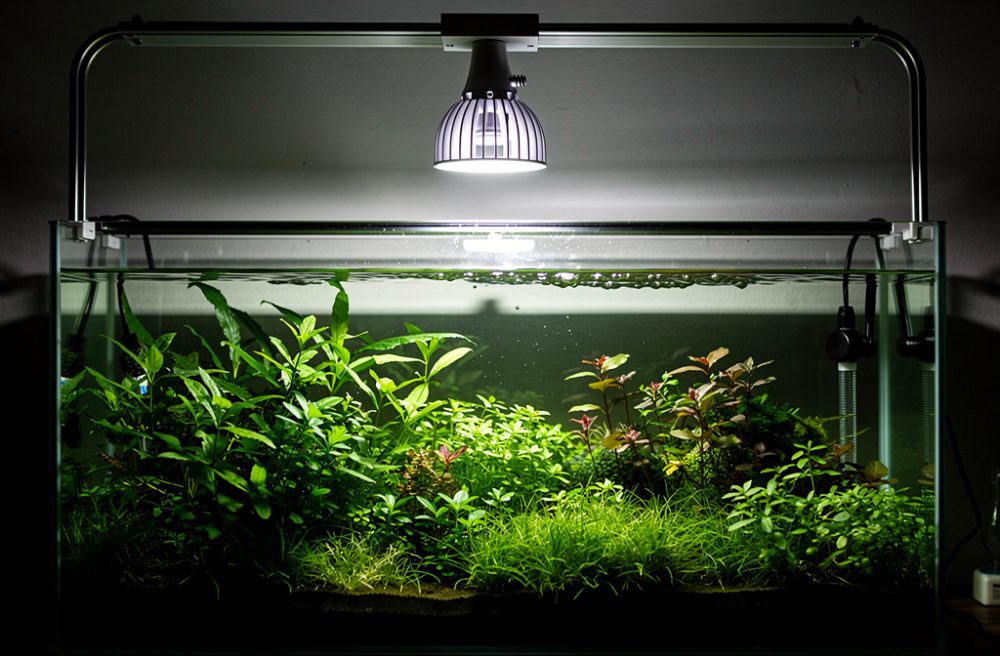
Full Spectrum for Planted Aquariums: LED Lighting Guide
This guide explains how to choose the ideal light spectrum for aquarium plants, focusing on continuous output across the 400–700 nm range. This balance of blue and red supports effective aquatic photosynthesis while limiting algae growth. Learn how to choose suitable lighting for a planted aquarium and encourage healthy, vigorous growth.
Understanding the ideal light spectrum for a planted aquarium
Lighting does more than illuminate an aquarium: it is essential to the life of underwater plants. The right spectrum creates an environment where plants thrive, helping prevent deficiencies and dull colours. This guide covers the science behind good lighting, a key to a successful planted aquarium.
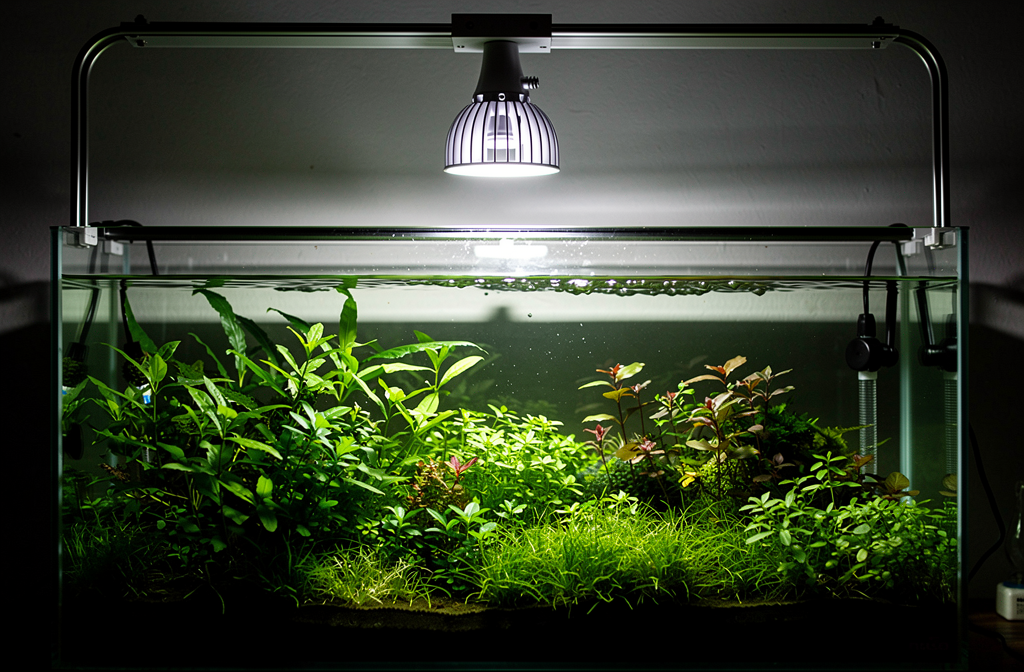
What is the PAR spectrum and why does it matter?
PAR (photosynthetically active radiation) is the 400–700 nm range of light that plants use to grow. This spectrum is central to plant development because it includes wavelengths that chlorophyll absorbs efficiently. It allows light energy to be converted into essential biological nutrients.
A continuous spectrum across this range ensures that all aquarium plants receive the wavelengths they need. Incomplete lighting often leads to weak stems and pale leaves, signs of slow growth. The best solutions, such as a quality LED bar, reproduce a continuous spectrum and help prevent energy deficiencies.
The role of blue and red light in aquatic photosynthesis
Blue light, between 420 and 500 nm, is crucial for photosynthesis and plant structure. It stimulates chlorophyll production and encourages dense, compact growth, which is essential in aquascaping. Without it, plants may become leggy and produce weak, unattractive leaves.
- Blue 420–500 nm : supports chlorophyll synthesis and encourages dense foliage for lush aquascapes.
- Red 620–680 nm : supports root development and improves leaf colour while encouraging flowering.
- Green 500–570 nm : penetrates deeper into the water and provides a natural-looking appearance.
- Ideal ratio : a mix of 40% blue, 40% red and 20% green supports balanced, harmonious development.
Red light, especially around 660 nm, influences important physiological processes such as root development. A well-designed aquarium LED bar combines blue and red in suitable proportions to promote balanced growth, strong leaves and healthy maturation.
Although plants absorb less green light, it penetrates effectively into dense growth in a planted aquarium. It improves photosynthesis deeper in the tank and contributes to natural-looking light. This helps you observe plant health and fish behaviour clearly.
Why CRI matters for observation and diagnosis
The Colour Rendering Index (CRI) measures how faithfully an aquarium LED bar reproduces natural colours. A high CRI, ideally above 90, makes observation a useful diagnostic tool. You can quickly spot deficiencies and assess the actual vitality of your plants.
With a low CRI, diseases and algae can be hidden by misleading artificial light. The best planted-aquarium lighting systems combine a balanced spectrum with excellent colour rendering, supporting horticultural performance and making tank care easier.
Choosing the right colour temperature and light intensity
light intensity and colour temperature are two linked factors that define lighting quality. Adjust them correctly to create an ideal environment for plant growth while enhancing the look of your planted aquarium.
Recommended colour temperature for different planting styles
For a freshwater tank, the ideal colour temperature is generally 5,000–8,000 K. The 6,500–7,300 K range is particularly recommended because it closely reproduces daylight. This balanced spectrum supports absorption of the wavelengths needed by chlorophyll and encourages healthy plant development.
A specialised “Plants” spectrum, enriched with blue LEDs around 9,200 K, may increase plant growth by nearly 30%. This blue light activates photosynthesis more effectively than standard lighting. Avoid colour temperatures above 12,000 K, however, as an unbalanced spectrum often encourages algae.
| Planting style | Recommended colour temperature | Benefits |
| Dense planting (stem plants, carpeting plants) | 6,500–7,300 K | Balanced blue and white, compact growth, natural appearance |
| Mixed planting (Anubias, Cryptocoryne, stem plants) | 6,500–7,500 K | Versatile spectrum for different species |
| High-performance “Plants” setup | 9,000–9,500 K + 660 nm LED | Increased growth (+30%) and denser foliage |
| Lightly planted tanks (epiphytes, Anubias) | 5,000–6,500 K | Lower algae risk and moderate energy efficiency |
Measuring PAR instead of watts
Electrical wattage alone does not indicate the actual efficiency of an LED bar or conventional lamp. Two lights with the same power rating can produce very different light intensity depending on their design. For aquatic plants the most useful measurement is PAR, which quantifies the photon flux available for photosynthesis.
PAR requirements vary considerably: allow 30–50 µmol·m⁻²·s⁻¹ for easy species such as Java fern. Dense planting needs 80–150 µmol·m⁻²·s⁻¹, while demanding species may require up to 300 µmol·m⁻²·s⁻¹. An aquarium LED light positioned 30 cm above the water provides around 120 µmol·m⁻²·s⁻¹, and the level drops quickly with distance.
Although the lumens per litre ratio is convenient for beginners, it can be imprecise for complex tanks. To check the performance of an aquarium LED bar, measure PAR at substrate level. This lets you adjust lighting precisely and optimise plant growth for your goals.
How depth affects light distribution
Water depth significantly affects how much light and lumen output reaches the substrate. Every additional 5 cm of water reduces the PAR received by around 10–15%. Measuring light intensity at the bottom is therefore essential for good light coverage.
For an even distribution, using several spaced light bars is often the best technical solution. Beyond 45 cm depth, intensity is often too low for demanding plants and falls below critical levels. Insufficient light at depth may then encourage algae at the expense of aquatic plants.
Programming lighting duration and cycles for a planted tank
Timing—duration, intensity and spectrum changes—affects plants as much as the light itself. A well-adjusted light cycle respects the plants’ biological rhythm and helps limit algae. Learn how to configure a suitable lighting schedule for your planted aquarium, combining modern technology with natural requirements.
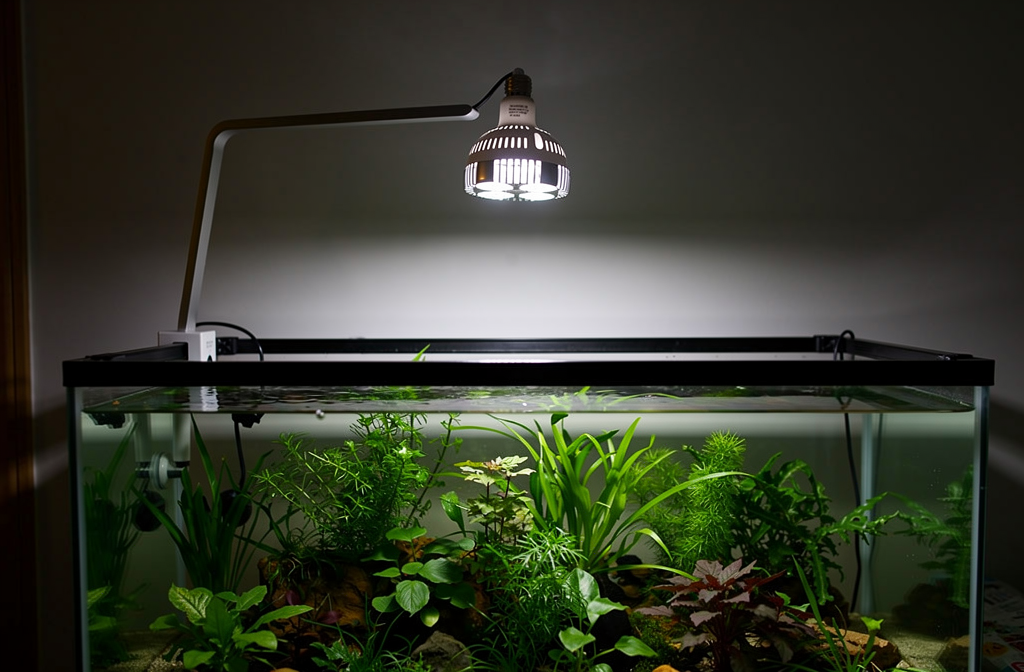
Ideal photoperiod for different planting densities
The photoperiod, or daily lighting duration , is essential for plant health and development. For most freshwater aquariums, 8–10 hours of continuous light is recommended. You can extend this to 12 hours only if you carefully manage nutrients and CO₂.
A lighting duration that is too short slows photosynthesis, while an uncontrolled excess encourages algae.
- Lightly planted tanks (epiphytes, Anubias): choose 6–8 hours of light per day to save energy and limit algae.
- Densely planted tanks (stem plants, carpeting plants): choose 9–10 hours with a gradual LED bar to maximise growth.
- High-performance planted tanks with CO₂: up to 12 hours may be possible if you use gradual transitions and optional breaks.
A timer with dimming is essential for simulating sunrise and sunset. Gradually increase the light, maintain a peak for a few hours, then reduce it towards evening. This reduces physiological stress compared with a constant maximum intensity, which may cause deficiencies.
Adapting the spectrum to plant growth stages
Plants pass through different biological stages, including germination and colour development, and each requires a particular light spectrum . An advanced schedule can adjust the blue-to-red ratio of your aquarium LED lighting as plants develop. For example, favour blue wavelengths during vegetative growth and increase red light during colour development.
Make these spectrum changes gradually over several days to prevent metabolic shock. Switching suddenly from a blue-dominant to a red-dominant spectrum can temporarily harm the plants. Our adjustable LED bars provide precise ratio control, allowing you to synchronise aquarium lighting with plant biology.
In aquascaping, some experienced enthusiasts even adjust light to the season or water temperature. They may reduce lighting hours in summer or introduce a day of darkness each week to reset light cycles.
Strategies for controlling algae through lighting
Algae often grow when light is abundant but plants lack the nutrients needed to use it. This is the result of photosynthesis being limited by an imbalance in nutrients. To prevent this, start a new tank or LED bar at 50% of its maximum intensity.
Increase power gradually over several weeks to give plants time to adapt. Watch for algae and respond quickly by reducing the photoperiod or intensity. The effectiveness of your strategy depends on the careful balance between light, nutrients and exposure time.
Installing and optimising LED lighting for a planted aquarium
LED technology has transformed aquascaping by providing much greater control over spectrum and heat than older T5 fluorescent tubes. But an aquarium LED needs more than a simple connection to work effectively. Precise positioning, reflectors and good thermal management turn a light bar into a capable horticultural tool.
Configure your system properly to get the full potential from every diode. Learn how to optimise your setup for maximum light coverage and healthy aquarium plant growth.
Choosing a high-performance LED bar
Choose “full-spectrum” bars with blue, red and white diodes for a complete, balanced spectrum. Rigid models limited to cool white or a simple blue-red combination are often less adaptable and provide lower visual quality. GreenVisuaLED offers configurable modules that let you adjust the red-to-blue ratio to suit your plants.
These systems are compatible with home automation (0–10 V, DALI) for precise day–night scheduling. Always check the manufacturer’s PAR data instead of relying only on wattage. Aim for 30–500 µmol·m⁻²·s⁻¹ depending on planting density and plant requirements.
Effective thermal management using aluminium heat sinks is essential for a lifespan exceeding 20,000 hours. It also maintains stable light output for aquatic plants over time.
- CRI of 90 or higher : supports reliable visual assessment of plant and fish health so you can respond quickly.
- Adjustable spectrum : change the blue-red ratio or colour temperature for different growth stages.
- Built-in scheduling or home-automation compatibility : makes it easy to automate gradual lighting cycles and synchronise with external control systems.
Avoid false savings: a low-cost aquarium LED light without reliable PAR data may lead to expensive disappointments. Algae problems or slow growth can cause more frustration than investing in a robust solution.
Positioning and height for even PAR
To install an LED bar properly, understand how light travels through water. The closer the source is to the surface, the higher its intensity but the smaller the area it covers. A bar positioned too high loses significant power and may disrupt the photosynthesis aquatic plants need.
For even coverage, position our bars around 5 cm above the aquarium. Aluminium diffusers can eliminate shadows and redirect lost light into the water. For large tanks, use several spaced modules to cover the substrate evenly.
Balancing light, CO₂ and nutrients to control algae
Increasing light without providing enough resources can create an ecological imbalance in your tank. If you increase lighting, adjust the CO₂ supply and fertilisation to feed your plants. Otherwise, algae can use the excess energy to take over your aquascape.
Choosing a suitable spectrum is crucial: it should support photosynthesis without encouraging algae. Read our complete guide to the aquarium plant spectrum to fine-tune your setup. A regular routine, managed by a timer with gradual switching, helps stabilise the ecosystem.
GreenVisuaLED designs lighting for aquascaping that supports the health of submerged plants. Its adaptable technology can recreate optimal conditions, as demonstrated by installations at Nausicaá Aquarium. Discover our aquarium LED lighting solutions and transform your tank into a lush aquatic garden.
Frequently asked questions
What light spectrum do aquarium plants need?
For good results, the ideal light spectrum covers the full PAR range from 400 to 700 nm. A balanced distribution of around 40% blue, 40% red and 20% green is recommended to support aquarium plants.
This balance encourages compact growth and supports photosynthesis in your planted aquarium. Full-spectrum lights that reproduce this mix help prevent pigment deficiencies and reduce algae risk, which can be caused by an incomplete spectrum .
A very low dose of UVA (1–2%) may help strengthen plant resilience. Avoid UVB and far-red wavelengths above 730 nm.
What colour temperature should I choose for a planted aquarium?
For most freshwater aquariums, choose a colour temperature between 5,000 and 8,000 K. The ideal range is 6,500–7,300 K because it closely reproduces daylight and suits plant growth in a planted aquarium.
For higher performance, a “Plants” spectrum around 9,000–9,500 K, enhanced with blue LEDs, can increase plant growth by up to 30%. This is a good option if you want to go beyond standard daylight lighting.
Do not exceed 12,000 K: a higher colour temperature may create imbalances that benefit algae rather than plants.
How many hours of light per day does a planted aquarium need?
A daily lighting period of 8–10 hours is generally recommended. You may extend this photoperiod to 10–12 hours only if nutrient and CO₂ levels are carefully controlled.
Ideally, reproduce a natural cycle with a gradual increase in intensity, a peak lasting a few hours and a gentle reduction. This approach limits plant stress and makes the best use of each lumen produced by your light bar.
If you are new to a planted aquarium, start carefully at 50–60% of maximum intensity. Increase it gradually over several weeks to avoid algae and deficiencies.
Related posts
 Discreet Green Wall Lighting: LED Design Guide
 Recessed Directional Grow Spot: A Guide for Plants and Green Walls
 Recessed LED Grow Bars for Green Walls: 2026 Comparison Guide