
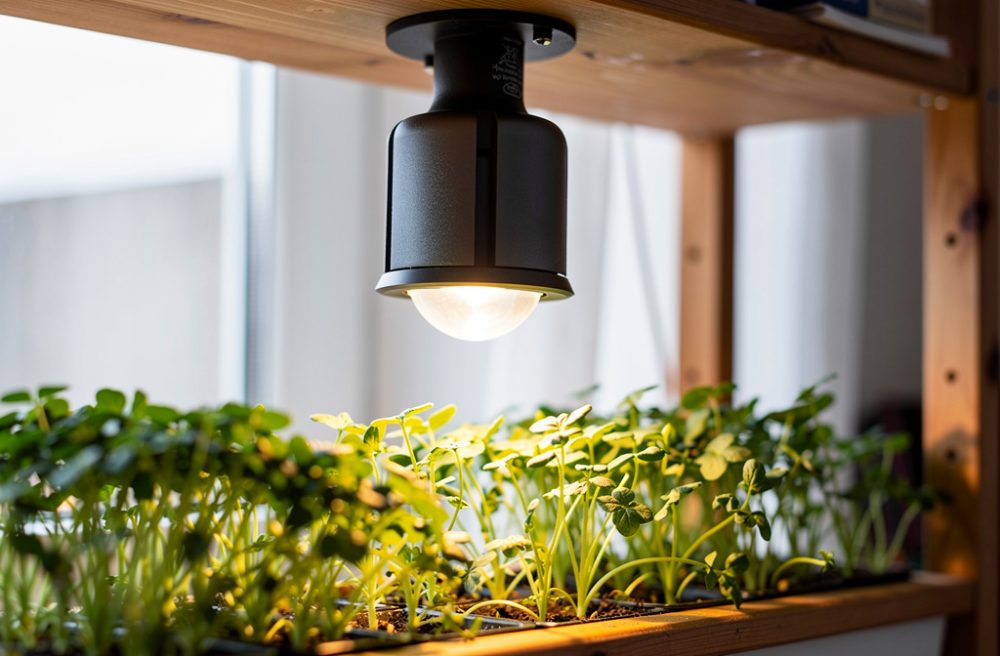
Full-Spectrum LED Grow Bulb for Growth and Flowering
Discover how a LED grow bulb with full spectrum supports the health of your indoor plants. It provides them with light carefully suited to support optimal photosynthesis every day. This guide covers the available formats and installation best practices to help you get the most from your plants.
Why choose a full-spectrum LED grow bulb?
LED grow light is a major development for indoor growers. It produces a light spectrum that closely reproduces the benefits of natural sunlight. This full spectrum for plant growth provides all the wavelengths essential to healthy plant development, from germination through to maturity.
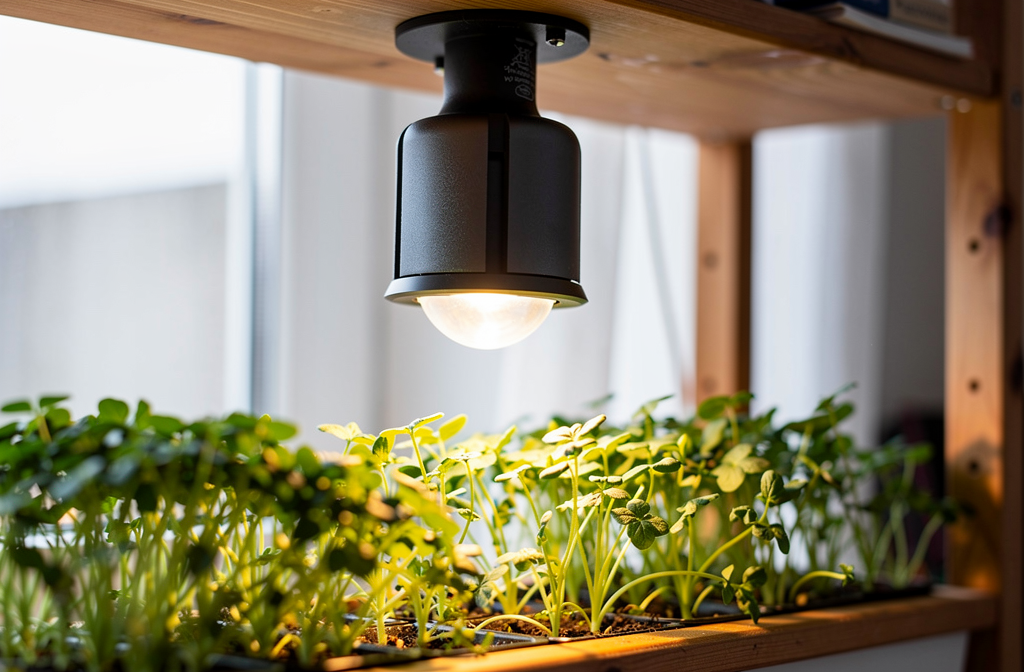
The benefits of full-spectrum lighting for photosynthesis
A LED bulb with a full spectrum can support natural chlorophyll production. Plants can develop dense, healthy foliage. Full-spectrum LEDs also reduce the risk of leaf scorch, helping maintain thermal safety even when positioned close to foliage.
- Increased chlorophyll : The leaves take on a rich emerald-green colour, a sign of active photosynthesis.
- Improved branching : Blue light supports well-structured vegetative growth. It helps prevent leggy growth and encourages sturdy, compact plants.
- Thermal safety : The absence of unwanted infrared radiation allows thegrow lighting to be positioned close to plants.
- High energy efficiency : Energy is used efficiently to support plant growth, helping reduce electricity costs compared with older technologies.
A light spectrum balanced also supports the transition into the flowering. This helps plants maintain the photoperiodic cues that are essential to their natural cycle. This modern approach puts plant wellbeing at the heart of the process.
Blue and red: understanding essential wavelengths
Blue light regulates growth by making plant structure denser and stems stronger. A LED grow bulb with a high proportion of blue light encourages branching, shorter internodes and concentrated leaf growth.
Red light, meanwhile, is essential for successful fruiting. Including it in the full light spectrum can accelerate flower formation, intensify colour and increase final yields.
A balanced ratio of blue to red follows the plant’s natural cycles through spectral transitions. This characteristic modulation distinguishes each grow light premium model from standard versions. That is why it can make sense to invest in a LED grow bulb designed specifically for plant growth.
Spectral stability and Philips LED technology
Philips diodes built into each grow bulb provide excellent spectral stability over time. They help avoid the colour shifts common with some other technologies. This reliability helps prevent light stress that could affect yields.
Modern LED technology avoids the spectral losses associated with older fluorescent lamps, which could become less effective after only a few months of use. Our products maintain consistent light quality to support your plants’ potential.
Choosing LED grow light with Philips components is a mark of quality. Spectral stability over thousands of hours supports lasting performance, an important consideration for permanent installations or professional growing.
Which LED grow light should you choose for your plants?
Your choice of LED grow light depends on your goals, available space and the plants you grow. GreenVisuaLED offers a wide range for different growing projects, from bonsai to green walls. These grow lights are suitable for delicate orchids as well as culinary herbs.
Formats and wattages: from 5 W to 200 W
A LED grow light with a 5 W GU10 base is ideal for lighting a single plant or bonsai. It provides gentle light over a small, precise area. The 7 W model covers a slightly larger area and can support the development of young plants.
The E27 LED grow bulb at 20 W offers flexibility for illuminating several plants or a green wall. For more demanding growing setups, the SpectraBULB X30 is an excellent LED grow bulbThis full-spectrum supports vigorous growth and excellent flowering indoors.
| Format | Wattage | Coverage area | Main applications |
| GU10 | 5 W | 0.1–0.2 m² | Single plant, bonsai or succulent |
| GU10 | 7 W | 0.2–0.4 m² | Small collection, young plants |
| E27 | 20 W | 0.4–0.8 m² | Group of 2–5 plants, medium-sized wall |
| Wide distribution | 30 W | >1 m² | Intensive growing, tomatoes, chillies |
| SpectraLINE bar | 7–20 W | Large, flat area | Cacti, succulents, terrariums |
| GVL SPOT spotlight | 200 W | 0.5 m² (70 × 70 cm) | Intensive flowering, professional green walls |
The full-spectrum LED grow bars SpectraLINE produce even light across large areas. They reduce shadowed areas, which is especially useful for succulent growers. Their IP65-rated versions can be installed in damp environments or near a fountain.
LED grow bar or spotlight: what is the difference?
A LED grow bar distributes light evenly across a rectangular area. It works well for terrariums or small horizontal green walls. A spotlight, by contrast, concentrates its output on plants with higher light requirements.
The grow bar SpectraLINE provides broad, particularly even light. The GVL SPOT 200W model instead offers intense, focused coverage over 70 × 70 cm. For professional green walls, XModule systems provide grow lighting with no shadowed areas.
E27 and GU10 compatibility for easy installation
A grow bulb in this range uses a standard E27 or GU10 base. Each horticultural LED fits directly into existing household light fittings. This can turn a floor lamp into a capable growing setup without complex electrical modifications.
- Simple installation: Screw in theE27 grow bulb or GU10 bulb for immediate use with no technical setup.
- Adjustable clips: Position your full-spectrum LEDs above plants using adjustable accessories.
- Adjustable supports: Adjust the height of your E27 LED grow bulb as your plants grow.
- Automation: Use timer cables to program day/night cycles easily.
This affordable concept makes modern horticultural technology much easier to use. It removes technical hurdles often associated with specialist equipment, giving hobbyists and professionals alike effective lighting for everyday use.
%products%
How to install and use your grow light effectively
To get the most from your grow lighting, make sure you understand three key factors: distance, light intensity and daily operating time. Adjusting these settings can help your plants move beyond simply surviving to achieve vegetative growth that is robust and flourishing.
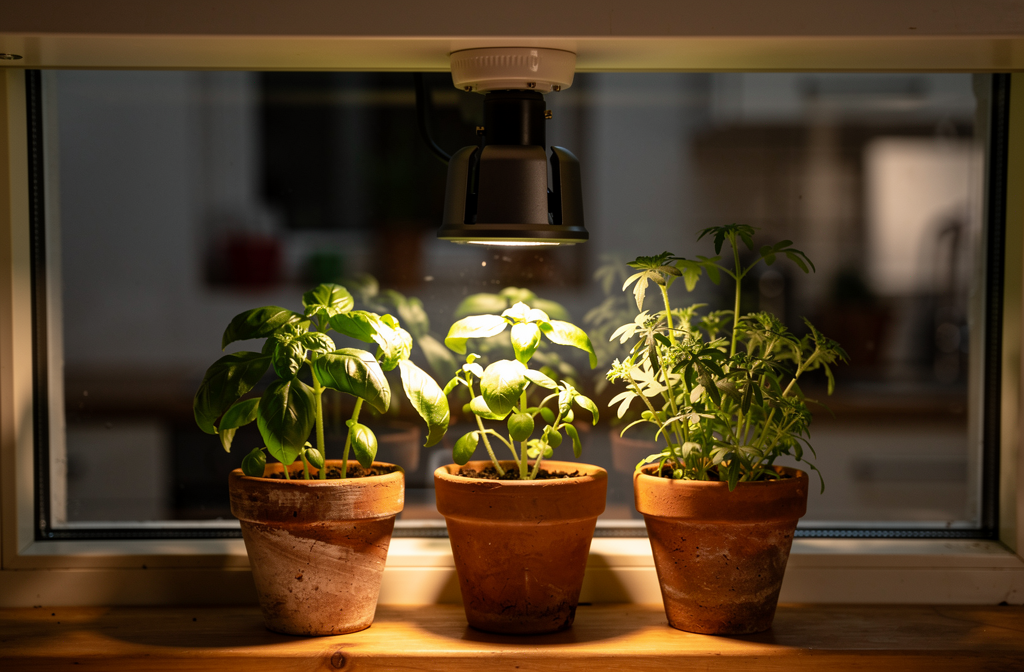
Distance and intensity: adjust for each growth stage
Start providing supplemental light at germinationusing moderate intensity at a distance of 20–30 cm to reduce the risk of heat stress. Later, when your seedlings and young plants begin to develop foliage, increase the distance to 30–45 cm to provide the gentler lighting conditions of a sunny greenhouse.
During active growth, keeping grow LEDs 30–45 cm from the plants can provide 4,000–6,000 lux. This exposure supports leaf development without overstressing the plant. As plants mature, move the lights to 45–60 cm away to reduce the risk of leaf scorch or excessive water evaporation.
When planning your setup, note that a powerful spotlight ideally covers a 70 × 70 cm area from a distance of 40 cm. Aim for around 2,000–4,000 lux for foliage plants and up to 10,000 lux for a dense green wall in full flowering.
Programming light cycles for growth and flowering
The vegetative phase needs 14–16 hours of light per day to support strong roots and lush foliage. An electronic timer provides consistency and helps prevent missed schedules that could stress plants.
- Vegetative growth: 14–16 hours per day : Blue-rich light (4,000–6,000 lux) supports balanced root and leaf growth.
- Flowering and fruiting: 10–12 hours per day : Gradually increase the proportion of red light and maintain a strong light intensity (6,000–8,000 lux).
- Very dark environments: up to 18 hours : In a room without natural light, simply extend thegrow lighting to compensate.
Gradually alternate between warm white and neutral white over two weeks to ease lighting transitions. Each species has its own needs: culinary herbs often require 14–16 hours, while tomatoes and chillies may need up to 18 hours of light.
Optimise light coverage from your grow bulbs
Using several medium-output light sources can distribute light much more evenly than using a single very powerful lamp. Correctly positioning an LED grow bulb is often more effective for your grow light than a single spotlight placed too high.
Adding simple aluminium reflectors can increase light efficiency by 10–20% without using additional electricity. Check your plants regularly: leggy stems indicate they may need more light, while brown leaf edges suggest the light source should be moved farther away.
Energy savings and performance of full-spectrum LED grow bars
Investing in quality equipment can pay off over time through energy savings and lower maintenance costs. GreenVisuaLED’s full-spectrum LED grow bars combine strong plant-lighting performance with high energy efficiency. This grow lighting supports plant production with performance that is difficult to match.
Electricity consumption and exceptional service life
These grow lights can use up to 80% less electricity than older, power-hungry HPS lamps. For example, a 30 W bulb operating 12 hours a day uses about 131 kWh per year, compared with 306 kWh for a 70 W HPS lamp. This is a significant reduction in your electricity bill.
- Exceptional service life of 35,000 to 50,000 hours : They can be used daily for several years without replacement, significantly reducing maintenance costs.
- No mercury or hazardous substances : A safer design that simplifies maintenance, makes recycling easier and reduces the environmental impact of indoor growing.
- Lower heat output : Complex extraction or air-conditioning systems may not be needed, creating further savings.
- Low light depreciation : Gradual performance decline over time is predictable, making it easier to plan replacements.
For a professional 10 m² installation using 120 W, annual savings may exceed €1,000 compared with a 400 W HPS system. This financial advantage can make investing in professional grow LEDs a sound investment.
Light output and professional LED technology
A LED grow bar from GreenVisuaLED can deliver a useful light output of more than 150 µmol·s⁻¹·W⁻¹. It efficiently converts electricity into photons plants can use, without generating excessive heat. Each watt consumed supports plant growth.
- Full spectrum from 400 to 700 nm : All emitted photons fall within the active photosynthesis range, avoiding unnecessary infrared output.
- COB and multi-diode technology : Advanced optics direct light onto the foliage, making additional reflectors unnecessary.
- Long-lasting spectral stability : The chips maintain a consistent blue-to-red balance over time, avoiding colour shifts that could affect development.
- Optimised 60° beam angle : Light is distributed evenly across the growing area, reducing shadows and maximising foliage exposure.
Real-world trials show a 30% increase in leaf biomass for indoor-grown basil, demonstrating the performance of full-spectrum LEDs compared with traditional fluorescent solutions.
3-year warranty and accessories to optimise your setup
GreenVisuaLED offers a full three-year warranty across its range of full-spectrum LED grow bars, protecting your investment and simplifying customer support if a problem occurs. The warranty reflects the reliability of the internal components and a decade of technical expertise.
Several useful accessories complete the setup, including adjustable mounts to accommodate plant growth, timers to automate lighting cycles, and a mobile app for remotely adjusting intensity and operating hours to suit your needs.
Frequently asked questions
Which LED colour is best for plant growth?
Blue light, ideally in the 440–460 nanometre range, is well suited to vegetative growth. It supports strong, compact foliage.
During the growth phase , a full spectrum with a blue bias and some green helps maximise photosynthesis . Red light plays a more secondary role before flowering.
For plant growth aim for a blue-to-red ratio of 1:1. To encourage flowering, shift to a ratio of 1:3 or 1:4, with more red light.
What is the difference between a grow bulb and a standard LED grow light?
A purpose-designed grow bulb provides lighting designed for each stage of a plant’s life cycle, which is important for photosynthesis. A standard bulb, by contrast, often emits generic white light that is less suitable for growing.
In addition, quality LED grow bulbs use high-performance optical and thermal components. This supports even light distribution and excellent energy efficiency.
A LED grow light for professional use consumes much less electricity while providing better output. These savings can quickly offset its slightly higher initial purchase price.
What light intensity and installation distance are recommended for my plants?
Light requirements vary by plant type. For typical foliage plants, provide 2,000–4,000 lux, with the LED grow light positioned 45–60 cm away.
Plants such as succulents, orchids and those used in green walls generally need stronger light, between 4,000 and 10,000 lux, at a shorter distance. Professional growers often aim for a PPFD (Photosynthetic Photon Flux Density) of 200–400 µmol·m⁻²·s⁻¹.
Finally, watch how your plants respond. If you notice legginess (abnormally elongated growth), move the light closer. If leaves show signs of scorching, move the light source farther away.
Related posts
 Discreet Green Wall Lighting: LED Design Guide
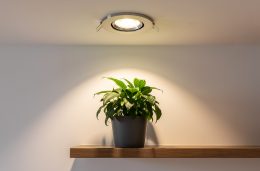 Recessed Directional Grow Spot: A Guide for Plants and Green Walls
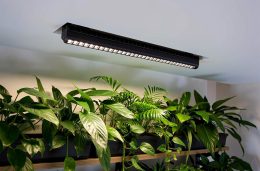 Recessed LED Grow Bars for Green Walls: 2026 Comparison Guide