
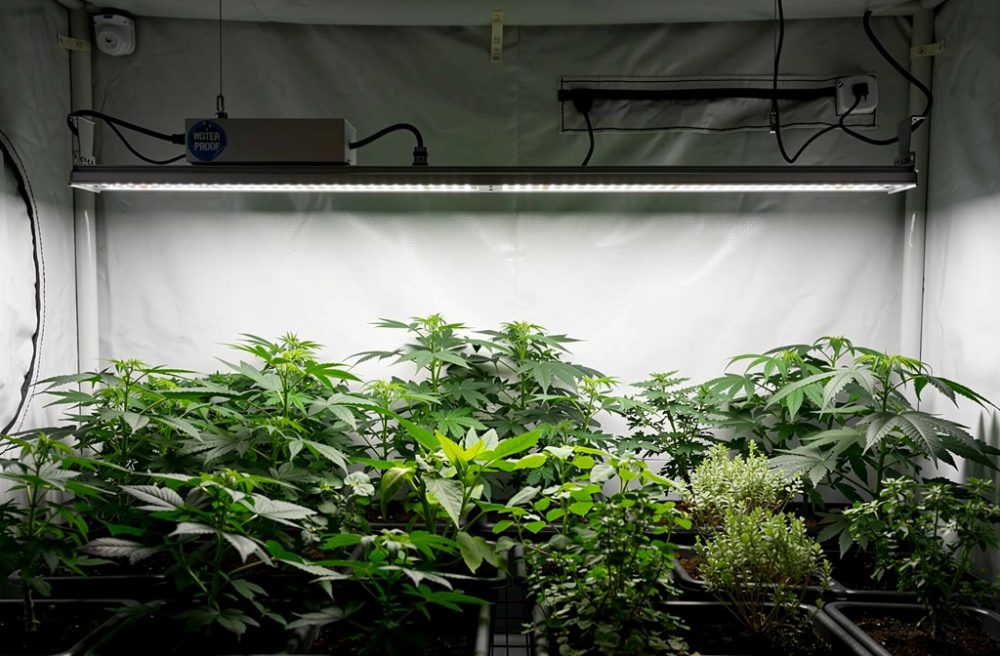
Full-Spectrum Horticultural LED Panel for Growth and Flowering: Comparison Guide
A LED grow panel for growth and flowering is now the leadinglighting for supporting your entire growing cycle , from seedling to harvest. This guide helps you choose the right horticultural LED and understand the key PPFD values and improve yields while controlling energy consumption.
Full-spectrum LED grow panel for growth and flowering
This type of horticultural LED panel with full spectrum combines all useful wavelengths to meet plant needs from germination throughout growth and through flowering, without needing to change equipment. The balanced combination of blue, red and far-red light provides strong performance and avoids interruptions to lighting between growing phases.
Fitted with CREE™ diodes with high efficacy delivering at least 2.6 µmol/J, these lights significantly outperform traditional systems and offer a service life exceeding 50,000 hours. Their dimmable driver adjusts light intensity smoothly, protecting plants while maintaining a stable full spectrum.
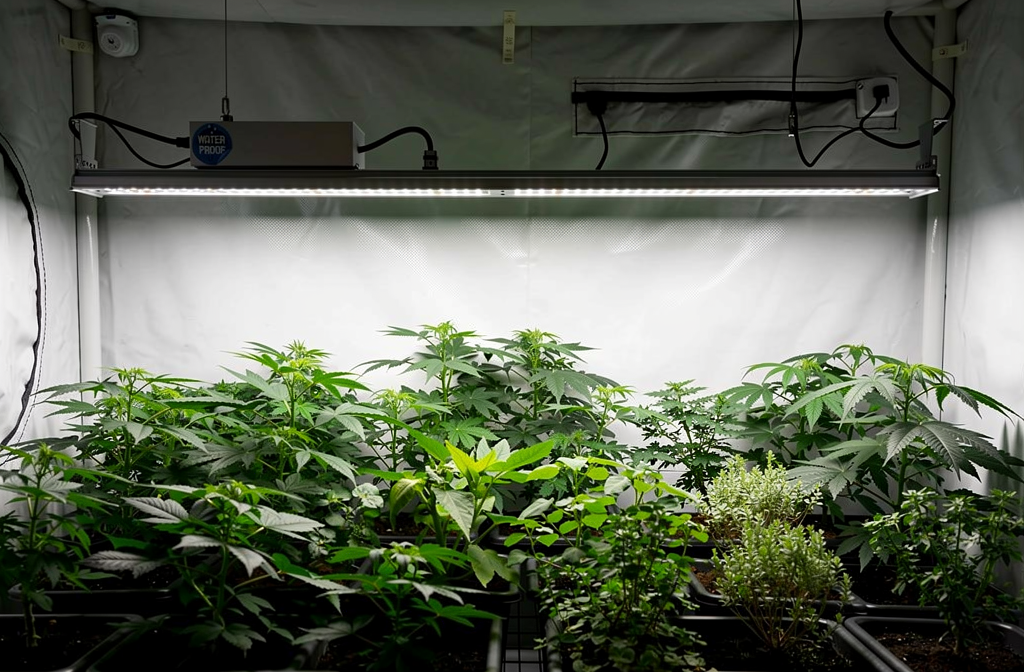
Why full spectrum is essential for your plants
The technology full spectrum closely reproduces natural sunlight, with a mix of about 30% blue and 70% red. It supports chlorophyll synthesis, photosynthesis and root development throughout the growth period. Plants can develop dense, even foliage before producing a flowering generous flowering display associated with higher yields.
The three built-in colour temperatures (6,500 K cool white, 4,500 K neutral white, 3,000 K warm white) offer flexibility to adjust grow lighting at each stage, from growth through flowering. One LED panel can serve throughout the cycle, which may reduce equipment costs.
Blue, red and far-red light for flowering
Far-red light (730–760 nm) encourages controlled cell elongation and increases leaf area, potentially increasing bud count by up to 30%. The photomorphogenic effect is controlled, helping plants develop more flowers without excessive metabolic stress.
A colour rendering index (CRI) above 80 provides faithful colour rendering, while low doses of UV are said to improve resilience and increase resin production towards the end of flowering. The resulting flowers display vivid, natural-looking colours.
- Blue-to-red ratio of 1:1.5 during vegetative growth : This supports compact foliage and strong roots for healthy growth.
- Blue-to-red ratio of 1:3 during flowering : This maximises flower density and supports beneficial aromatic compounds.
- Integrated far-red (730–760 nm) : It can increase bud size by up to 30%.
- CRI > 80 for optimal pigmentation : This helps render deep greens and natural flower colours.
Dimmable drivers allow a gradual transition from one spectral ratio to another, helping avoid sudden light changes and supporting plant health during flowering. This lets you tailor grow lighting to each stage of the cycle.
How to choose an LED grow light with the right spectrum
Choose your horticultural LED panel according to your growing area and yield goals. A full spectrum of 400–700 nm is generally sufficient for standard photosynthesis, while extending to 800 nm may suit high-intensity growing, particularly during flowering. Check that the stated efficacy is at least 2.6 µmol/J.
Also check for a three-year warranty, CE and RoHS compliance, and a stated service life above 50,000 hours. Choosing suitable lighting can support good yields, controlled energy use and a successful growing cycle.
PPFD and installation distance by growing phase
PPFD (µmol/m²/s) describes the photon flux available for photosynthesis, which is more informative than a lamp’s electrical wattage alone. This indicator measures theefficiency actual lighting system growing project. It is measured with a dedicated PAR meter, which you can use to fine-tune the installation distance or the intensity of your LED grow light.
For more on these essential concepts, see our complete guide toLED grow lighting . It explains how a full spectrum, an light distribution that is even and suitable cycles support growth and flowering indoors while helping control energy consumption.
Recommended PPFD values by growth stage
Light requirements change with plant development. Seedlings and cuttings can use a PPFD of 100–200 µmol/m²/s; vegetative growth requires 300–500 µmol/m²/s, while a flowering flowering plant can benefit from an intense 500–600 µmol/m²/s, supporting an optimal light output . These ranges are intended to match photosynthetic needs at each stage.
- Seedlings and cuttings: 100–200 µmol/m²/s – A LED grow light rated at 30 W, positioned 30–45 cm away for 16–18 h/day, is sufficient without risking photoinhibition.
- Vegetative phase: 300–500 µmol/m²/s – A grow light LED rated at 200 W hung 20–30 cm away for 16–18 h/day supports dense, robust foliage.
- Intensive flowering: 500–600 µmol/m²/s – LED grow lights rated at 300–500 W, positioned 20–30 cm away for 12 h/day, support flower maturation and density.
For example, a horticultural LED panel rated at 200 W installed 30 cm away produces about 600–700 µmol/m²/s. This is comparable to the light output of an older 400 W HPS bulb, at around half the electricity consumption. This efficiency can significantly improve the economics of any indoor growing.
| Growing phase | PPFD (µmol/m²/s) | Recommended LED power | Installation distance | Daily duration |
| Seedlings / cuttings | 100-200 | 30 W | 30–45 cm | 16–18 h |
| Vegetative growth | 300-500 | 200 W | 20–30 cm | 16–18 h |
| Intensive flowering | 500-600 | 300-500 W | 20–30 cm | 12 h |
| Late-cycle flowering | 400-500 | 150-300 W | 30–40 cm | 12 h |
Optimal hanging height for an LED grow light
Thanks to their low heat output, LED grow lights horticultural lights can be installed much closer to plants than traditional HPS models. A typical distance is 20–35 cm for LEDs versus 40–60 cm for older technologies. This proximity significantly improves light distribution and the intensity of the PPFD (µmol/m²/s) reaching plants.
Typical distances are 50–80 cm for seedlings, 30–60 cm during growth and 20–45 cm during flowering. These distances support good light penetration and even illumination across the canopy.
Adjust distance to avoid scorch and legginess
Watch the leaves: whitish patches or scorched edges may indicate that the lamp is too close. Conversely, unusually elongated, leggy stems can indicate insufficient light. Adjust the installation distance gradually to find a suitable balance.
A PAR meter is the most reliable way to measure the PPFD plants receive, avoiding guesswork. This tool helps make your yields consistent from one cycle to the next. This scientific approach helps ensure you provide the power necessary light andoptimise long-termlighting of your indoor growing.
%products%
LED grow light efficiency compared with HPS lamps
LED grow lighting has transformed indoor cultivation: its efficacy can be two to three times that of traditional HPS lamps. A horticultural LED marketed as “1,000 W” may actually use only 110–150 W while providing 2.5 µmol·J⁻¹, compared with around 1.2 µmol·J⁻¹ for a 1,000 W HPS. This illustrates the claimed gains in power and efficiency.
Energy consumption and savings with grow lights
Thanks to their strong energy efficiency, LED lights significantly reduce energy consumption and operating costs for a garden or grow room. Over a continuous twelve-week flowering, a single horticultural LED panel uses about 160 kWh, while equivalent HPS lamps can exceed 300 kWh, allowing savings of up to 75%. At the average French electricity rate, users may save nearly €900 per year, quickly offsetting the initial investment.
- Energy use reduced by a quarter : 160 kWh for the horticultural LED , compared with 300 kWh for an HPS of equivalent power, improving the economics of the indoor growing.
- Lower annual cost : about €300 with LED grow lights, compared with €1,200 for HPS lamps, supporting a faster return on investment.
- Guaranteed spectral stability : The lighting LED maintains its efficacy and light output for 50,000 hours, while HPS lamps can lose 20–30% of their light output.
A 250 W LED model can replace a 1,000 W HPS while halving energy use. Three 300 W horticultural LED panels can cover the same area as one 1,000 W HPS, offering greater modularity than a single large fixture.
Thermal management and service life of an LED grow panel
Unlike HPS lamps, which produce considerable heat and often require powerful ventilation and complex cooling, an horticultural LED panel operates at much lower temperatures, typically 45–60°C. Robust aluminium heat sinks and quiet fans help achieve this, preventing heat stress and limiting excessive evaporation.
- Much longer service life: over 50,000 hours : equivalent to six or seven years at twelve hours a day, compared with an average of only eighteen months for an HPS bulb.
- Minimal light loss: less than 5% after 10,000 hours : Spectral consistency supports a light output that remains stable through flowering.
- No more ballast concerns : The all-in-one design simplifies maintenance and reduces energy consumption as well as improving overall lighting.
LED chip temperatures remain below 85°C, extending the service life well beyond the stated 50,000 hours. This is why some manufacturers, including GreenVisuaLED, offer a minimum three-year warranty. Mylar reflectors may further improve light efficiency by 10–15%; the lack of an external ballast and a built-in 90° reflector also simplify installation for beginners and experienced growers alike.
Grow light types and suitable light cycles
Modern grow lighting comes in three main formats : quantum boards for even light distribution, modular bars and COB modules with strong penetration. Understanding their characteristics helps you choose the right power and optimise each growing area while avoiding wasted energy.
This knowledge helps you match growth and flowering phases to your production goals while maximising yields and efficiency throughout the plant life cycle.
Quantum boards, LED grow bars and COB modules compared
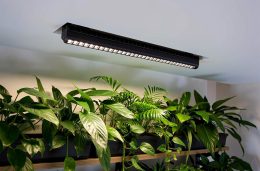
A LED grow bar is highly modular. For example, five 200 W bars combined with four 50 W spotlights total 1,200 W and effectively cover 3–4 m² with adjustable X-WALL tracks. This system lets you expand your setup gradually at lower cost, without replacing existing infrastructure.
- 1,000 W quantum board : Provides very even light distribution over 1.5–2 m² during flowering. It offers excellent uniformity but less flexibility.
- Multiple 200 W bars : Highly modular and well suited to seedlings, cuttings and multiple crops grown at the same time.
- High-power COB modules : Intense, vertically penetrating light, ideal for abundant flowering but requiring more headroom.
Connecting multiple LED panels in series can maintain excellent uniformity while increasing the growing area. This flexible design outperforms traditional HPS lamps systems, which are often less flexible and less energy-efficient.
Whether you prefer the uniformity of a quantum board, the gradual scalability of bars or the flowering density of COBs, GreenVisuaLED offers complete setups for each approach.
Programming light cycles for growth and flowering
The light cycles are essential for guiding plant physiology. During the growth phase, a 16-hour light and 8-hour dark cycle mimics long summer days and supports dense foliage, strong roots and biomass accumulation.
To trigger flowering, use a 12 h light and 12 h dark cycle. Similar to short autumn days, this encourages bud formation. A 24-hour mechanical timer rated up to 3,680 W can easily control thelighting without Wi-Fi, offering robust operation and around 30% energy savings compared with continuous operation. A low-power lamp power, fitted with a green filter, allows work during the dark phase without disrupting the photoperiod.
Modular configurations for different growing areas
For a small growing area of 0.5–1 m², a single 30 W panel placed 20–30 cm above the plants is sufficient for light flowering. For a medium area of 1.5–2 m², a 1,000 W LED delivering 750–900 µmol/m²/s at 30 cm is an attractive alternative to conventional HPS lamps .
For larger areas of 3–4 m², combining five LED grow bars rated at 200 W with four 50 W spotlights (1,200 W total) provides a good balance between flexibility and power . A more economical setup for the same area would use two compact 300 W panels. This scalable modularity adapts to the expansion of your growing project, while reducing consumption by about 730 kWh per year compared with a continuously operated HPS setup.
Frequently asked questions
What LED wattage can replace a 1,000 W HPS lamp?
To make this replacement, a horticultural LED rated at about 250-300 W provides photon flux equivalent to a 1,000 W HPS while doublingefficiency on average. For greater flexibility, consider multiple LED panels in a modular setup: three 300 W units or six 150 W modules can replace an HPS grow light, improve light distribution and simplify installation.
How far away should I install an LED panel to avoid leaf burn?
For a small LED grow bulb rated at 30 W, position it 30–45 cm from seedlings, whose young tissues are particularly delicate. For a more powerful light (200–300 W), keep it 20–30 cm away during growth, then reduce the distance to 15–20 cm during flowering intensive. Monitor PPFD with a PAR meter and adjust gradually: scorch marks indicate excess light, while legginess suggests the light is too far away.
Is a single full-spectrum LED panel enough for both growth AND flowering?
Yes. A single horticultural LED described as full spectrum (or full spectrum ) is suitable for all stages of the growing cycle, from growth through to flowering . These fixtures combine red and blue diodes in one spectrum. A dimmable driver lets you adjust power and light output precisely, without needing to change the grow light.
Related posts
 Discreet Green Wall Lighting: LED Design Guide
 Recessed Directional Grow Spot: A Guide for Plants and Green Walls
 Recessed LED Grow Bars for Green Walls: 2026 Comparison Guide